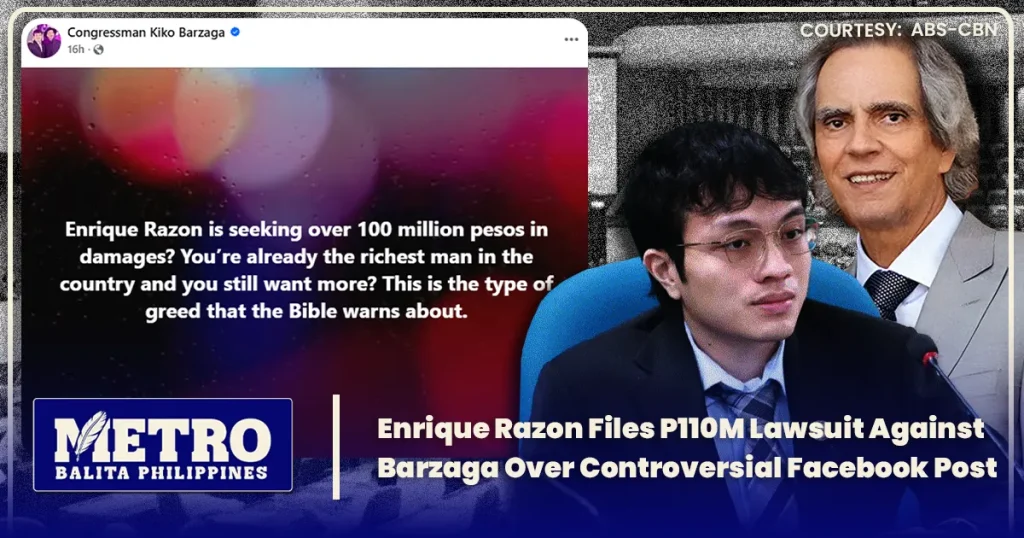
Ports and casino magnate Enrique Razon has filed a ₱110 million legal case against suspended Cavite lawmaker Francisco Barzaga, following a Facebook post that accused him of corruption and bribery. The case, which includes two counts of cyberlibel, was lodged before the Makati City Prosecutor’s Office and has quickly gained national attention due to the seriousness of the claims and the prominence of the individuals involved.
Razon’s complaint stems from a social media post published on January 9, where Barzaga allegedly referred to him as the “mastermind” behind supposed corruption in Congress. The post implied that Razon had bribed certain members of the House of Representatives to influence leadership outcomes. Razon has firmly denied these accusations, describing them as false, malicious, and unsupported by evidence.
Allegations Linked to Congressional Leadership
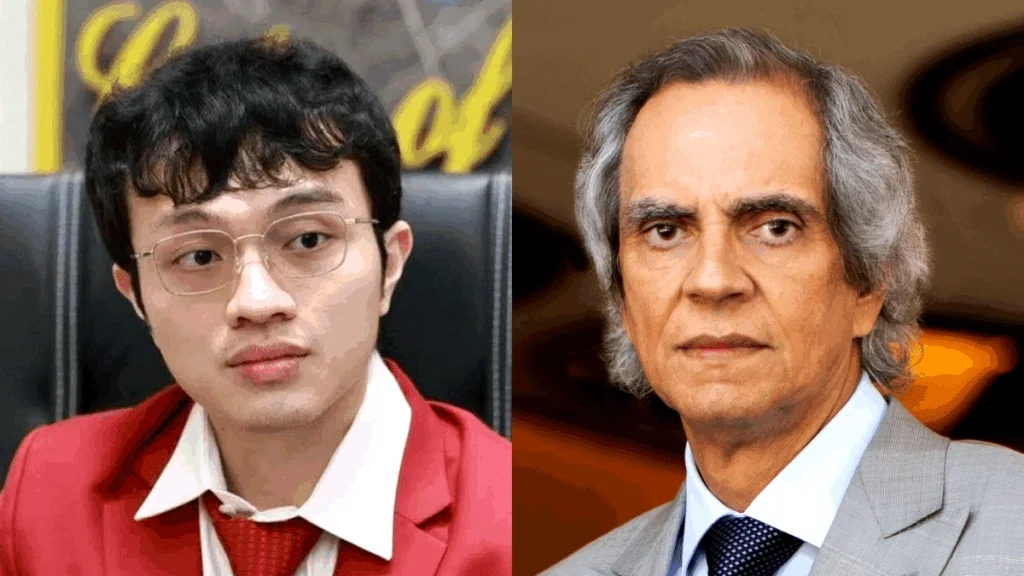
According to reports, the Facebook post suggested that the alleged bribery was connected to efforts to help Martin Romualdez retain his position as Speaker under the 20th Congress. This implication placed Razon at the center of a political controversy despite him being a private individual not holding public office.
Razon’s legal team argues that the statements were presented as facts rather than opinions or political commentary. They claim this distinction is crucial, as it exposes the post to scrutiny under cyberlibel laws. By naming Razon directly and linking him to criminal acts, the complaint asserts that the post caused immediate reputational damage and subjected him to public suspicion.
Basis of the Cyberlibel Case
In his filing, Enrique Razon is seeking ₱100 million in moral damages and ₱10 million in exemplary damages, bringing the total claim to ₱110 million. The complaint states that the damages reflect the harm to his reputation as well as the emotional distress caused by being publicly accused of corruption.
The case emphasizes that social media platforms such as Facebook are not exempt from legal accountability. Razon’s lawyers argue that online posts can spread rapidly, reaching a wide audience in a short period of time, which amplifies the potential damage of defamatory statements. They maintain that the absence of proof and the use of strong, accusatory language justify the filing of criminal and civil complaints.
Barzaga’s Response and Public Discourse
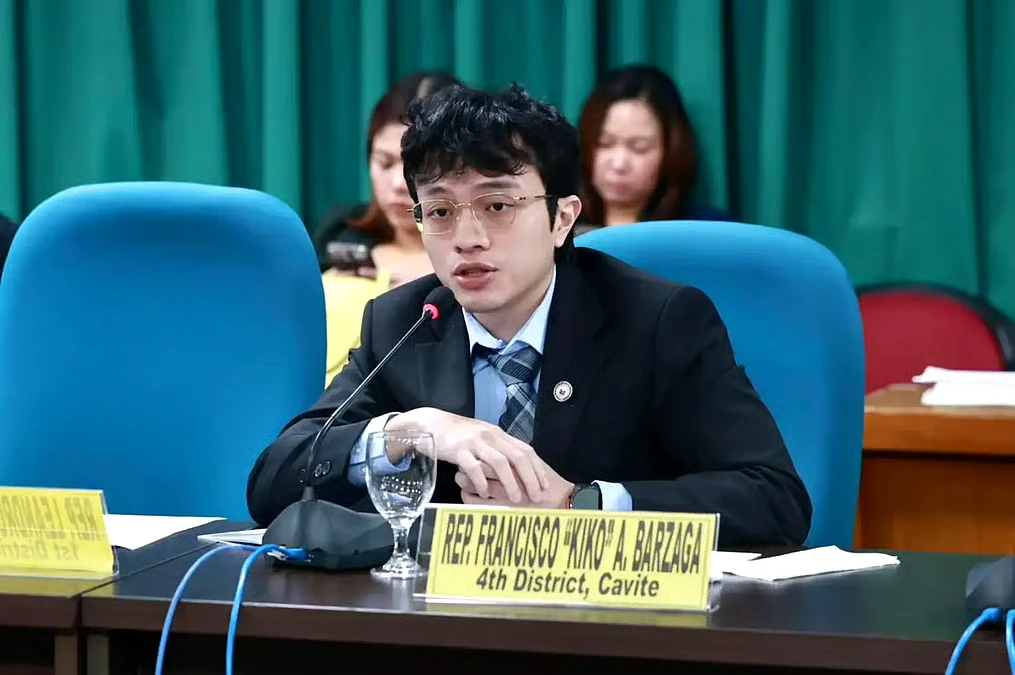
Barzaga has publicly stood by his statements and framed them as part of political expression and public interest discussion. He has not issued a retraction and has indicated that he is prepared to face the legal challenge. His response has fueled debate online, with discussions focusing on freedom of speech, political accountability, and the limits of acceptable commentary on social media.
Legal observers note that cyberlibel cases often hinge on whether statements are presented as factual claims and whether there is intent to damage a person’s reputation. In this case, the court is expected to examine the wording of the Facebook post, its context, and the reach of the platform where it was published.
Broader Implications of the Case
The lawsuit highlights the growing legal risks of using social media for public accusations. For figures like Enrique Razon, reputation is closely tied to credibility, and unproven claims can cause lasting damage. The case also reminds public officials and private individuals that online statements carry legal responsibility and must be made with accuracy and care.
As proceedings move forward, the lawsuit filed by Enrique Razon against Francisco Barzaga is expected to test how Philippine law balances free expression with protection against defamation in the digital age. The outcome could influence how politicians and public figures use social media when making allegations involving private individuals.
The case underscores that online platforms are now part of the legal landscape, where words can carry significant weight and consequences. Metro Balita Ph will continue to monitor developments and provide updates as the case progresses.