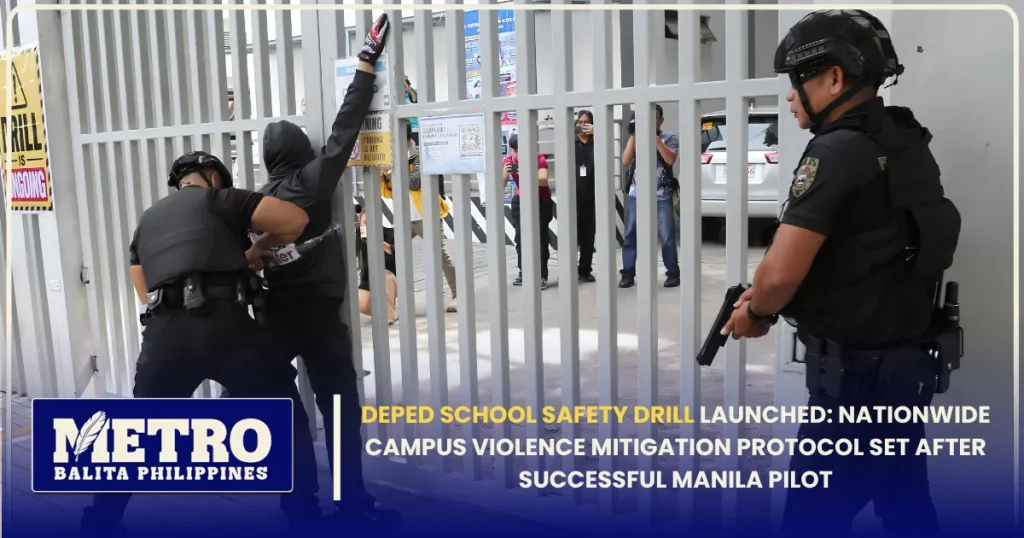
MANILA, Philippines — In a proactive move to safeguard the country’s academic institutions against modern security threats, the Department of Education has officially pioneered a comprehensive deped school safety drill designed to mitigate campus violence. The sudden launch comes amid intensifying national discussions surrounding student protection and the absolute necessity of updated crisis management strategies within public and private school infrastructures. As security demands shift globally, this new deped school safety drill marks a major transition from traditional natural disaster preparedness toward handling active human threats directly on school grounds.
The department’s shifting focus addresses a grim reality: schools must be prepared for more than just typhoons and earthquakes. By establishing the deped school safety drill framework, education officials are establishing a baseline of emergency readiness that treats human-induced crises with the same structural discipline historically reserved for environmental disasters.
Crisis Preparedness: The Need for an Updated DepEd School Safety Drill
For decades, crisis response within Philippine schools focused heavily on earthquake simulations and fire evacuations. However, recent developments highlight the growing vulnerability of densely populated campuses to external security breaches and localized violence. The newly established deped school safety drill was conceived to address these complex vulnerabilities, providing clear, structured survival procedures for faculty members and learners alike.
Education leaders have realized that a static approach to threat management is no longer sufficient. Securing thousands of students requires dynamic, modern methodologies that teach immediate behavioral adjustments during an ongoing crisis. By testing these defensive protocols early, authorities intend to build a muscle-memory response capable of saving lives if an intruder or a violent actor gains access to a school facility.
Inside the Pilot Simulation at Manila Science High School
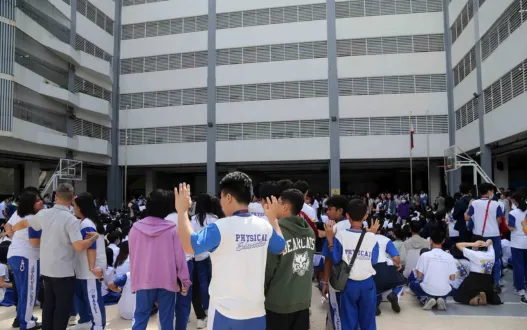
The inaugural deployment of this crucial security initiative took place on Wednesday, July 15, 2026, during the National Safe Schools Summit. The deped school safety drill was officially piloted at the Manila Science High School, a prominent campus catering to highly advanced science and technology learners. The dry run engaged approximately 1,751 students spanning Grades 7 through 12, along with dozens of administrators, faculty personnel, and safety coordinators.
The extensive simulation tested specific, hard-hitting defensive maneuvers, focusing on the nightmare scenario of an active shooter breaching the perimeter walls. During the drill, simulated warning alarms echoed through the buildings, signaling an instant lockdown. Students were instructed to lock classroom doors, barricade entry points with heavy desks, turn off all lights, and remain entirely silent away from window sightlines. The exercise successfully demonstrated how standard classrooms could be transformed into hardened defensive zones within less than 60 seconds.

Nationwide Rollout Strategy Confirmed by Secretary Angara
Witnessing the strategic execution of the pilot program firsthand, Department of Education Secretary Sonny Angara lauded the coordination of the participants and confirmed the agency’s long-term operational plans. The Secretary explicitly noted that the deped school safety drill would soon be scaled up and implemented on a nationwide scale, covering all administrative regions from Luzon to Mindanao.
“We cannot afford to be complacent when it comes to the absolute security of our learners. The successful simulation we witnessed today proves that clear instructions save lives. This deped school safety drill will become standard operating procedure across all public schools in the Philippines.” — DepEd Secretary Sonny Angara
The agency intends to formalize these training steps into an official department order, ensuring that school heads are legally and operationally mandated to integrate the safety guidelines into their semester calendars. The transition to a nationwide model will require training thousands of regional coordinators, establishing uniform crisis vocabulary, and creating school-specific layout strategies tailored to different architectural styles found throughout the country.
Key Simulation Scenarios Covered
| Threat Level | Primary Action Protocol | Focus Objective |
| Perimeter Breach | Shelter-in-Place / Complete Lockdown | Hardening classrooms and preventing visual contact. |
| Active Shooter | Run, Hide, Fight Strategy | Tactical evacuation or direct room defense as a last resort. |
| Post-Incident | Controlled Evacuation & Assembly | Account for all individuals and coordinate with emergency medical services. |
Law Enforcement Integration and Emergency Response
A critical element highlighted during the execution of the pilot deped school safety drill was the seamless tactical integration between academic staff and local law enforcement units. Representatives from the Philippine National Police and local emergency medical teams observed the timeline of the drill to evaluate response speeds, cordon efficiency, and communications clarity.
In a real crisis, the initial fifteen minutes before police arrival are the most lethal. The deped school safety drill specifically prepares teachers to act as the primary incident commanders during these crucial opening moments. By teaching educators how to provide accurate situational reports to emergency dispatchers while simultaneously keeping their students concealed, the program bridges the dangerous gap between a threat detection and official law enforcement intervention.
Furthermore, local police personnel highlighted that observing the deped school safety drill allowed tactical teams to understand the internal layout of standard school buildings. This mutual exchange of structural data and operational expectations ensures that if a crisis occurs, responding units can neutralize threats without causing accidental crossfire or confusion among fleeing crowds.
The Mental Health and Psychosocial Impact of Emergency Drills
While physical safety remains the immediate priority, child psychologists and education advocates have pointed out that an active shooter or violence-centered deped school safety drill must be managed delicately to avoid psychological trauma. Replicating violent scenarios can induce severe anxiety among younger demographics if not contextualized properly by trained professionals.
To mitigate these psychological risks, DepEd is partnering with disaster risk reduction specialists to ensure that every deped school safety drill includes a comprehensive, age-appropriate post-drill debriefing phase. Guidance counselors are tasked with explaining the protective nature of the exercises, reframing the drills not as a source of fear, but as an empowering tool for self-preservation. Educators are being taught to look out for signs of distress during and after simulations, providing a balanced environment where safety preparedness coexists with emotional well-being.
Logistics, Funding, and Institutional Challenges Ahead
Scaling the deped school safety drill across an archipelago containing tens of thousands of schools presents immense logistical hurdles. Many rural public schools lack robust locking mechanisms on classroom doors, perimeter fencing, or centralized public address systems capable of alerting an entire campus simultaneously.
To overcome these structural limitations, the Department of Education is seeking to allocate dedicated funds from its national budget to upgrade basic security infrastructure alongside the rollout of the deped school safety drill initiative. Regional offices are also encouraged to form partnerships with local government units to secure additional funding for alarms, security cameras, and gate reinforcement. The long-term vision is to establish a standardized baseline of physical security that complements the behavioral protocols taught during the drills.
Institutionalizing the deped school safety drill represents a turning point in how the country views campus security. By acknowledging the real threats of modern violence and creating actionable, stress-tested protocols, the government is building a more resilient educational system. Moving forward, the success of this program will rely heavily on the continuous training of teachers, the vigilance of local communities, and the unwavering commitment to keeping schools as sacred, safe spaces for learning.
Community Involvement and Parent Reassurance
A successful nationwide implementation of the deped school safety drill requires more than just student and teacher cooperation; it demands active transparency with the broader community. Parents, in particular, often harbor deep anxieties when schools begin practicing for violent scenarios. To combat misinformation and panic, DepEd plans to launch localized information campaigns alongside the implementation of the deped school safety drill.
By conducting community orientations before the sirens ever ring out, schools can educate parents on exactly what to expect. Parents will be instructed on emergency communication channels and explicitly told not to rush to the campus during an active lockdown, as doing so can congest emergency lanes and inadvertently put more lives at risk. The goal of the deped school safety drill is to foster a culture of calm, calculated execution, replacing standard panic with pre-determined institutional pathways.
Enhancing Infrastructure to Support Tactical Training
A critical reality highlighted by security experts during the pilot program is that the best behavioral training can be undermined by failing infrastructure. If a classroom door cannot lock from the inside, or if a window lacks proper coverings, the execution of the deped school safety drill becomes significantly compromised. Recognizing this, DepEd’s long-term strategy includes an extensive audit of school facilities to identify structural weak points.
The department aims to integrate these physical enhancements directly into the rollout of the deped school safety drill. Simple fixes, such as installing heavy-duty deadbolts on classroom doors and applying privacy films to ground-floor windows, can exponentially increase the effectiveness of a shelter-in-place order. While funding remains a challenge, prioritizing these high-impact physical upgrades alongside regular iterations of the deped school safety drill will give schools a fighting chance against external threats.
Future Outlook: Building a Resilient Academic Environment
As the Department of Education prepares to draft the formal rules governing this initiative, the pilot program stands as a clear proof of concept. The deped school safety drill is no longer a theoretical security proposal but a lived operational standard that will soon define school life across the Philippines. By training young learners and faculty members to identify threats, secure physical spaces, and communicate under pressure, the country is taking a vital step toward modernizing its educational defenses.
Ultimately, the institutionalization of the deped school safety drill underscores a fundamental truth: keeping children safe requires evolving ahead of the threats they face. Through rigorous practice, inter-agency collaboration, and continuous community engagement, the nationwide implementation of the deped school safety drill promises to build a more secure, resilient, and prepared generation of Filipino students.
Stay updated with the latest news at Metro Balita PH.