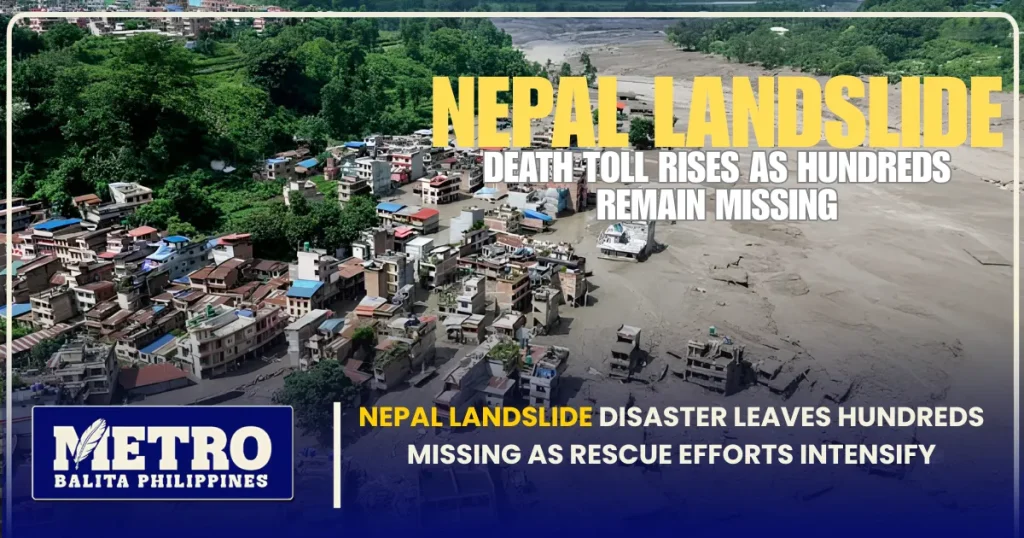
A devastating Nepal landslide along the Himalayan border with Tibet has triggered catastrophic flash floods, destroying communities, roads, bridges and other infrastructure while leaving a large number of people missing. Rescue teams are now racing against time to search areas buried under mud, rocks and debris as authorities work to determine the full scale of the disaster.
The disaster struck on Wednesday, August 26, after a huge mass of mud and rock collapsed into a river near the Nepal-China border. The resulting surge of water and debris swept through parts of Nepal and Tibet, turning normally calm mountain valleys into dangerous channels of fast-moving floodwater.
By Thursday, reports indicated that the death toll had climbed sharply, while more than 1,300 people were still unaccounted for across Nepal and Tibet. The situation remained fluid as rescue authorities continued identifying victims and missing persons.
Nepal Landslide Triggers Catastrophic Flash Floods
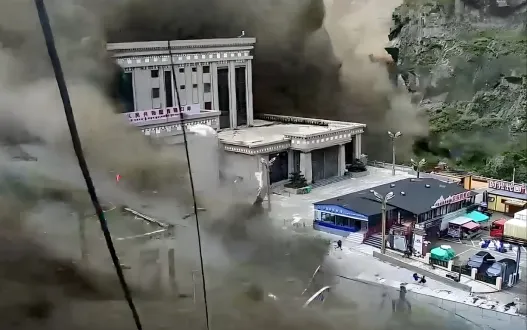
The Nepal landslide was initially difficult to explain because the first seismic signals were interpreted as a possible earthquake. Further analysis by the U.S. Geological Survey indicated that the seismic energy was more consistent with a glacial collapse and debris flow rather than a conventional earthquake.
The collapse sent an enormous amount of water, ice, mud and rock into the river system. The sudden increase in water volume produced a flash flood that moved rapidly downstream, leaving little time for people living or traveling in the affected valleys to escape.
Reuters reported that the wall of mud and rock that entered the river contributed to flooding of an extraordinary scale. Satellite imagery reviewed by the news agency showed mountainsides that had previously been covered in vegetation transformed into areas covered with brown sediment and debris.
The Nepal landslide also demonstrated how quickly a geological event in the high Himalayas can turn into a wider humanitarian emergency. Mountain rivers can carry debris over considerable distances, meaning communities far from the original collapse can still face dangerous flooding.
Why the Himalayas Are Vulnerable
The Himalayan region is particularly exposed to landslides, avalanches, glacier-related hazards and flash floods because of its steep terrain and rapidly changing environmental conditions.
Experts have increasingly warned that warming temperatures can destabilize glaciers and increase the amount of meltwater stored in high-altitude areas. The current disaster has renewed questions about how prepared communities are for sudden glacier-related events.
However, investigators have cautioned against immediately assigning a single cause to the disaster. The exact chain of events leading to the collapse is still being studied, and authorities continue to assess geological and environmental evidence.
Death Toll Rises as Hundreds Remain Missing
The human cost of the Nepal landslide has continued to grow as rescue teams recover bodies from affected areas.
The Associated Press reported that at least 168 people had died and more than 1,300 remained missing across Nepal and Tibet in its latest update. Nepal authorities listed hundreds of missing people, while officials in Tibet also reported casualties and missing residents.
Reuters separately reported that nearly 1,500 people, including more than 700 foreigners, were missing across Nepal and Tibet as search operations continued. The difference between reported figures reflects the rapidly changing situation and the difficulty of confirming identities in isolated mountain communities.
Authorities have warned that the final toll could rise because some affected locations remain difficult to reach. Communication problems, destroyed roads and bridges, unstable slopes and continuing bad weather are complicating rescue operations.
Among those reported missing are foreign tourists and pilgrims who were traveling through the region. The area is an important route for people heading toward Mount Kailash and other religious and trekking destinations in the Himalayas.
The Nepal landslide has therefore become an international emergency, with families in several countries waiting for information about relatives who were traveling in the affected region.
Rescue Teams Face Difficult Conditions
Following the Nepal landslide, rescue agencies immediately began searching for survivors and evacuating people from dangerous areas.
Nepalese authorities have deployed rescue personnel and helicopters to reach communities that cannot easily be accessed by road. The Nepalese Army has also been involved in transporting survivors and injured people from affected areas.
But rescuers are working under extremely challenging conditions.
Many roads have been destroyed or buried beneath mud and rocks. Bridges have also been swept away, cutting off communities and making it harder to transport heavy equipment, food and medical supplies.
Mountain terrain adds another layer of danger. Rescue workers must navigate unstable slopes while searching through debris that could shift again without warning.
Search Operations Continue
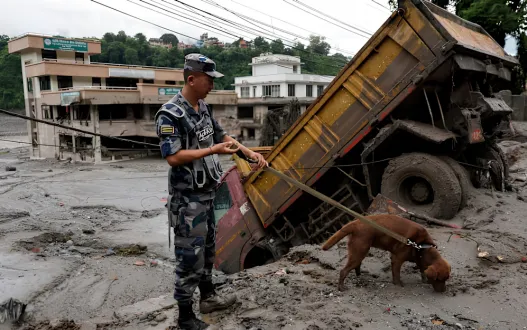
The search following the Nepal landslide has focused on areas where homes, vehicles, camps and other structures were swept away.
Rescue workers are also trying to establish accurate lists of missing people. This is particularly difficult because some victims were traveling in groups, while others were residents whose homes were destroyed.
Officials have urged people to rely on verified information as the search continues. With hundreds of families waiting for confirmation about loved ones, inaccurate reports can create additional distress during an already devastating emergency.
The Nepal landslide has also disrupted electricity and communications in some affected locations, particularly across parts of Tibet. Damaged infrastructure has made it harder for authorities to coordinate rescue operations and communicate with people outside the disaster zone.
Infrastructure Destroyed by Mud and Water
Beyond the loss of life, the Nepal landslide has caused extensive damage to essential infrastructure.
Reports from the affected region described roads, bridges, buildings and power facilities being swept away or buried. The destruction is especially serious in mountainous communities because many areas depend on a limited number of roads and bridges for transportation and supplies.
When a major bridge disappears, an entire community can effectively become isolated.
That creates immediate problems for rescue teams but can also produce longer-term difficulties involving food deliveries, medical care, tourism and local businesses.
The Nepal landslide could therefore have consequences that extend well beyond the immediate emergency. Rebuilding roads and bridges in steep Himalayan terrain is expensive, time-consuming and technically difficult.
Authorities will also need to assess whether damaged areas remain safe for residents. Additional landslides or sudden flooding could threaten both survivors and rescue workers if unstable slopes are left unchecked.
Foreign Tourists and Pilgrims Among the Missing
One of the most striking aspects of the Nepal landslide is the number of foreign nationals reportedly caught in the disaster.
Nepal’s tourism authorities said that numerous foreign travelers were among those unaccounted for. Many were connected to pilgrimage and tourism activities involving routes toward Mount Kailash and Lake Manasarovar.
Reports have identified missing people from countries including India, the United States, Australia, Britain and Canada.
For governments overseas, confirming the status of their citizens has become an urgent priority. Australia, for example, said at least 34 Australian citizens were missing, while officials stressed that information from the disaster area remained limited.
The Nepal landslide has also raised concerns for tour operators and pilgrimage organizers, particularly those responsible for groups traveling through remote mountain routes.
The tragedy serves as a reminder that popular Himalayan destinations can remain extremely dangerous despite modern transportation and communication systems.
Climate Change Questions Return to Focus
The Nepal landslide has also brought renewed attention to the effects of climate change in the Himalayan region.
Scientists have warned for years that rising temperatures are accelerating glacier loss across parts of the Hindu Kush Himalayas. As glaciers retreat, the landscape can become increasingly unstable, while meltwater can accumulate in lakes and other high-altitude areas.
That does not mean climate change alone caused this particular disaster. Researchers still need to examine the exact geological processes involved in the collapse.
Nevertheless, the event highlights a broader concern: communities living below glaciers and along steep mountain rivers may face increasing risks from sudden natural hazards as the region warms.
The Nepal landslide could consequently become an important case study for scientists studying glacier stability, landslide risks and disaster preparedness in high-altitude regions.
What Happens Next?
The immediate priority after the Nepal landslide is finding survivors and accounting for missing people.
Rescue teams are expected to continue searching damaged communities while authorities assess additional risks along rivers and unstable mountain slopes. Helicopters and other emergency resources will remain essential where roads have been destroyed.
Officials also face the difficult task of providing shelter, food, medical treatment and communication services to people displaced by the floods.
In the coming days, investigators will likely gather more satellite imagery, geological information and eyewitness accounts to establish exactly how the disaster unfolded.
The Nepal landslide has already demonstrated the devastating combination of unstable Himalayan terrain, sudden water movement and vulnerable infrastructure. As rescue operations continue, authorities are facing not only a race to save lives but also the enormous challenge of rebuilding communities that have been severely damaged.
For families waiting for news, however, the focus remains much simpler: finding their loved ones.
The final impact of the Nepal landslide may not be known for some time. With rescue operations still underway and casualty figures changing, officials continue to urge caution while teams search through the debris.
What is already clear is that the disaster has left a deep mark on communities on both sides of the Nepal-Tibet border. The destruction of homes, roads and bridges, combined with the large number of missing people, makes the event one of the region’s most serious recent natural disasters.
As search crews continue their work, the world is watching the Himalayas closely. The Nepal landslide has become a stark reminder of how quickly conditions can change in one of the world’s most dramatic and environmentally fragile regions.
Stay updated with the latest news at Metro Balita PH.