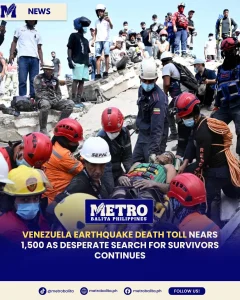
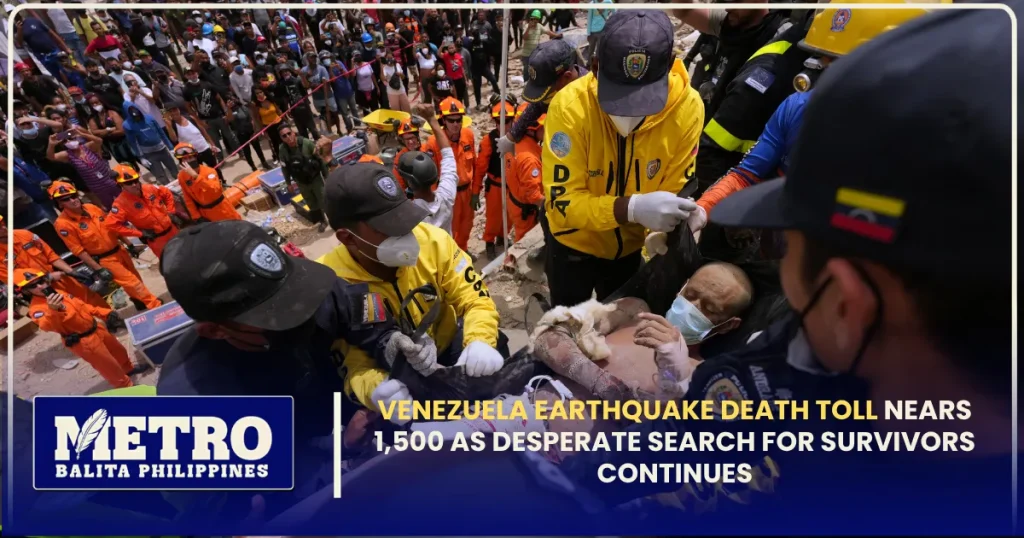
CARACAS, Venezuela – The Venezuela earthquake death toll has climbed to nearly 1,500 as rescue teams continue their race against time to find survivors trapped beneath collapsed buildings following the country’s devastating twin earthquakes. Authorities and international aid groups warn that the number of casualties could still rise as thousands remain unaccounted for and emergency workers struggle to reach some of the hardest-hit communities.
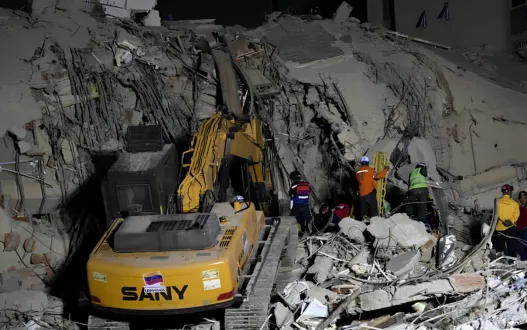
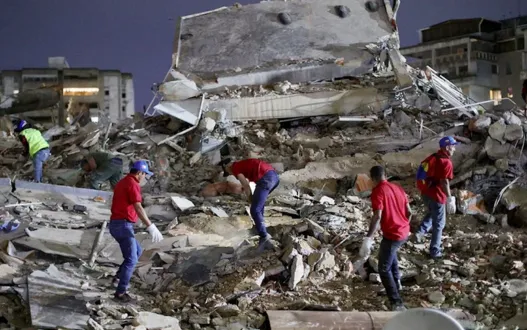
The back-to-back earthquakes, measuring 7.2 and 7.5 in magnitude, struck northern Venezuela earlier this week, triggering widespread destruction in the coastal state of La Guaira and parts of the capital, Caracas. Entire neighborhoods were reduced to rubble, roads were damaged, and critical infrastructure, including power and communication lines, suffered severe disruptions.
Venezuela Earthquake Death Toll Continues to Rise
The latest official figures show the Venezuela earthquake death toll approaching 1,500 people, while more than 3,100 others have been injured. Authorities have also reported that nearly 50,000 people remain missing, raising fears that the final number of fatalities could be significantly higher.
Emergency workers from Venezuela and several foreign countries have joined forces in the massive rescue operation. More than 2,600 rescue personnel, including specialized canine teams and medical units, have arrived in the country to assist local responders. Despite the international support, rescue efforts have been hampered by blocked roads, unstable buildings, and persistent aftershocks.
Many residents have taken matters into their own hands, digging through debris with shovels and even their bare hands in hopes of finding loved ones alive.
“We still hear voices under the rubble,” one resident told local media as volunteers continued searching through the remains of a residential building in La Guaira.
Rescue Operations Face Mounting Challenges
As the Venezuela earthquake death toll continues to increase, hopes of finding more survivors are slowly fading. The critical 72-hour window often considered the most important period for earthquake rescues has already passed, although emergency crews insist they will continue searching.
Several survivors have been pulled from collapsed structures in recent days, offering moments of hope amid the tragedy. Among the rescues were children and elderly residents who managed to survive for days beneath the rubble.
However, many areas remain difficult to access due to damaged roads and landslides. Rescue crews are also dealing with repeated aftershocks, which continue to threaten already weakened buildings and endanger emergency personnel.
The country’s fragile infrastructure has further complicated response efforts. Large sections of La Guaira experienced prolonged power outages, and communication networks remain unreliable in several communities.
Humanitarian Crisis Deepens
The devastating earthquakes have displaced more than 12,000 people, forcing thousands of families to seek shelter in evacuation centers, schools, and temporary camps. Many survivors are now facing shortages of food, drinking water, medicine, and basic necessities.
Medical facilities are struggling to cope with the growing number of injured victims. Hospitals in affected areas have become overwhelmed, prompting international organizations and neighboring countries to send additional medical supplies and emergency aid.
India recently launched “Operation Amistad,” delivering field hospitals, medicines, and emergency equipment to support relief operations in Venezuela. Other countries, including the United States, Mexico, Spain, and several Latin American nations, have also sent rescue teams and humanitarian assistance.
Aid organizations warn that the humanitarian situation could worsen if survivors do not receive sufficient assistance in the coming days.
Stories of Loss and Survival
Behind the rising Venezuela earthquake death toll are countless stories of heartbreak and resilience.
Among the victims were the wife and two children of Argentine football player Lucas Trejo, whose family was found dead after an intensive 72-hour search operation. Another footballer’s wife reportedly died while shielding their young daughter during the quake, a tragic act of sacrifice that has touched many people around the world.
Meanwhile, emotional reunions have also emerged from the disaster zone. Rescue teams have managed to pull several survivors from the debris days after the quakes struck, providing moments of hope for families desperately awaiting news of missing loved ones.
Residents continue to gather outside collapsed buildings, refusing to leave despite the dangers posed by aftershocks.
Government Under Pressure
The worsening Venezuela earthquake death toll has placed the country’s leadership under intense scrutiny. Some survivors and local residents have criticized the government’s response, saying emergency assistance arrived too slowly and that rescue equipment remains insufficient in several areas.
Authorities have defended their response efforts, citing the scale of the disaster and the extensive damage caused by the twin earthquakes. The government has suspended classes in affected regions and launched a commission to inspect damaged structures and assess the safety of public buildings.
Political analysts believe the disaster could have significant implications for Venezuela’s already fragile political situation, with public frustration growing over the handling of the emergency.
One of Latin America’s Deadliest Earthquakes
Seismologists say the twin earthquakes represent one of the most destructive seismic events to strike Venezuela in modern history. The United States Geological Survey has warned that the final death toll could eventually exceed 10,000 depending on the number of people still trapped and missing.
The scale of destruction has drawn comparisons to some of the deadliest earthquakes in Latin American history, with hundreds of buildings either collapsing entirely or suffering major structural damage.
Experts also warn that the region could continue experiencing aftershocks for weeks, creating additional risks for survivors and rescue workers.
International Community Rallies Behind Venezuela
As the Venezuela earthquake death toll continues to rise, governments and humanitarian organizations worldwide have expressed solidarity with the Venezuelan people.
International donations, rescue teams, and emergency supplies continue arriving in the country as authorities work to stabilize the situation and support survivors.
The coming days will be critical, not only for rescue efforts but also for the long-term recovery of communities devastated by the disaster. Rebuilding homes, restoring infrastructure, and helping thousands of displaced families could take years.
For now, however, the focus remains on finding survivors and providing relief to those who have lost everything.
With thousands still missing and rescue operations continuing around the clock, the tragedy in Venezuela serves as another painful reminder of how quickly natural disasters can transform lives and leave entire communities facing an uncertain future.
For more news and updates, visit Metro Balita Ph.