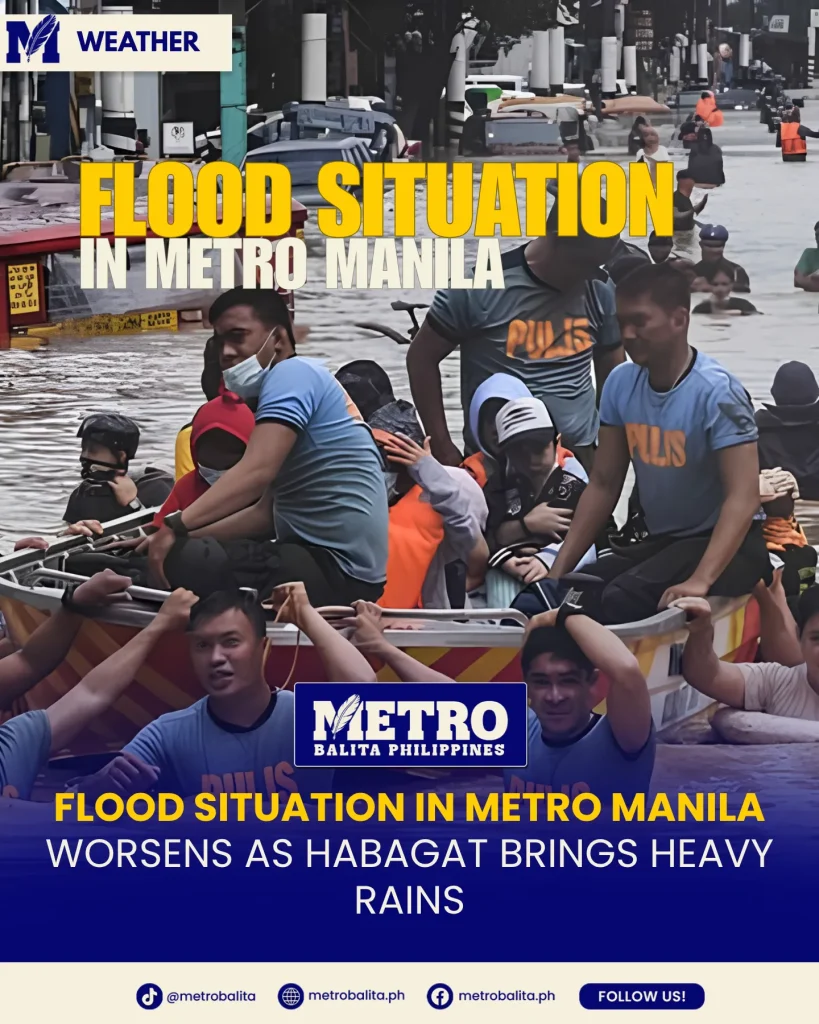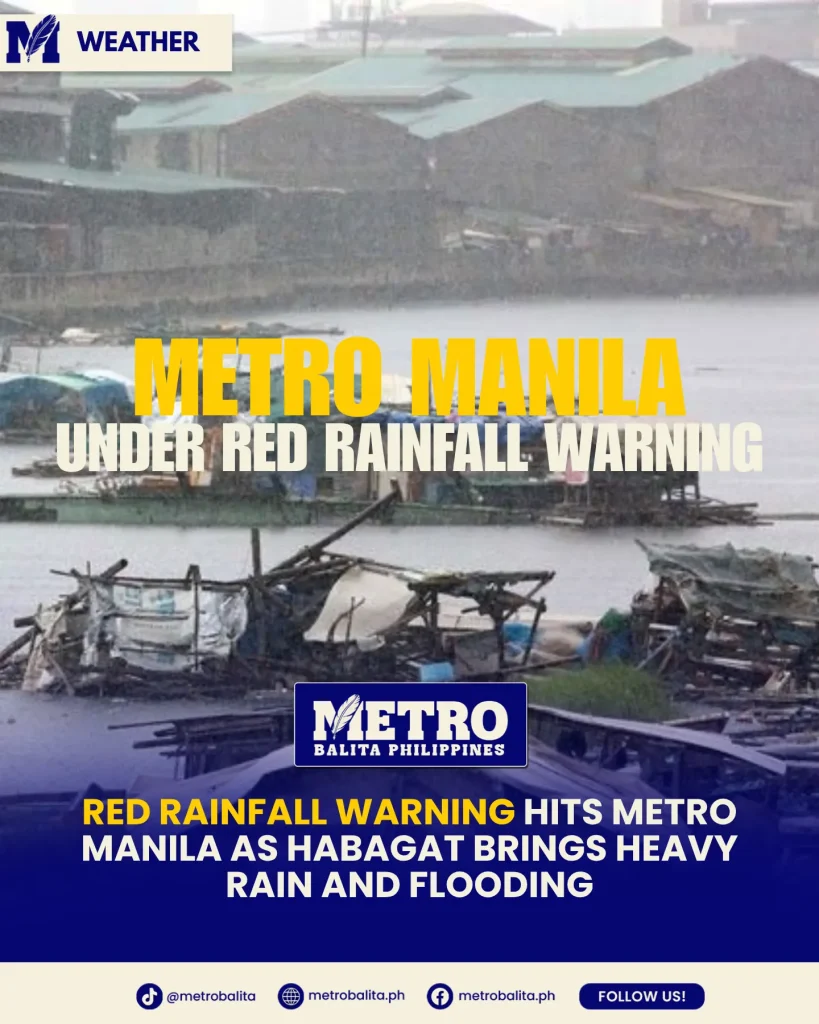
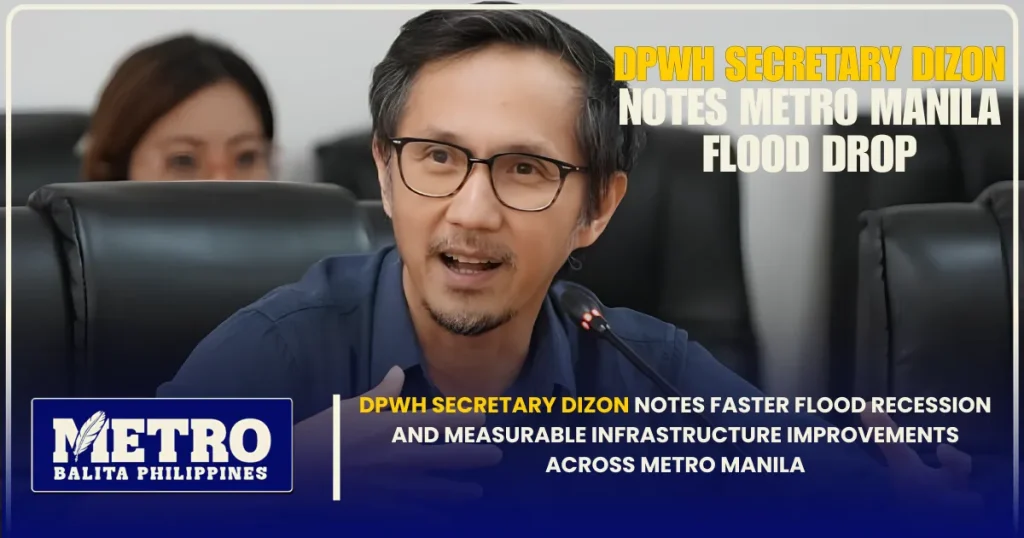
MANILA, Philippines — Recent heavy monsoon downpours triggered by the Southwest Monsoon (Habagat) have served as a stringent real-world test for the capital region’s primary drainage systems, but initial operational monitoring reveals noticeable improvements across several flood-vulnerable urban corridors. According to DPWH Secretary Dizon, floodwaters in historically prone thoroughfares are now receding significantly faster compared to previous years, signaling early tangible returns on intensified engineering interventions, updated pumping protocols, and continuous drainage maintenance.
Speaking during a comprehensive flood mitigation review, DPWH Secretary Dizon highlighted critical arterial roads—specifically along the low-lying stretches of Araneta Avenue in Quezon City and key segments of Taft Avenue in Manila—where water levels subsided in a fraction of the time typically recorded during similar severe weather events. While acknowledging that urban flooding remains a deep-seated structural issue in the National Capital Region, DPWH Secretary Dizon emphasized that targeted declogging operations, pumping station upgrades, and active inter-agency coordination are yielding immediate relief for thousands of daily commuters and motorists.
Drainage System Upgrades and Faster Water Recession
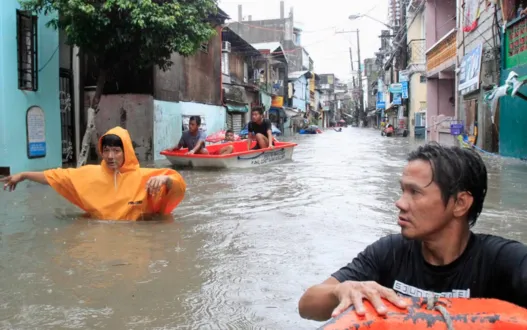
The primary benchmark for evaluating urban flood management is not solely whether surface flooding occurs during extreme, high-volume rainfall events, but how quickly arterial road networks can shed accumulated stormwater and safely restore normal vehicular movement. During recent monsoon rains, multiple key locations that previously suffered hours of standing water experienced markedly accelerated drainage times.
DPWH Secretary Dizon pointed to major flood-prone zones, such as the intersection of Araneta Avenue and Maria Clara Street in Quezon City, where stormwater traditionally gathered into a deep basin that paralyzed public transportation for extended periods. Under updated infrastructure protocols, newly improved drainage conduits and synchronized pumping operations enabled floodwaters to recede far faster than during comparable rainfall episodes in recent memory.
“Our primary goal during heavy downpours is to ensure that roads become passable as quickly as possible,” explained DPWH Secretary Dizon. “We are seeing that where infrastructure improvements and regular desilting have been completed, the duration of inundation has dropped dramatically.”
Similarly, along Taft Avenue in Manila—a densely populated university and commercial corridor—recent stormwater accumulation drained away much faster than historical averages. DPWH Secretary Dizon noted that while local topography and dense urbanization present continuous hydraulic bottlenecks, strategic civil works and routine clearing of sub-surface drainage lines have successfully reduced overall water retention times across critical sections of the metropolis.
Inter-Agency Collaboration: DPWH Secretary Dizon Commends MMDA Partnership
A primary driver behind the observed reduction in flood recession times is the enhanced operational synergy between national civil works authorities and local government units. DPWH Secretary Dizon commended the Metropolitan Manila Development Authority (MMDA) for its unrelenting, round-the-clock maintenance of primary storm drains, major floodways, and neighborhood drainage canals (esteros).
“Cleaning, clearing, and maintaining our drainage networks is a non-stop operational requirement,” noted DPWH Secretary Dizon, reinforcing that physical civil infrastructure must be paired with continuous field clearing to prevent urban solid waste from choking drainage intakes.
The operational alignment between the Department of Public Works and Highways and the MMDA involves real-time monitoring across dozens of automated pumping stations scattered throughout the National Capital Region. When heavy rains are forecast, pre-clearing primary runoff channels and ensuring all heavy-duty pumping units are fully operational allow high volumes of water to be actively directed out toward the Pasig River and Manila Bay. DPWH Secretary Dizon emphasized that sustained multi-agency coordination remains indispensable as changing weather patterns bring increasingly concentrated localized downpours to urban centers.
Key Areas Showing Measurable Drainage Improvement
| Area / Thoroughfare | Historical Challenge | Recent Operational Improvement |
| Araneta Avenue (Quezon City) | Severe, prolonged water retention blocking major transit routes | Rapid floodwater drawdown via upgraded drainage conduits |
| Taft Avenue (Manila) | Frequent surface flooding affecting schools and commercial zones | Accelerated discharge into primary city drainage mains |
| Primary Pumping Stations | Debris buildup reducing operational pump capacity | Synchronized MMDA-DPWH de-clogging and continuous clearing |
| Espana Boulevard (Manila) | Persistent low-lying runoff accumulation | Enhanced drainage outflow into modernized catchment networks |
Ongoing Challenges in Persistent Regional Flood Zones: Pampanga and Central Luzon
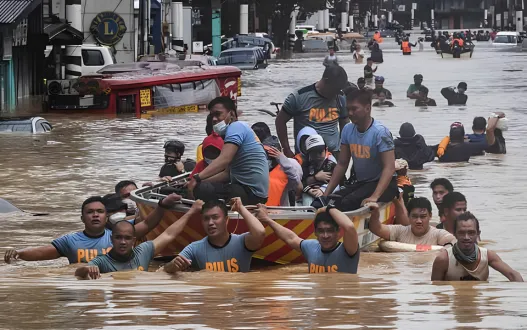
While metropolitan areas in Metro Manila demonstrate positive preliminary outcomes, regional flood mitigation across the broader Luzon landmass remains a complex and formidable challenge. DPWH Secretary Dizon acknowledged that low-lying provinces, particularly in Central Luzon such as Pampanga and Bulacan, continue to confront severe inundation during prolonged weather disturbances.
In low-lying coastal and basin provinces like Pampanga, high ocean tides, heavy river siltation, and massive rainwater runoff from surrounding mountainous catchments create systemic flooding that cannot be resolved through surface clearing alone. DPWH Secretary Dizon admitted that these broad plain regions require comprehensive long-term structural engineering, massive river basin dredging, and high-capacity dyke systems to safeguard agricultural land and residential settlements.
Engineering evaluations directed by DPWH Secretary Dizon reveal that long-term master planning for major regional river systems—such as the vast Pampanga River Basin—must combine massive structural defense walls, upstream retarding basins, and continuous large-scale dredging to handle millions of cubic meters of runoff flowing from upper catchment areas down to Manila Bay.
Engineering Strategy: Comprehensive Flood Mitigation Framework
Addressing the root drivers of flooding in rapidly growing metropolitan and agricultural regions requires shifting away from piecemeal, emergency responses toward long-range engineering upgrades. DPWH Secretary Dizon reaffirmed the department’s commitment to prioritizing large-scale structural solutions designed to withstand high-volume rainfall events driven by evolving global climate trends.
To address these vulnerabilities, DPWH Secretary Dizon outlined several priority engineering strategies currently being executed across target sectors:
- Expanding Underground Retarding Basins: Building large subterranean water storage structures beneath public parks and civic spaces to temporarily hold excess urban runoff during peak rainfall before releasing it gradually.
- Upgrading High-Capacity Pumping Stations: Replacing outdated pumps with modern, high-efficiency submersible units capable of discharging massive volumes of water against high-tide backflow conditions.
- Pumping Station Automation & Modernization: Transitioning facilities to automated, sensor-driven telemetry systems that trigger pumping operations automatically as water levels rise.
- Comprehensive River Basin & Estero Dredging: Systematically desilting major rivers and urban waterways to restore their natural hydraulic carrying capacity and prevent banks from overflowing into surrounding communities.
- Slope Protection and River Wall Fortification: Constructing reinforced concrete floodwalls along major riverways to prevent structural erosion and protect embankment communities from catastrophic breached walls.
DPWH Secretary Dizon stressed that active community participation is equally vital to long-term success. Responsible solid waste management at the household and barangay levels directly affects the functionality of municipal drainage networks, keeping plastic waste and residential debris from clogging intake grates and damaging pump impellers during critical storm events.
Socio-Economic Impact of Accelerated Flood Recovery
The economic consequences of prolonged urban flooding are severe, ranging from millions of pesos in lost worker productivity and disrupted supply chains to physical damage inflicted on personal vehicles and commercial property. When major thoroughfares like Araneta Avenue or Taft Avenue become impassable, logistics networks across Metro Manila experience widespread delays.
By accelerating floodwater recession times, DPWH Secretary Dizon highlighted that the department is actively protecting economic productivity. Rapid water drawdown allows public transportation networks to resume operations faster, reduces vehicle stranding, and minimizes time lost by workers stuck in gridlock. Furthermore, reducing the duration of water exposure on road pavement extends the operational lifespan of national highways, reducing the frequency of costly asphalt asphalt repairs and road re-paving projects.
Local business owners in traditionally flood-prone areas have expressed cautious optimism regarding the faster drainage times observed during recent storms, noting that reduced standing water allows shops and commercial establishments to reopen much sooner after a heavy downpour passes.
Moving Forward: Building Resilient Urban Infrastructure
The measurable progress recorded across Metro Manila proves that targeted infrastructure maintenance, modernized engineering, and close inter-agency coordination produce concrete, positive outcomes for urban communities. However, as DPWH Secretary Dizon repeatedly stated, flood mitigation is an ongoing operational commitment that requires constant engineering adaptations, persistent maintenance, and long-term capital investment.
With climate patterns delivering more intense, concentrated localized downpours, national infrastructure planners must continuously refine stormwater management frameworks. By pairing immediate operational clearing with transformative long-term civil engineering projects, DPWH Secretary Dizon and the Department of Public Works and Highways aim to progressively reduce flood risks, protect critical public infrastructure, and enhance the overall climate resilience of communities across Metro Manila and surrounding provinces.
Metro Balita Ph continues to deliver essential weather information.