The Metropolitan Manila Development Authority (MMDA) has taken a decisive step toward public accountability by halting the field activities of one of its most prominent traffic enforcers. Following a wave of public backlash, the MMDA suspends Gabriel Go from active clearing duties after a video of a road apprehension involving a motorcycle-riding schoolteacher sparked widespread anger across social media. The incident, which occurred during a standard clearing operation, has reignited a crucial national debate about the limits of law enforcement authority, the right to privacy, and the growing trend of public shaming under the guise of transparent governance.
The suspension of Gabriel Go, the head of the Special Operations Group-Task Force for Road Clearing (SOG-TFRC), highlights the delicate balance between enforcing traffic laws and maintaining respect for the human dignity of citizens. For years, Metro Manila’s clearing operations have been heavily publicized, often recorded and streamed online to showcase the government’s efforts to clean up the congested streets of the capital. However, the recent clash between Go and an unnamed public school teacher has forced the agency to look inward. After evaluating the initial evidence and the public outcry, the MMDA suspends Gabriel Go to ensure an impartial and transparent probe into whether his on-camera behavior crossed the line into public humiliation.
Why the MMDA Suspends Gabriel Go: The Viral Confrontation
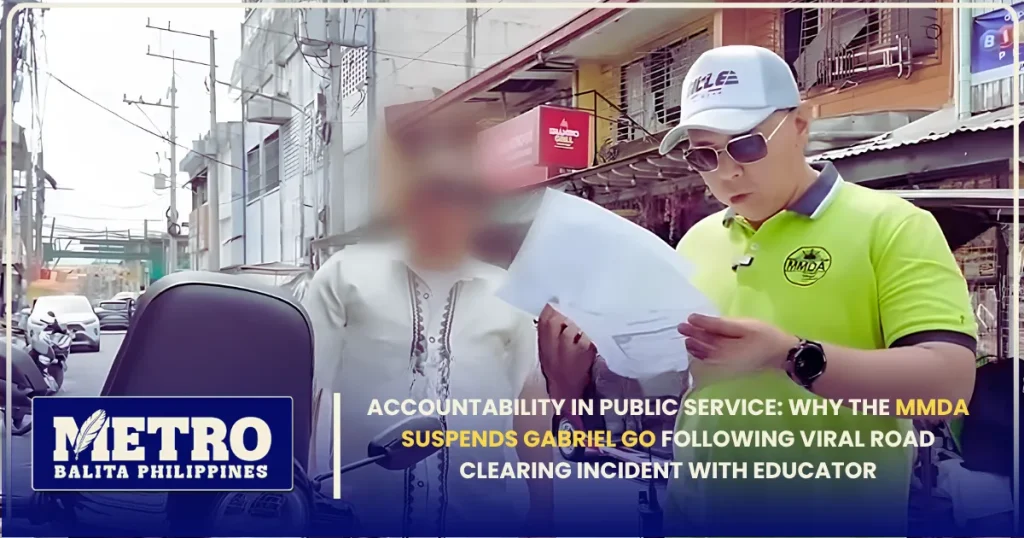
The controversy began on Tuesday, July 14, 2026, during a routine road clearing operation led by the SOG-TFRC. Gabriel Go posted a video on his personal Facebook page documenting the apprehension of a male driver who was operating a motorcycle without a protective helmet—a clear violation of Republic Act No. 10054, or the Motorcycle Helmet Act of 2009.
In the video, Go is seen confronting the driver, who was eventually identified as a local schoolteacher. While the violation itself was clear, the manner of the confrontation immediately drew heavy criticism. In the video’s caption, Go wrote:
“Teacher ka po sir, dapat ikaw ang better example sa kabataan. Tandaan natin, the school is our second home at ang mga guro ang tumatayong magulang.”
(You are a teacher, sir; you should be a better example to the youth. Let us remember, the school is our second home and teachers stand as the parents.)
During the filmed encounter, the teacher repeatedly pleaded with Go and his team not to film him, requesting that the video not be uploaded to social media to protect his privacy and professional standing. Go dismissed these concerns, assuring the driver that his face would be blurred and advising him not to state his name on camera. Despite these verbal assurances, the video was uploaded to Go’s personal social media account, where it quickly accumulated thousands of shares, views, and comments.
Rather than focusing on the traffic violation, netizens quickly pointed out that the video felt less like a lesson in road safety and more like an act of public shaming. Because of the intense backlash and the formal complaints lodged by various educational groups, the MMDA suspends Gabriel Go pending a formal explanation through a show-cause order.
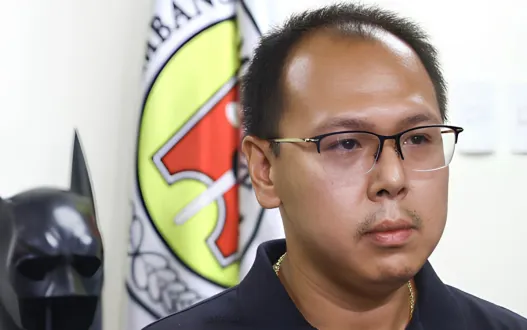
Teachers’ Groups and Lawmakers Demand Decisive Action
The education sector reacted swiftly and fiercely to the viral video, arguing that the public humiliation of an educator undermines the respect due to the teaching profession. The Teachers’ Dignity Coalition (TDC) formally wrote to MMDA Chairperson Don Artes, demanding a thorough investigation into Go’s conduct.
While the TDC clarified that it does not condone traffic violations and agrees that teachers should be held accountable if they break the law, they emphasized that enforcement must be executed with professionalism, courtesy, and respect for human dignity. In a public statement, the TDC wrote:
“While affirming that teachers must obey traffic laws and should be held accountable for violations, TDC emphasizes that its concern is not the enforcement of the law itself, but whether it was carried out with the professionalism, courtesy, and respect for human dignity expected of public servants.”
At the same time, the ACT Teachers Party-list took a more aggressive stance, calling for the outright dismissal of the task force chief. ACT Teachers Party-list Representative Antonio Tinio expressed his anger on social media, writing: “Sibakin si Gabriel Go ng MMDA! Chairman Artes, it’s time for him to go!”
The political party-list group pointed out that Go’s social media posts directly violate existing MMDA directives. The agency has previously barred its personnel from utilizing personal social media accounts to publish videos or photos related to official operations. This policy violation is one of the primary reasons why the MMDA suspends Gabriel Go while his conduct is under review.
The Legal and Ethical Boundaries of “Social Media Enforcements”
The case has brought the legal and ethical implications of “social media enforcement” into sharp focus. In recent years, several government agencies and local government units in the Philippines have turned to Facebook, TikTok, and YouTube to broadcast their daily operations. Proponents of this approach argue that it promotes transparency, acts as a deterrent to would-be violators, and proves to the public that taxpayers’ money is being put to work.
However, legal experts and privacy advocates have repeatedly warned about the dangers of this practice. Recording citizens without their consent—especially when they are being accused of minor infractions—can lead to severe real-world consequences, including online harassment, cyberbullying, and permanent damage to a person’s career and mental health.
For many educators, the decision where the MMDA suspends Gabriel Go is a step toward restoring mutual respect between the state and the public. Under the Data Privacy Act of 2012 (Republic Act No. 10173), individuals have a right to privacy, and the unauthorized public broadcasting of an individual’s identity, even during a law enforcement operation, sits in a highly contentious legal gray area. Critics argue that when a public servant uses a personal social media account to broadcast these apprehensions, they are often doing so for personal branding, views, or monetization, rather than for the public interest.
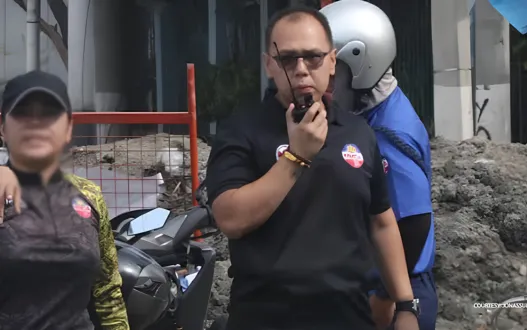
MMDA’s Internal Investigation and Social Media Policy
In response to the growing national conversation, the MMDA released an official statement confirming that Gabriel Go has been temporarily relieved of his duties within the road clearing task force. The agency reiterated its commitment to upholding the highest standards of professionalism among its staff.
| Investigation Detail | Status / Action Taken |
| Enforcer Involved | Gabriel Go (Head of SOG-Task Force for Road Clearing) |
| Immediate Action | Participation in clearing operations held in abeyance |
| Legal Step | Show-cause order issued; required to explain side in writing |
| Core Allegations | Public humiliation, violation of social media directives, and privacy infringement |
Even as the MMDA suspends Gabriel Go from field operations, the debate continues over the agency’s use of social media during operations. The MMDA has strict, long-standing guidelines that prohibit field personnel from posting operational footage on personal pages. Despite these rules, Go’s viral post remained active on his personal page even after the suspension was announced, raising further questions about the enforcement of internal policies within the agency.
By taking action where the MMDA suspends Gabriel Go, the agency signals that public service requires humility as much as it does authority. MMDA Chairperson Don Artes has previously stated that the agency does not tolerate abusive behavior from its officers, and this suspension serves as a test case for how the agency will handle the digital behavior of its high-profile officers moving forward.
Balancing Road Safety with Human Dignity
Road clearing operations are undeniably vital for Metro Manila, a metropolis infamous for its crushing gridlock. The SOG-TFRC performs essential work in keeping major thoroughfares free of obstructions, illegally parked vehicles, and unauthorized vendors. However, this incident shows that the manner of enforcement is just as important as the enforcement itself.
As the MMDA suspends Gabriel Go from road clearing duties, observers hope this case serves as a turning point. Law enforcement should not be an avenue for content creation or public moralizing. When a traffic officer assumes the role of a parent, teacher, or moral judge on camera, they step outside their legal mandate.
It remains to be seen whether permanent disciplinary actions will be taken, but for now, the fact that the MMDA suspends Gabriel Go highlights the power of public accountability. When citizens, educators, and lawmakers stand together to demand respect, institutions are forced to listen. Ultimately, the news that the MMDA suspends Gabriel Go represents a critical lesson in balancing digital transparency with basic human rights, proving that even those tasked with clearing the roads must stay within their proper lanes.
Stay updated with the latest news at Metro Balita PH.