Motorists in the Philippines may finally get some relief at the pump next week as a projected oil price rollback is being eyed following recent movements in international crude oil prices.
The possible rollback comes after two consecutive weeks of fuel price increases that pushed pump prices higher across the country. According to the latest industry monitoring, global oil prices have started to ease, raising hopes that local gasoline and diesel prices could move lower when oil companies announce their next adjustments.
The projected oil price rollback is not yet final, however. Fuel companies will still have to assess the remaining trading days before announcing their official price changes. In the Philippines, oil companies traditionally announce price adjustments on Mondays, with the new prices taking effect the following day.
For motorists, commuters, delivery riders, transport operators and businesses that depend heavily on fuel, even a small rollback could provide some much-needed breathing room after weeks of higher fuel costs.
Projected Oil Price Rollback Follows Two Weeks of Fuel Hikes
The possible projected oil price rollback comes at an important time for Filipino consumers.
Before the latest outlook emerged, motorists had already experienced back-to-back increases in pump prices. For the week beginning August 25, gasoline prices went up by ₱1.08 per liter, while diesel increased by ₱2.31 per liter. Kerosene also climbed by ₱0.95 per liter. The adjustments were scheduled to remain in effect until August 31.
Those increases added to the pressure on household budgets and businesses that rely on transportation.
Diesel is particularly important because it is widely used by public utility vehicles, trucks, delivery vehicles and other commercial operations. When diesel prices rise, the impact can extend beyond the gas station because higher transportation expenses can eventually affect the prices of goods and services.
That is why the latest projected oil price rollback is being closely watched by consumers.
Why Are Fuel Prices Expected to Decline?
The latest outlook is largely connected to movements in the international oil market.
Crude oil prices serve as one of the major factors behind weekly fuel price adjustments in the Philippines. When global prices decline, local pump prices can eventually follow, although the impact is not always immediate.
Recent reports indicate that world crude prices have been easing, giving the Philippine fuel market some room for a possible rollback. ABS-CBN reported on August 27 that a rollback was likely next week as global crude oil prices softened.
This has strengthened expectations for a projected oil price rollback after the recent increases.
However, international oil markets remain highly sensitive to geopolitical developments, supply concerns and changes in demand. Any sudden movement before the end of the trading period could still change the size of the expected adjustment.

How Much Could the Projected Oil Price Rollback Be?
At this point, motorists should be careful when looking at early estimates.
The projected oil price rollback represents an estimate based on current international price movements. It is not the final amount that consumers will necessarily see at gas stations.
The final adjustment depends on the complete trading picture used by the Department of Energy and the fuel industry when determining the weekly movement.
This means that the estimated rollback could become larger, smaller or potentially change direction before the official announcements.
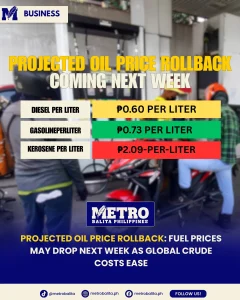
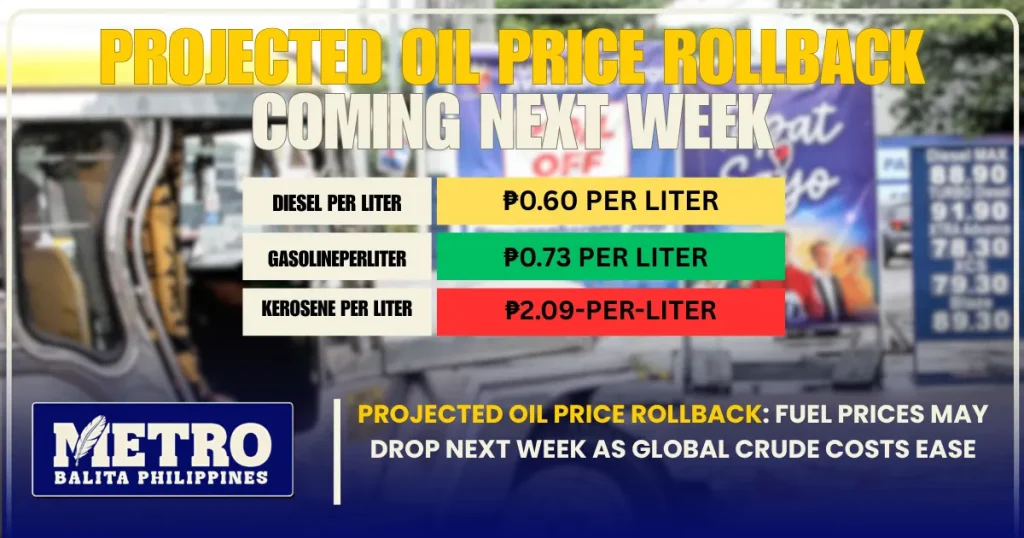
Recent fuel-price developments demonstrate how quickly the market can move. Earlier in August, gasoline, diesel and kerosene prices recorded rollbacks after previous increases. On August 4, gasoline prices dropped by ₱0.73 per liter, diesel declined by ₱0.60 per liter and kerosene posted a ₱2.09-per-liter reduction.
The latest projected oil price rollback therefore represents another potential shift in a highly volatile fuel market.
Diesel Could Get the Biggest Attention
Among the major petroleum products, diesel will likely receive significant attention if the projected oil price rollback pushes through.
Diesel prices affect millions of Filipinos indirectly because the fuel is heavily used in transportation and logistics.
Jeepneys, buses, trucks, delivery vehicles and various commercial fleets depend on diesel. A reduction in diesel prices can therefore help reduce operating expenses for businesses and transport operators.
For ordinary consumers, the benefit may also be felt indirectly.
If transportation and delivery expenses become cheaper, businesses may have more room to manage operating costs without immediately passing additional expenses to consumers.
Still, the size of any benefit will depend on how large the actual rollback becomes.
Gasoline Prices May Also Move Lower
Gasoline users are also watching the projected oil price rollback closely.
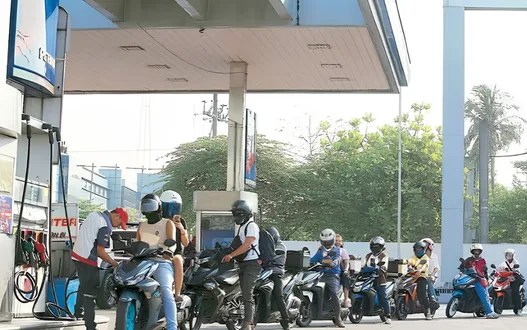
Private vehicle owners, motorcycle riders, ride-hailing drivers and other motorists have been dealing with higher fuel expenses following the recent rounds of price increases.
The latest increase on August 25 pushed gasoline prices up by ₱1.08 per liter.
A rollback next week would not necessarily erase the previous increases, but it could provide temporary relief for consumers.
For motorists who regularly fill up their tanks, even a reduction of less than ₱1 per liter can translate into noticeable savings over time, particularly for those who travel long distances or use their vehicles for work.
The projected oil price rollback could therefore be welcome news for a wide range of gasoline consumers.
What Is Driving the Global Oil Market?
The global oil market has remained particularly sensitive to geopolitical developments.
Oil prices can react quickly to concerns involving major oil-producing regions, shipping routes, supply disruptions and international negotiations.
The Philippines is particularly exposed to changes in international oil prices because much of its fuel supply depends on imported petroleum.
That means developments outside the country can eventually influence the amount Filipino motorists pay at local gas stations.
The recent easing in global crude prices has helped create the conditions for the projected oil price rollback now being monitored by the Philippine fuel industry.
However, the market remains unpredictable.
A new geopolitical development or unexpected disruption in crude supply could cause international prices to rise again.
Why the Rollback Is Not Yet Final
Consumers should also understand the difference between a projected adjustment and an official fuel-price announcement.
A projected oil price rollback is based on available market data and price movements during the trading period. It can change before oil companies finalize their announcements.
Oil companies normally release their price advisories on Monday. The adjustments are then implemented on Tuesday.
This means motorists should wait for the official announcements before assuming that a specific amount will be deducted from the price of gasoline or diesel.
The projected oil price rollback may provide a useful indication of where prices are heading, but it should not yet be treated as a guaranteed pump-price reduction.
What Motorists Should Expect Next Week
If international crude prices continue to soften, Filipino motorists could see lower pump prices beginning next week.
The projected oil price rollback could provide some relief after the recent increases, particularly for consumers who have been struggling with higher transportation expenses.
But motorists should continue monitoring official announcements rather than relying solely on early estimates circulating online.
The final figures are expected to become clearer once the current trading period ends and oil companies release their respective advisories.
For drivers planning to refuel, waiting for the official announcement may be worthwhile if their fuel needs are not urgent.
On the other hand, motorists who need to travel immediately should not assume that prices will definitely fall by a specific amount.
Impact on Transport and Daily Expenses
The importance of the projected oil price rollback extends beyond private motorists.
Fuel prices are closely connected to transportation costs in the Philippines. Public utility vehicles, logistics companies, delivery services and businesses with vehicle fleets all depend on petroleum products.
When fuel becomes more expensive, operators face higher expenses. When prices decline, they may gain some room to manage those costs.
However, a single weekly rollback does not automatically mean transportation fares or retail prices will immediately decline.
Businesses consider several factors, including labor, maintenance, electricity, rent, logistics and other operating expenses.
Therefore, the projected oil price rollback could offer relief, but its broader effect on household expenses may take time to become noticeable.
Consumers Still Need to Watch Prices Closely
While the possible rollback is positive news, consumers should remember that the international oil market can change rapidly.
A projected oil price rollback can turn into a smaller adjustment if crude prices rise again before the official computation period ends.
Likewise, a stronger decline in international prices could potentially result in a larger rollback.
That uncertainty is why the Department of Energy and industry observers continue to monitor global petroleum markets closely.
When Will the Official Fuel Prices Be Announced?
The biggest question for motorists is when they will know the exact adjustment.
Oil companies typically announce their weekly price changes every Monday, with implementation beginning Tuesday.
For the upcoming adjustment, motorists should therefore watch for official announcements on Monday, August 31.
Until then, the projected oil price rollback remains an estimate rather than a confirmed price cut.
The actual amount could vary among fuel companies depending on their individual pricing decisions and market conditions.
Consumers should also compare prices between nearby stations because pump prices can differ even when companies implement the same general market adjustment.
Projected Oil Price Rollback Could Bring Temporary Relief
The latest projected oil price rollback is welcome news for Filipino motorists after two straight weeks of fuel price increases.
Global crude oil prices have recently shown signs of easing, creating expectations that gasoline and diesel prices could decline next week. The potential reduction could help motorists, transport operators and businesses manage some of the pressure created by higher fuel costs.
Still, consumers should remain cautious.
The projected oil price rollback is not yet final, and international oil prices can change quickly because of geopolitical developments, supply conditions and other market factors.
The most reliable figures will come from the official fuel-price announcements expected on Monday, August 31, with the new prices taking effect on Tuesday.
For now, motorists can take the latest market movement as a hopeful sign: after several weeks of painful increases, pump prices may finally be heading in the opposite direction.
If the current trend continues, the projected oil price rollback could offer Filipino consumers a much-needed break at the gas station next week.
Stay updated with the latest news at Metro Balita PH.