Claire Castro Remarks on Teachers Draw Criticism After Zamboanga School Shooting
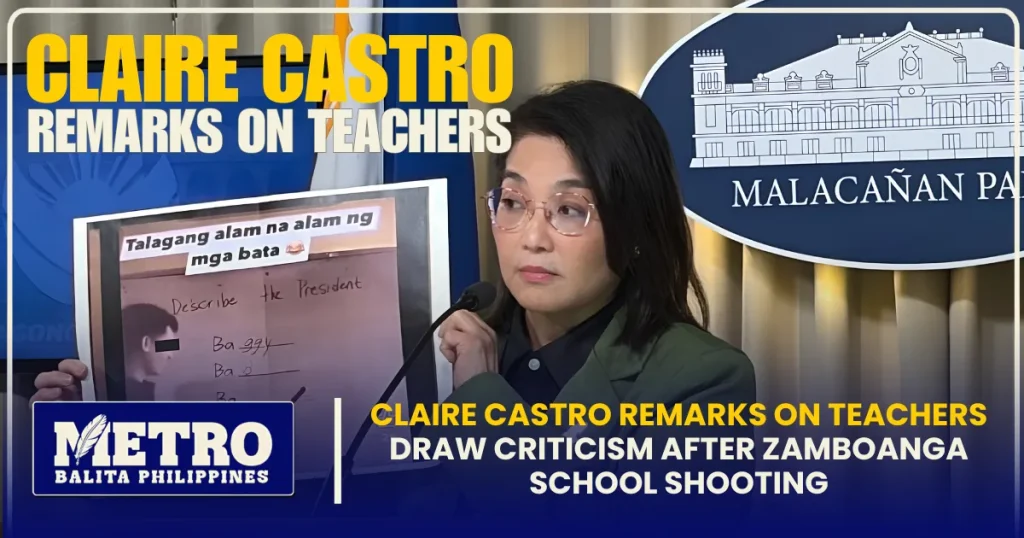
Claire Castro remarks on teachers have sparked a growing public debate after the Palace press officer commented on the role of educators following the deadly shooting at Ateneo de Zamboanga University. Her statements drew criticism from teachers’ groups and education advocates, who said the remarks appeared to place part of the responsibility for student behavior on teachers.
The controversy emerged after the August 18 shooting in Zamboanga City, where a Grade 9 student allegedly shot a fellow student before taking his own life. The incident shocked the country and immediately raised questions about school security, firearm access, student welfare, social media, and the responsibilities of adults surrounding young people.
Against this backdrop, the Claire Castro remarks on teachers became another major point of discussion. Castro later maintained that she was not blaming teachers for the violence and argued that her comments had been misunderstood.
What Claire Castro Said About Teachers
The Claire Castro remarks on teachers came while she was responding to questions about the Zamboanga school shooting and concerns over student behavior.
Castro pointed to instances in which some teachers allegedly failed to model proper conduct for students. Reports quoted her as saying that there were situations when teachers themselves could teach students disrespectful behavior.
Her comments quickly attracted attention because they were made while the public was still processing the school shooting. For many educators, the timing and context made the statement particularly sensitive.
The Claire Castro remarks on teachers were interpreted by critics as suggesting that teachers should bear some responsibility for the behavior that can eventually contribute to violence or disrespect among students. Teachers’ organizations rejected that interpretation and demanded clarification and an apology.
The Palace official, however, later insisted that this was not what she meant.
Claire Castro Says She Was Not Blaming Teachers
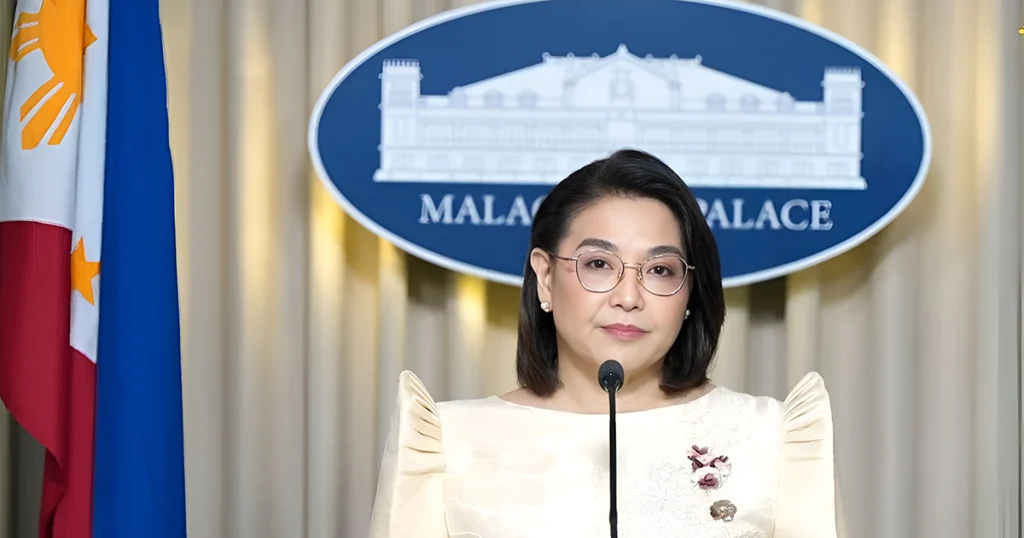
In defending her position, Castro said her comments were intended as a reminder about the important role teachers play in shaping young people.
The Claire Castro remarks on teachers, according to her clarification, were not intended to accuse educators of causing the Zamboanga shooting. Instead, she said teachers have an important responsibility as adults who interact closely with students.
Castro emphasized that teachers can influence students through their behavior, values, and interactions. She argued that educators, like parents and other adults, have a role in teaching young people proper conduct.
She also rejected calls for her to apologize, saying that her statement had been taken out of context or misinterpreted. The Palace official stood by her remarks during a briefing on August 19.
The Claire Castro remarks on teachers therefore became a debate not only about what she said, but also about how public officials should discuss sensitive issues involving educators, children, and school violence.
Why the Remarks Sparked Anger
For teachers’ organizations, the issue was more serious than a simple misunderstanding.
The Alliance of Concerned Teachers, or ACT, said the remarks were insulting and demoralizing to educators who are already dealing with demanding workloads and low salaries. ACT called on Castro to retract her statement and apologize.
ACT Teachers party-list Representative Antonio Tinio also demanded an apology, arguing that teachers should not be blamed for a violent act committed by a student.
The Claire Castro remarks on teachers consequently became a separate controversy from the original shooting investigation.
Teachers Say School Violence Has Many Causes
The criticism against Castro also reflects a broader concern about how school violence is understood.
Teachers are responsible for education and student supervision, but educators cannot control every factor affecting a child’s behavior. Students are influenced by their families, peers, online communities, social media content, personal experiences, and their surrounding environment.
The Claire Castro remarks on teachers prompted educators to stress that assigning responsibility to teachers alone oversimplifies a complicated issue.
The Zamboanga shooting itself has raised questions about firearm ownership, access to weapons, online activity, school security, and the possible influences surrounding the student involved.
Reuters reported that authorities were examining the circumstances surrounding the shooting, including how the student obtained a firearm and the role of online content in the broader discussion about youth violence.
That context is important because the Claire Castro remarks on teachers were made during a national conversation involving multiple possible causes and areas of responsibility.
The Zamboanga School Shooting Behind the Controversy
The controversy cannot be separated from the tragic event that triggered the discussion.
On August 18, a Grade 9 student allegedly opened fire at a school affiliated with Ateneo de Zamboanga University in Zamboanga City. A fellow student was killed, while the suspected shooter later died by suicide. Other people were also reported injured during the incident.
The attack shocked parents, students, teachers, and communities across the Philippines.
Authorities immediately began looking into how the student entered the school with firearms and how the weapons were obtained. The incident also intensified discussions about gun safety and the responsibilities of firearm owners.
The Claire Castro remarks on teachers emerged as the government faced pressure to explain what could be done to prevent similar incidents.
Rather than focusing exclusively on educators, other officials and lawmakers have discussed several areas, including firearm accountability, school safety, social media, and youth protection.
ACT Calls for an Apology
The Alliance of Concerned Teachers has been among the strongest critics of Castro.
ACT said the Claire Castro remarks on teachers unfairly portrayed educators and could contribute to further demoralization within the teaching profession.
The group argued that teachers should not be treated as convenient targets when discussing a complex incident involving violence. ACT also stressed that educators are already working under difficult conditions.
According to ACT, the public discussion should instead examine the different factors that can contribute to violence among young people.
The call for an apology has since become one of the central parts of the controversy.
However, Castro has so far declined to apologize, maintaining that her words were misunderstood.
Other Teachers Also Speak Out
The reaction was not limited to national teachers’ organizations.
Teachers in Tarlac also publicly criticized the Palace official’s remarks, showing that the issue had reached educators outside the immediate area of the Zamboanga incident.
The Claire Castro remarks on teachers therefore generated discussion among educators who felt that the profession was being unfairly portrayed.
For many teachers, the concern is not about rejecting accountability. Rather, they argue that responsibility must be properly distributed among families, schools, government agencies, communities, and other institutions involved in protecting children.
Palace Clarification Does Not End the Debate
Although Castro clarified that she was not blaming teachers, the controversy has continued.
The Claire Castro remarks on teachers remain a subject of debate because critics say the original wording itself was problematic, while Castro maintains that her broader point was about the influence adults have on young people.
The disagreement illustrates how sensitive public statements can become when they are made immediately after a tragedy.
For government officials, discussing school violence requires balancing several concerns. Authorities must address the immediate need for safety while also examining longer-term issues involving mental health support, family involvement, online behavior, school policies, and firearm regulation.
At the same time, educators argue that they should not be portrayed as responsible for every behavioral problem involving students.
What Happens Next?
The discussion surrounding the Claire Castro remarks on teachers is likely to continue as authorities investigate the Zamboanga shooting and lawmakers consider possible responses.
The House of Representatives has already seen resolutions filed seeking an inquiry into the incident.
The broader investigation could lead to discussions about school security procedures, firearm storage, access to weapons, online safety, and measures designed to protect students and teachers.
These issues are separate from the question of Castro’s remarks, but they are connected by the larger national conversation about how schools can become safer environments.
The Claire Castro remarks on teachers have highlighted one important part of that conversation: the role of educators in shaping young people and the limits of what teachers can reasonably be expected to control.
A Larger Conversation About Education and Student Safety
Ultimately, the controversy surrounding the Claire Castro remarks on teachers goes beyond one statement.
Teachers undoubtedly have an important role in guiding students, but schools are only one part of a child’s environment. Parents, communities, government agencies, technology companies, law enforcement, and society also have responsibilities when it comes to protecting young people.
The Zamboanga tragedy has shown how difficult and urgent these issues can be.
The Claire Castro remarks on teachers may have started a heated argument, but the more important question is how the country can turn that discussion into meaningful action.
For educators, that means ensuring that teachers receive support rather than simply being blamed when students display troubling behavior. For government agencies, it means examining the systems that allow dangerous situations to develop. For families and communities, it means remaining attentive to warning signs and creating environments where young people can ask for help.
As investigations continue, the public will likely hear more about the circumstances surrounding the shooting and possible measures to strengthen school safety.
For now, the Claire Castro remarks on teachers remain at the center of a debate that reflects a much larger national concern: how the Philippines can better protect students, support educators, and prevent another tragedy inside a place that should be dedicated to learning and safety.
The controversy also serves as a reminder that conversations following tragedies require care. Assigning responsibility may be necessary, but doing so fairly requires looking at the complete picture rather than placing the burden on a single group.
The Claire Castro remarks on teachers have made that challenge especially visible, with teachers’ groups calling for accountability while Castro continues to defend the context of her statement.
As the country awaits further developments from the investigation, the focus remains on finding answers, strengthening school safety, and ensuring that students and teachers are protected in the classroom.
Stay updated with the latest news at Metro Balita PH.