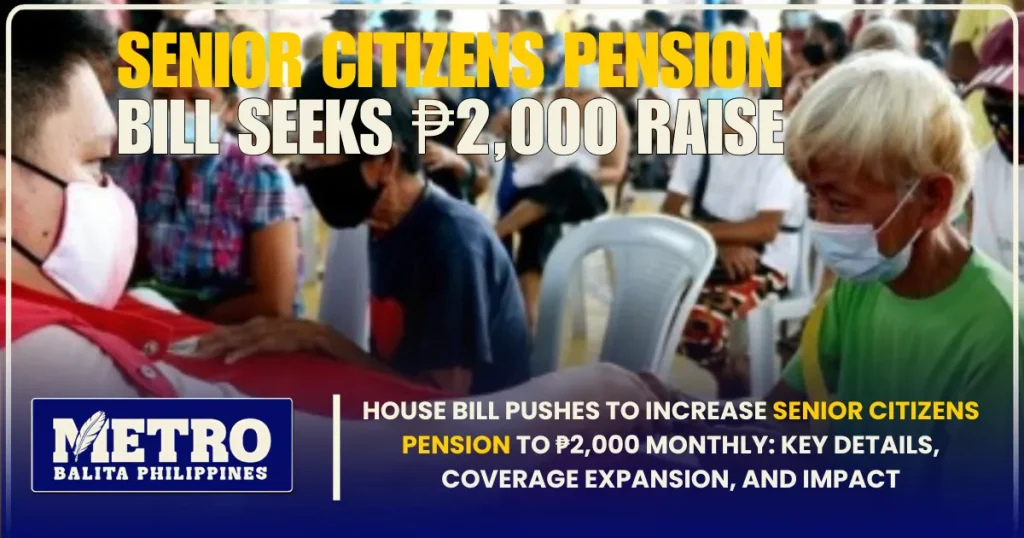
MANILA, Philippines — A new legislative initiative filed in the House of Representatives aims to provide substantial economic relief to millions of elderly Filipinos by doubling the monthly senior citizens pension stipend from ₱1,000 to ₱2,000.
Under House Resolution 1370, introduced by lawmakers from the Makabayan Bloc and led by ACT Teachers Party-list Representative Antonio Tinio, the proposed measure seeks to overhaul the current social protection system for older citizens. The initiative comes at a critical time when basic commodities, healthcare costs, and prescription medications continue to stretch the limited finances of low-income elderly households across the country.
By addressing gaps in existing social safety nets, proponents argue that raising the senior citizens pension is no longer merely a charitable effort, but an urgent statutory obligation to safeguard the dignity and well-being of the nation’s aging population.
Expanding the Reach of the Senior Citizens Pension Framework
Beyond doubling the base monthly stipend, the newly filed legislative measure introduces significant structural updates to how social assistance is distributed among elderly Filipinos. A major highlight of the proposal is the inclusion of retirees who were previously excluded from receiving social assistance due to small existing retirement payouts.
Under the current setup, many elderly individuals receiving micro-pensions from formal security systems are barred from social pension programs. The newly proposed bill explicitly seeks to expand coverage to Social Security System (SSS) and Government Service Insurance System (GSIS) pensioners who receive ₱10,000 or less per month.
Representative Antonio Tinio emphasized that thousands of former formal-sector workers still live below the functional poverty line despite receiving small monthly stipends from GSIS or SSS. Expanding the senior citizens pension parameters ensures that elderly Filipinos with inadequate formal pensions receive the supplementary assistance needed to cover food, housing, and life-sustaining medicine.
Furthermore, the legislation incorporates a pioneering clause: an automatic periodic adjustment mechanism. This feature mandates that the monthly senior citizens pension automatically scale upward over time based on official inflation figures reported by the government. By indexing payouts to consumer price indexes, the bill protects elderly beneficiaries from having their purchasing power steadily eroded by macroeconomic pressures and market volatility.
Legislative Mandates and the Constitutional Basis for Senior Support
In filing the measure, authors of the bill underscored the constitutional imperative behind state welfare programs for older citizens. The explanatory note accompanying the filing highlights explicit guarantees provided under the 1987 Philippine Constitution regarding social protection and human dignity.
“This is a concrete step toward recognizing that our senior citizens deserve not merely gratitude, but adequate and sustained social protection,” stated Representative Tinio during the measure’s formal filing.
The bill draws directly from Article XIII, Section 11 of the Constitution, which directs the State to adopt an integrated and comprehensive approach to health development and prioritize the needs of the elderly, sick, disabled, women, and children. It also references Article II, which commits the government to the promotion of social justice and the protection of human dignity across all sectors of society.
Data from the Philippine Statistics Authority (PSA) reveals the demographic urgency of the legislation. The country currently counts approximately 9.85 million senior citizens, meaning that older persons now represent roughly one in every 11 Filipinos. As demographics shift toward an aging population, lawmakers argue that the senior citizens pension framework must evolve rapidly to prevent widespread economic hardship among older demographics.
Civil Society and Advocacy Groups Rally Behind Pension Reform
The legislative drive in Congress reflects growing grassroots momentum organized by advocacy organizations and civil society groups dedicated to elderly welfare. Among the main proponents pushing for the enhanced senior citizens pension is the advocacy coalition Seniors Kontra Kurakot (SKK).
Members of SKK have consistently lobbied both houses of Congress to redirect public funds toward social safety nets and reduce wasteful or vulnerable spending items in the national budget. Representatives from the group stressed that senior citizens have spent decades building the national economy through direct labor, tax contributions, and informal work.
“Senior citizens have contributed decades of work and service to their families, communities, and society. They deserve a pension and social protection system that allows them to live with dignity, not one that leaves them struggling to survive,” Seniors Kontra Kurakot stated in an official release supporting the House resolution.
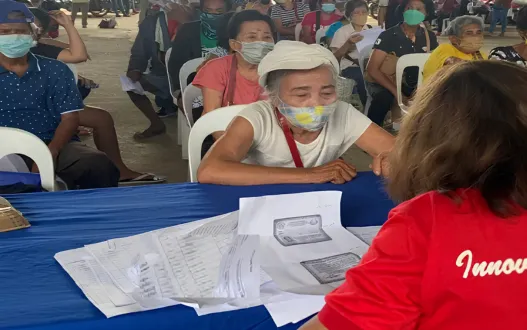
Advocates maintain that for millions of indigent elderly citizens without family support structures or savings, the monthly senior citizens pension represents their sole source of liquid income. Rising costs for maintenance drugs for hypertension, diabetes, and arthritis mean that much of the existing ₱1,000 allocation is exhausted within days of distribution.

Economic Reality: Assessing the ₱2,000 Monthly Pension Impact
To understand the necessity of raising the senior citizens pension, economists and social policy analysts point to the rapid rise in the cost of living across urban and rural centers in the Philippines. While previous legislative milestones—such as Republic Act 11916, which doubled the social pension from ₱500 to ₱1,000—provided temporary relief, ongoing inflationary spikes have absorbed much of those gains.
For an indigent senior citizen living in Metro Manila or regional provinces, daily expenditure requirements for basic sustenance far outpace historical benchmark rates. Below is a breakdown comparing the financial reality faced by seniors under past and proposed monthly pension structures:
| Pension Parameter | Previous Model (Pre-RA 11916) | Current Baseline (RA 11916) | Proposed Model (HR 1370) |
| Monthly Disbursement | ₱500 | ₱1,000 | ₱2,000 |
| Daily Allowance Breakdown | ~₱16.66 per day | ~₱33.33 per day | ~₱66.66 per day |
| SSS / GSIS Pensioner Eligibility | Excluded | Excluded | Included (if receiving ≤₱10,000) |
| Inflation Adjustment Feature | None (Static) | Periodic Review | Automatic Inflation Indexing |
As shown in the comparison, increasing the senior citizens pension to ₱2,000 provides a daily baseline allowance of roughly ₱66.66. While still modest, social workers note that this increment doubles an individual’s daily purchasing capacity for essential items such as rice, clean drinking water, maintenance medication, and cooking fuel.
Funding Challenges and Fiscal Realities in Congress
While the proposal has drawn broad support from civil rights advocates and elderly associations, its passage into law will require overcoming significant budgetary hurdles. Implementing a ₱2,000 senior citizens pension across millions of eligible beneficiaries will demand a major increase in annual appropriations for the Department of Social Welfare and Development (DSWD).
During preliminary budgetary discussions, legislative committees must identify reliable funding channels to sustain the program year after year. Proposed funding sources under consideration by lawmakers include:
- Reallocation of Unutilized Capital Funds: Diverting unspent or underutilized allocations from non-performing agency programs into social protection funds.
- Tax Revenues from Sin Taxes: Leveraging dedicated excise tax collections on alcohol, tobacco, and vapor products earmarked for public health and social welfare programs.
- Strengthened Budget Oversight: Streamlining distribution networks to minimize administrative overhead and ensure direct, timely cash transfers to legitimate beneficiaries.
House proponents remain confident that prioritizing the senior citizens pension within the national budget is economically feasible if fiscal leakages are minimized and social protection is elevated as a national priority.
Next Steps in the Legislative Process
Following its formal entry in the House of Representatives, House Resolution 1370 will be referred to the appropriate House committees—primarily the Committee on Senior Citizens and the Committee on Appropriations—for initial review and public hearings.
During committee deliberations, lawmakers are expected to consult with officials from the DSWD, the Department of Budget and Management (DBM), the National Commission of Senior Citizens (NCSC), and representatives from civil society organizations like SKK. These hearings will finalize the exact mechanics of enrollment, verification, and disbursement to ensure seamless execution once passed.
If approved by the House, a counterpart measure will need to pass the Senate before being submitted to the President for enactment. Advocates and senior citizen groups across the country have pledged to monitor committee hearings closely, urging lawmakers to fast-track the measure into law to protect millions of elderly Filipinos from deepening poverty.
Get the latest news and updates right here on Metro Balita PH.