Trending

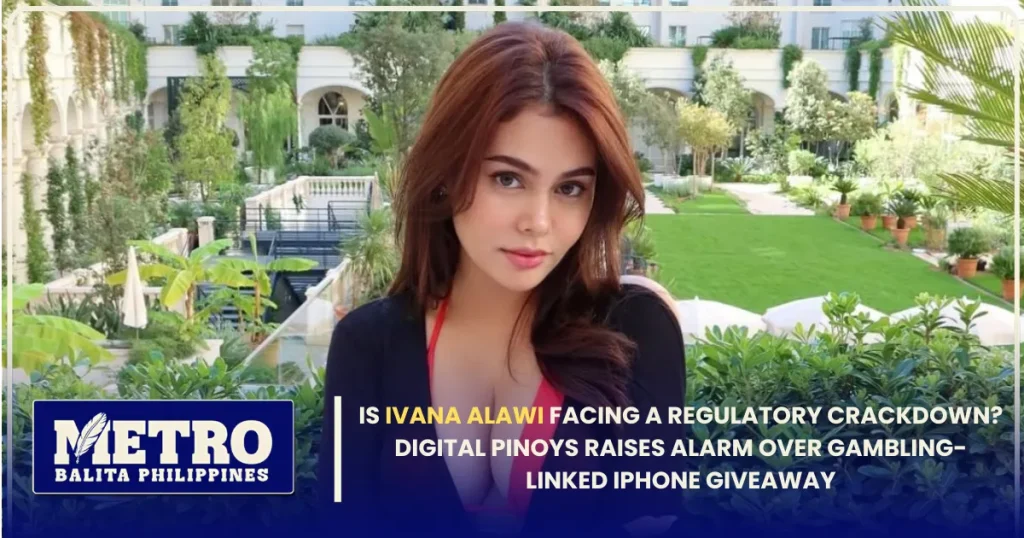
Is Ivana Alawi Facing a Regulatory Crackdown? Digital Pinoys Raises Alarm Over Gambling-Linked iPhone Giveaway

Facebook
Social X
LinkedIn
Reddit
Threads
Ivana Alawi

MANILA, Philippines — A prominent digital advocacy organization has sounded a national alarm over a massive social media contest organized by top-tier actress, model, and internet personality Ivana Alawi. The campaign, which promises to distribute one hundred premium smartphones to online participants, has drawn severe criticism due to its direct structural links to a prominent electronic gambling application currently endorsed by the celebrity. Digital Pinoys, an advocacy group championing consumer rights and internet safety in the Philippines, issued a public warning indicating that the giveaway mechanics utilized by Ivana Alawi effectively function as a predatory marketing funnel. The group argues that this method inadvertently exposes minor children, teenagers, and other highly vulnerable demographics to addictive online betting content under the guise of an ordinary digital contest.

The advocacy group is urgently calling upon regulatory authorities, specifically the Philippine Amusement and Gaming Corporation (PAGCOR), alongside the social media conglomerate Meta Platforms, to launch a swift investigation. Digital Pinoys wants to determine whether these aggressive, high-value celebrity promotions comply with domestic advertising laws and children’s digital safety guidelines. As the online gaming sector expands rapidly throughout the country, the intersection of mainstream celebrity entertainment and digital wagering has turned into a heavily contested battleground for public interest groups.

The Mechanics of the Online Promotion

Unpacking the Strategy Behind the Ivana Alawi Online Campaign

The controversy began to unfold rapidly after Ivana Alawi published the details of the grand smartphone raffle across her official digital channels, where she commands an audience of tens of millions of active followers. The premise of the promotional event was undeniably appealing: a chance for ordinary netizens to win a brand-new smartphone. However, the exact conditions required for entry immediately drew the attention of digital watchdogs. To secure a valid entry into the draw, participants were instructed to follow, like, or actively engage with the official social media handles of the online casino app that Ivana Alawi represents as a brand ambassador.

According to Ronald Gustilo, the National Campaigner for Digital Pinoys, this specific promotional format systematically exploits the widespread public adoration of Ivana Alawi to expand the digital consumer base of a gambling platform. By utilizing high-demand consumer electronics that hold a universal appeal across all economic classes and age brackets, the marketing strategy functions as an exceptionally potent customer acquisition mechanism. Gustilo noted that the primary driver of this cross-promotional event goes far beyond simple viewer appreciation. Instead, it serves as a calculated data and audience expansion strategy designed to capture a broad cross-section of internet users, many of whom would otherwise never intentionally visit or follow an electronic gaming platform.

Ivana Alawi

Consumer Protection and Regulatory Issues

The Threat of Predatory Marketing to Filipino Minors

In a formal public briefing, Digital Pinoys explicitly categorized the social media mechanism deployed by Ivana Alawi as possessing distinct “predatory marketing characteristics.” The core issue raised by the consumer safety group centers on the universally attractive nature of tech giveaways. While traditional gambling advertisements are legally restricted to adult audiences aged 21 and older, an internet raffle offering premium smartphones naturally draws the eager participation of schoolchildren, teenagers, and economically vulnerable individuals who view the prize as an unattainable luxury item.

The danger of this model is its long-term, cumulative impact on young minds. Even if a child or teenager who follows the instructions of Ivana Alawi does not immediately deposit real money or place a live bet on the casino application, the act of following the platform’s social accounts bridges a dangerous gap. By adding these pages to their daily feeds, young users open the door to an ongoing stream of future gambling advertisements, interactive betting notifications, promotional deposit bonuses, and highly stylized marketing content. Over an extended period, this persistent algorithmic exposure can slowly erode natural psychological barriers against financial risk, effectively normalizing wagering behaviors and laying a foundation for future gambling dependencies.

Call for Action to National Regulators and Tech Platforms

In light of these findings, Digital Pinoys has formally petitioned the Philippine Amusement and Gaming Corporation (PAGCOR) to look into the broader implications of influencer-led giveaways tied to regulated industries. In the Philippines, gambling advertisements are subject to strict state mandates, including explicit age gates, visible responsible gaming warnings, and restrictions against targeting impressionable audiences. The consumer group questions whether leveraging a universally appealing lifestyle prize to artificially inflate a casino’s digital following violates the foundational principles of responsible advertising laws.

Simultaneously, the advocacy organization has targeted its appeals toward Meta Platforms, the parent company overseeing Facebook and Instagram—the very spaces where Ivana Alawi commands a massive share of her digital viewership. Major global tech networks maintain strict corporate guidelines concerning real-money gaming promotions, often requiring explicit institutional permissions, local licenses, and tight geographic and age filters to completely insulate youth from exposure. Digital Pinoys asserts that by wrapping a gambling acquisition campaign in the friendly packaging of a celebrity lifestyle giveaway, the system successfully circumvents traditional platform filters. This allows aggressive betting promotions to spread organically across mainstream networks without restriction.

The Broader Implications for the Digital Space

The Evolving Landscape of Influencer Advertising and Gaming Laws

The friction between consumer watchdogs and the promotional management of Ivana Alawi highlights a larger, systemic challenge within the rapidly growing digital ecosystem of the Philippines. Over the last few years, localized online casinos, virtual slot machines, and electronic sportsbooks have experienced an unprecedented commercial boom. To secure market share in a highly saturated digital landscape, these platforms increasingly employ top-tier celebrities like Ivana Alawi to make their brands feel accessible, safe, and part of everyday casual entertainment.

However, the regulatory architecture governing these collaborations remains complicated. While PAGCOR possesses absolute jurisdiction over the licensing and operational compliance of electronic gaming firms, the Department of Trade and Industry (DTI) is tasked with regulating public promotional lotteries and consumer raffles to prevent deceptive practices. A massive giveaway involving one hundred smartphones typically necessitates a formal permit from the DTI to validate the fairness of the raffle. When such a contest is structurally dependent on expanding the consumer network of a regulated gaming entity, it creates a challenging regulatory grey area. Experts warn that if regulatory bodies fail to establish clear boundaries now, it could create a precedent where any highly regulated sector can use popular creators to bypass audience restrictions.

Ivana Alawi

The Long-Term Social Consequences of Normalizing Digital Betting

Beyond the specific legal details and permitting structures, social workers and public health advocates express deep concern regarding the cultural shifts these high-profile partnerships encourage. For decades, traditional gambling carried a distinct societal stigma and was geographically isolated to physical casino properties or off-track betting hubs. Today, the active involvement of beloved public figures like Ivana Alawi effectively rebrands monetary wagering as an ordinary, glamorous lifestyle choice for the modern digital native.

Sociological research consistently indicates that when an influential role model promotes a specific behavior, their audience—especially young, developing minds—strongly associates that activity with modern success and social validation. In the context of the smartphone raffle tied to Ivana Alawi, the public messaging can inadvertently downplay the very real financial and psychological hazards of compulsive online betting. The gamified nature of modern casino applications, reinforced by the steady endorsement of trusted media icons, builds an environment where vulnerable individuals struggle to distinguish between risk-free mobile entertainment and high-stakes financial gaming.

Structural Accountability in the Digital Creator Economy

As public pressure for a formal regulatory crackdown mounts, the digital marketing and talent management industries are closely watching how the situation develops. The ongoing controversy has sparked a broader, necessary debate within the online community regarding the ethical obligations of content creators. Activists argue that because top-tier public figures like Ivana Alawi possess immense cultural influence, they must perform rigorous due diligence before entering promotional agreements with industries that carry inherent public health, societal, and economic risks.

Moving forward, Digital Pinoys and its network of consumer protection partners are pushing for a comprehensive modernization of the country’s digital advertising policies. Proposed reforms include mandating strict, non-skippable age-verification systems for any celebrity content linked to gaming brands, instituting outright prohibitions on using general consumer goods to generate traffic for betting platforms, and creating hefty penalties for digital spaces that fail to safeguard localized audiences. Until definitive policy actions are implemented by regulatory bodies like PAGCOR and corporate networks like Meta, the conversation surrounding Ivana Alawi will stand as a clear reminder of the urgent need for robust consumer safeguards in a modern, hyper-connected society.

Stay updated with the latest news at Metro Balita PH.
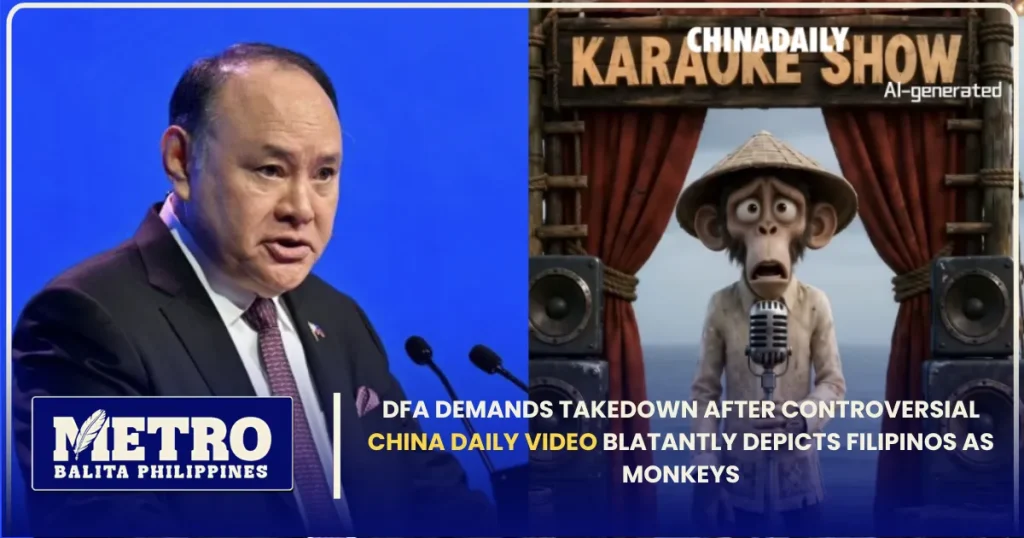
DFA Demands Takedown After Controversial China Daily Video Blatantly Depicts Filipinos as Monkeys

Facebook
Social X
LinkedIn
Reddit
Threads
China Daily video

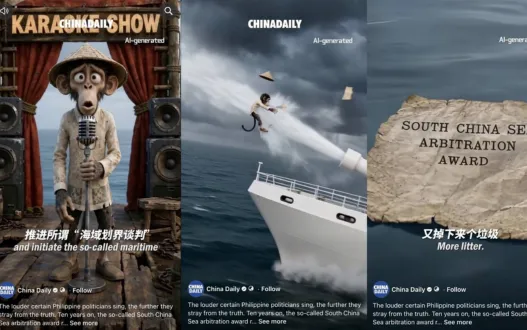
MANILA, Philippines — In a major diplomatic escalation amid ongoing geopolitical tensions, the Philippine Department of Foreign Affairs (DFA) has issued a fierce condemnation against a state-run media outlet from Beijing. The Philippine government is actively demanding the immediate removal of an artificial intelligence (AI)-generated broadcast that explicitly degrades the Filipino people. Within the first few sentences of the official diplomatic notice, officials made it clear that the controversial China Daily video crosses a dangerous line from political disagreement into outright racial discrimination by overtly portraying Filipinos as monkeys.

The Department of Foreign Affairs stated on Thursday that maritime and territorial disagreements do not justify the use of such offensive, demeaning, and highly racist imagery. Published originally on July 10, 2026, by the prominent state-controlled media network China Daily, the animated presentation focused heavily on criticizing the landmark 2016 South China Sea arbitral award. However, the diplomatic backlash was triggered not by the political commentary itself, but by the derogatory visual tropes embedded within the production, which Manila argues completely undermines international decorum.

The Diplomatic Outrage and Manila’s Formal Stance

The Department of Foreign Affairs lost no time in organizing a formal diplomatic response once the public broadcast began circulating across regional digital networks. Filipino diplomats expressed profound disgust that a state-sanctioned media corporation would resort to century-old, colonial-era racial slurs to mock a neighboring sovereign nation. By integrating advanced digital tools to construct the racist narrative, the China Daily video has introduced a dangerous new dimension to Beijing’s ongoing “lawfare” and psychological operations in the West Philippine Sea.

According to senior diplomatic sources, formal communications have been transmitted directly to Beijing’s representatives demanding an unedited retraction. The official DFA statement stressed that while state media agencies are free to express their respective governmental policies on disputed maritime features, targeting the ethnicity and dignity of an entire nation is completely unacceptable. The Philippine government clarified that it will not tolerate propaganda efforts that attempt to dehumanize its citizens in order to score geopolitical points.

China Daily video

Senate Leaders and Defense Officials Align Against Racism

The condemnation quickly reverberated far beyond the halls of the DFA, sparking unified outrage among Philippine legislators and defense chiefs. Leaders from various political factions have stood shoulder-to-shoulder with the executive branch, noting that the highly offensive China Daily video reflects poorly on China’s claims of being a responsible global actor.

Senator Francis “Kiko” Pangilinan released a strongly worded statement on Friday, expanding the call for action to include an outright public apology from the highest levels of the Chinese government. Pangilinan argued that such base propaganda directly contradicts Beijing’s stated aspirations to be recognized as a respected, civilized leader in the international community. The AI-generated content by China Daily depicting Filipinos as monkeys is blatantly racist, demeaning, and utterly unacceptable, according to legislative statements circulated in the local press.

Echoing this sentiment, Senator Robinhood “Robin” Padilla labeled the production as “completely unacceptable” and deserving of unequivocal global condemnation. Defense Secretary Gilberto Teodoro Jr. also slammed the broadcast, warning that weaponizing state media to distribute racially charged AI imagery deeply damages the prospects for constructive bilateral dialogue. Philippine officials universally emphasized that true international leadership is built on mutual respect and accountability, not on the distribution of racist stereotypes disguised as news commentary.

Analyzing the Impact of the China Daily Video on Regional Ties

The timing of this media release has further complicated an already fragile regional security environment. Legal and maritime experts suggest that the China Daily video was intentionally launched to coincide with the anniversary week of the 2016 Permanent Court of Arbitration ruling, which legally invalidated Beijing’s expansive historic claims over the South China Sea. Rather than engaging with the complex legal mechanics of the arbitral award, the state media outlet chose a path of visual vilification.

Bilateral relations between Manila and Beijing have faced numerous challenges over the past several years, characterized by physical confrontations at sea, diplomatic protests, and competing public narratives. However, observers note that the explicit nature of the China Daily video marks a distinct behavioral shift. Observers point out that using state-funded assets to broadcast dehumanizing racial slurs introduces domestic emotional anger into a dispute that both sides had previously pledged to manage through calculated diplomatic channels.

China Daily video

The Role of AI in State-Sponsored Psychological Campaigns

A primary concern raised by technological analysts and intelligence officials is the strategic utilization of generative artificial intelligence by foreign state media entities. The China Daily video provides a concrete example of how advanced digital animation can be rapidly deployed to fabricate xenophobic content at scale. By leveraging AI to craft highly offensive caricatures, the creators managed to bypass traditional editorial standards that typically govern formal state communications.

Cybersecurity experts in Manila warn that this incident could be a precursor to more aggressive, AI-enabled misinformation campaigns targeting the domestic population of the Philippines. When state-backed platforms choose to weaponize the China Daily video format, it signals to the broader digital ecosystem that racial discrimination is a permissible tool in international statecraft. The DFA’s insistence on a total takedown aims to establish a firm boundary against the normalization of AI-driven hate speech in regional geopolitical rivalries.

Global Expectations and the Demand for Accountability

As the controversy continues to develop, international eyes remain focused on how Beijing will handle the fallout from the problematic broadcast. The Philippine Senate has explicitly noted that if China desires to be viewed as a trustworthy, responsible global superpower, it must demonstrate a basic capacity to regulate its own state instruments. Allowing the China Daily video to remain accessible online serves only to validate concerns regarding the aggressive nature of its external public relations apparatus.

At the close of the week, the Inquirer and various local news organizations reported that they had officially sought comments from both the editorial board of China Daily and the Chinese Embassy in Manila. As of press time, neither entity has issued an official statement or clarified whether they intend to honor the DFA’s formal takedown demand. The lack of an immediate response has only strengthened the resolve of Philippine authorities to keep the issue at the forefront of their diplomatic agenda.

Next Steps for Philippine Foreign Policy

Moving forward, the Philippine government faces the delicate task of defending national honor without completely severing the remaining channels of communication dedicated to maritime safety. The aggressive pushback against the China Daily video underscores a broader strategy by Manila to publicize and confront every facet of coercive behavior it encounters. By refusing to let state-sanctioned racism pass without a formal challenge, the DFA is signaling that national dignity is non-negotiable.

The coming days will determine whether this digital dispute will trigger broader economic or diplomatic countermeasures. For now, the Philippine public, media, and political establishment remain completely united in their demand: the racist China Daily video must be permanently deleted, and an official apology must be rendered to the Filipino nation.

Stay updated with the latest news at Metro Balita PH.
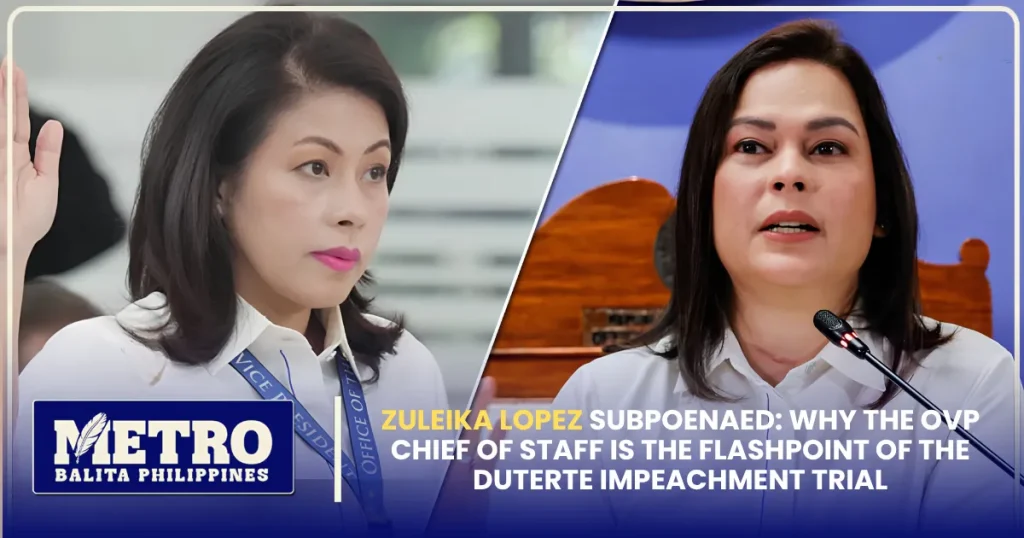
Zuleika Lopez Subpoenaed: Why the OVP Chief of Staff is the Flashpoint of the Duterte Impeachment Trial

Facebook
Social X
LinkedIn
Reddit
Threads
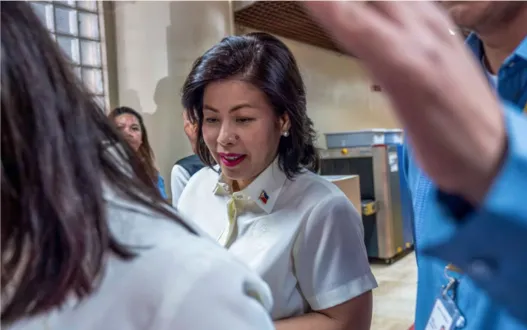
Zuleika Lopez

MANILA, Philippines — The high-stakes Senate impeachment trial of Vice President Sara Duterte has reached a critical focal point at the close of its opening week. The Senate impeachment court formally ordered the issuance of a subpoena to Office of the Vice President (OVP) Chief of Staff Undersecretary Zuleika Lopez, positioning the longtime Duterte confidante at the very absolute center of the intensifying legal warfare.

The development unfolded during the third day of the trial as the House prosecution panel finalized its upcoming witness lineup. Presiding Officer and Senate President Francis “Chiz” Escudero granted the prosecution’s request to summon Zuleika Lopez, requiring her presence on the witness stand. The decision directly sets up a highly anticipated confrontation, as the OVP’s second-highest official is now legally obligated to testify in the ongoing effort to remove the Vice President from office.

For a news landscape currently saturated with fast-paced political transitions, understanding the exact legal mechanism of this specific summons is crucial. This investigative report breaks down how the upcoming testimony of Zuleika Lopez could make or break the case against the country’s second-highest official.

The Strategic Move Behind the Subpoena

The decision to summon the OVP chief of staff is not a routine administrative step; rather, it is a calculated tactical play by the House prosecutors. Lead managers from the prosecution team clarified that the presence of Zuleika Lopez is essential for examining Article IV of the Articles of Impeachment, which centers on the explosive allegations of grave threats against President Ferdinand Marcos Jr., First Lady Liza Araneta-Marcos, and then-House Speaker Martin Romualdez.

According to House prosecutor and Iloilo Representative Lorenz Defensor, the prosecution’s schedule for the second week of the trial is tightly coordinated around high-profile testimonies. The panel is slated to present National Bureau of Investigation (NBI) lawyer Jeremy Lotoc first, followed immediately by the appearance of Zuleika Lopez on the witness stand.

The prosecution contends that her position inside the OVP gives her direct, firsthand knowledge of the operational context surrounding the Vice President’s controversial statements. Prosecutors aim to use her testimony to identify, authenticate, and contextualize various items of documentary and digital evidence that have been submitted to the Senate. By putting a member of Duterte’s inner circle on the stand, the prosecution hopes to establish an undeniable timeline of intent.

Zuleika Lopez

The November 2024 Catalyst: Root of the Gravity Threats Charge

To fully comprehend why the testimony of Zuleika Lopez is considered a linchpin for both sides, the public must look back to the political firestorm of late 2024. The grave threats charge stems directly from an emotional, late-night online press briefing conducted by Vice President Duterte on November 23, 2024.

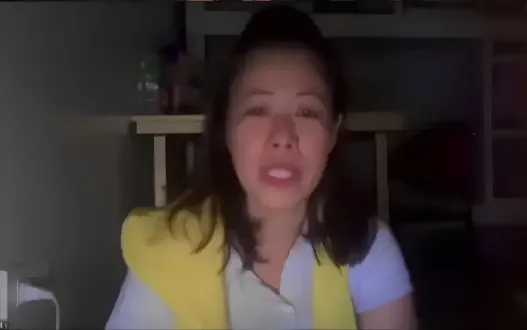
During that Zoom broadcast, an intensely protective Duterte lashed out at the leadership of the House of Representatives and the presidential family. The trigger for the Vice President’s fury was the House Committee on Good Government and Public Accountability’s decision to cite Zuleika Lopez for contempt and order her detention within the congressional complex. The House panel had accused the chief of staff of undue interference after she reportedly requested the Commission on Audit (COA) to withhold spending reports regarding the OVP’s confidential funds from legislative scrutiny.

When the House ordered her transfer to the Correctional Institution for Women in Mandaluyong City, the situation escalated. Zuleika Lopez fell ill under the immense stress of the confinement, and it was during this exact window of medical and legal crisis that the Vice President issued her now-infamous remarks regarding a purported assassination plot.

The Defense Turnabout: Transforming a Witness into a Shield

In an unexpected twist during the trial’s third session, the defense team, led by lawyer Carlo Joaquin Narvasa, actually accelerated the focus on the chief of staff. The defense team requested and received permission to play specific snippets of that historic November 2024 online briefing right inside the Senate chamber.

The clips showcased an incredibly emotional Zuleika Lopez speaking from her place of detention, where she visibly wept and openly claimed that her life was in imminent danger due to systemic pressure from the House. The defense’s choice to display this footage was aimed at humanizing the OVP staff and establishing a defense of extreme provocation.

The move prompted a sharp inquiry from Senator-judge Risa Hontiveros, who questioned whether the defense was implying that the Vice President’s severe verbal responses were fully excused or prompted by the detention of her aide. Attorney Narvasa answered affirmatively, arguing that the House of Representatives had engaged in an aggressive, systematic pattern of oppression against the OVP staff. From the defense’s point of view, the Vice President was not launching an unprovoked political attack, but was rather reacting defensively to protect a loyal subordinate who was undergoing a severe psychological and physical breakdown while in custody.

Zuleika Lopez

How the Defense Strategy Backfired

While the defense intended to use the emotional footage to garner public sympathy and establish a narrative of congressional bullying, the move inadvertently handed a major victory to the prosecution. House prosecutors quickly seized upon the presentation of the video clips to justify their insistence on a formal subpoena.

Surigao del Norte Representative Robert Ace Barbers, a key figure in the prosecution, noted that the defense’s reliance on the video clip made the personal appearance of Zuleika Lopez absolutely indispensable. Barbers noted that since the defense had introduced her emotional state and personal grievances as a formal element of the trial’s context, her actions, choices, and statements were now wide open for comprehensive cross-examination.

The logic is simple: the defense can no longer claim that her role is tangential to the grave threats article if they are simultaneously using her experiences to justify the Vice President’s statements. The prosecution now has a wide open door to question the chief of staff about her exact executive interactions with the Vice President during those tense hours in November 2024.

What to Expect Next Week in the Senate Chamber

As the trial transitions into its second week, the pressure on the Senate impeachment court to maintain efficiency is growing. Senator-judge Bam Aquino issued a strong plea to both legal teams to cut back on lengthy rhetorical detours and streamline their examinations. His appeal followed a gruelling nine-hour session spent examining the trial’s first witness, NBI Senior Agent John Mark Calilung, who stood firm under intense cross-examination regarding the authentication of the digital recordings.

Beyond the upcoming human testimonies, a major battle is brewing over financial documents. Presiding Officer Escudero ordered both sides to submit formal memoranda regarding a disputed subpoena for Bureau of Internal Revenue (BIR) and bank records. The court confirmed that a controversial box of BIR documents had been temporarily returned to the tax agency fully sealed and untouched, pending oral arguments on the matter scheduled for next Wednesday.

The upcoming week will represent a major test of durability for the OVP leadership. Observers note that the testimony of the chief of staff will likely be a defining moment of the trial. If she maintains a rigid front, she may bolster the defense’s narrative of a weaponized legislature. However, if prosecutors successfully navigate her cross-examination, her statements could provide the missing link needed to cement the articles of impeachment.

Key Figures and Witness Schedule for Week 2

DateScheduled WitnessInstitutional AffiliationCore Focus of Testimony
MondayAtty. Jeremy LotocNational Bureau of Investigation (NBI)Digital forensics, video authentication, and threat assessment tracking.
TuesdayAtty. Zuleika LopezOffice of the Vice President (Chief of Staff)Context of the November 2024 press briefing, confidential funds correspondence, and claims of institutional oppression.
WednesdayCapt. Belinda BelloHouse Office of the Sergeant-at-ArmsSecurity protocols, detention conditions, and events during the House contempt citation.

As the nation watches the Senate floor, the impending arrival of Zuleika Lopez ensures that the trial is moving away from purely technical arguments over video files and toward the deeply personal, high-stakes executive decisions that triggered this historic constitutional crisis.

For citizens looking to understand the visual and emotional weight of the evidence currently being debated on the Senate floor, this continuous coverage of the Vice President Sara Duterte impeachment trial updates provides a concise look into the core arguments surrounding the controversial OVP chief of staff.

Stay updated with the latest news at Metro Balita PH.
Latest

Updated