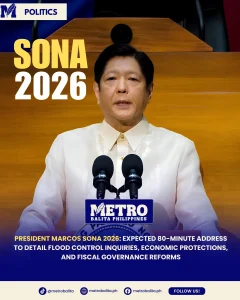
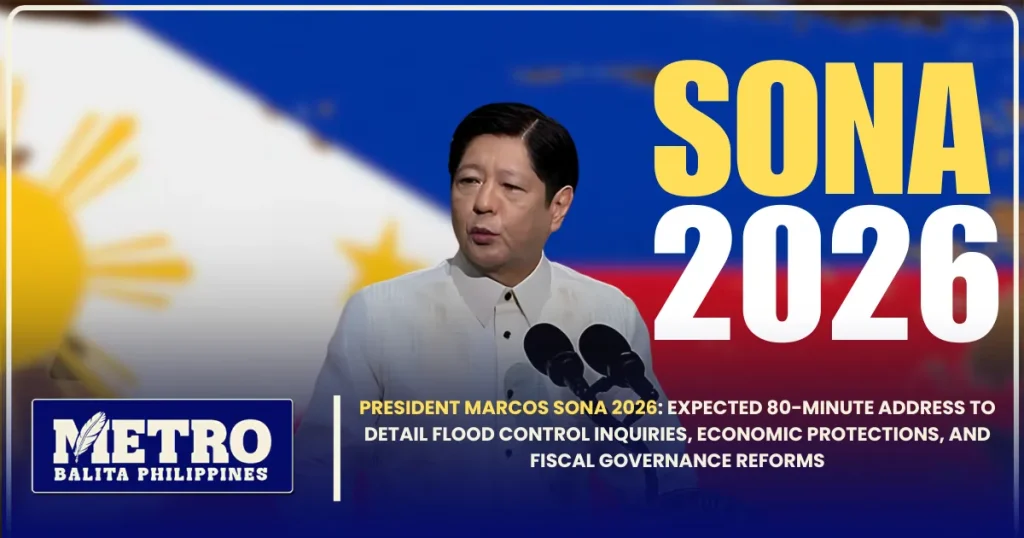
MANILA, Philippines — Final security sweeps, protocol checks, and technical dry runs have officially concluded across the Batasang Pambansa Complex in Quezon City as Malacañang confirmed that the fifth president marcos sona is projected to run for approximately one hour and 20 minutes on Monday afternoon. The calculated 80-minute runtime for the Chief Executive’s penultimate state report was finalized following an exhaustive, late-night final rehearsal conducted on Sunday evening, where senior executive aides, cabinet members, and communications officials gathered to review government performance metrics, infrastructure forensic audits, and critical legislative priorities intended for joint presentation before both houses of Congress.
Palace Press Officer Claire Castro confirmed during a morning briefing that the Chief Executive spent the eve of his annual report making meticulous, timed passes through the speech manuscript. The primary objective behind this thorough rehearsal process was to ensure that comprehensive administrative updates regarding national public works audits, consumer inflation buffers, and long-term macroeconomic programs are conveyed clearly and directly to lawmakers, civic leaders, international observers, and millions of Filipino citizens watching across the country. From the very opening moments of this year’s address, the administration intends to pivot directly toward core policy execution, governance updates, and fiscal accountability, choosing to bypass traditional pre-event social commentary in favor of substantive reporting.
What to Expect in the President Marcos SONA Heading into 2026
With national attention heavily focused on government spending transparency, infrastructure resilience, and household living costs, the fifth president marcos sona arrives at an exceptionally critical juncture for the current administration. Speaking to accredited reporters during an executive site inspection in Mabalacat City, Pampanga, late last week, President Ferdinand R. Marcos Jr. emphasized that the annual state address remains a dynamic and fluid document that undergoes continuous structural updates up until the very moment he ascends the podium at the House of Representatives.
“The State of the Nation Address is an evolving document right up until the moment it is delivered,” the Chief Executive stated during his Pampanga engagement, explaining that real-time economic adjustments, domestic price shifts, and ongoing administrative audits necessitate precise, last-minute refinements to the final draft.
In stark contrast to previous annual state events where public commentary heavily fixated on red-carpet arrivals, celebrity guests, and designer evening wear, Malacañang issued a unambiguous directive prioritizing legislative substance over ceremonial spectacle.
“Ipagpaumanhin, hindi po napag-uusapan ang mga kasuotan. Tutok ang lahat sa mensahe ni Pangulo sa SONA bukas (Our apologies, but attire has not been discussed. Everyone is fully focused on the President’s message for the SONA),” Castro stated in her press conference, reinforcing that the main priority of the upcoming president marcos sona remains strictly aligned with administrative performance, policy execution, and institutional reform.
Key Policy Pillars and Structural Focus Areas
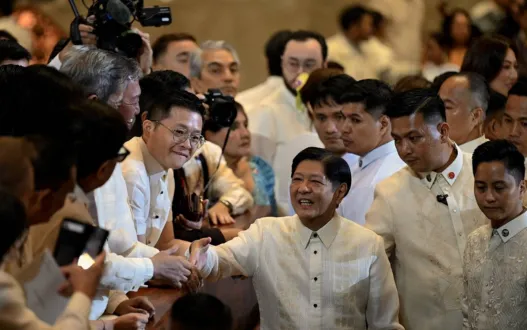
To provide lawmakers, business leaders, international partners, and everyday citizens with a detailed framework of what will be presented during the speech, Malacañang officials have highlighted several foundational agenda items that will form the backbone of the address:
- Flood Control Integrity & Ghost Project Auditing: Direct executive reporting regarding extensive multi-agency investigations looking into alleged non-existent, delayed, or substandard flood management structures across storm-vulnerable provinces.
- Economic Cushioning & Price Stabilization: Detailing proactive administrative policies designed to shield Filipino consumers from global market volatility, international supply chain bottlenecks, and imported fuel price spikes.
- Legislative Priorities & Statutory Reforms: Reviewing the implementation status of key economic reform bills passed during previous legislative sessions while outlining required priority bills for the remainder of the 19th Congress.
- Agricultural Supply Chains & Anti-Hunger Hubs: Comprehensive updates on farm-to-market road construction, direct fertilizer and seed distribution networks, and state-backed agricultural hubs designed to streamline crop logistics.
- Social Protection Modernization: Expanding targeted conditional cash transfer initiatives, upgrading public health facilities under the Universal Health Care scheme, and accelerating classroom construction across rural educational districts.
- National Security & Maritime Sovereign Rights: Reaffirming long-term strategies for safeguarding territorial integrity, upgrading defense capabilities, and reinforcing maritime security partnerships across regional waters.
Direct Action on Infrastructure Anomalies and Substandard Projects in the President Marcos SONA
Among the most anticipated topics within the fifth president marcos sona is the progress update concerning high-level inquiries into public works anomalies. Following severe seasonal weather events and recurring regional inundations that disrupted agricultural logistics across major island groups, the executive branch initiated sweeping forensic audits targeting public works projects that failed to provide adequate community protection despite receiving substantial annual budget allocations.
During last year’s fourth State of the Nation Address—which ran for one hour and 11 minutes on July 28, 2025—the President issued stern, direct warnings against fraudulent contractors, negligent engineers, and public officials implicated in substandard flood defense developments. In this year’s address, the Chief Executive is set to present concrete administrative outcomes, including active prosecution filings, corporate blacklisting actions, and structural auditing overhauls introduced within the Department of Public Works and Highways (DPWH) and regional procurement boards.
Palace insiders indicate that the upcoming president marcos sona will detail newly established legal and technological mechanisms designed to permanently eliminate ghost infrastructure projects from the national budget. By deploying third-party engineering audits, real-time satellite imaging verification, and public-facing contract tracking portals, the administration aims to reassure taxpayers that public funds designated for climate adaptation and disaster risk reduction are being utilized with strict financial accountability and engineering integrity.
Navigating Global Economic Uncertainties and Inflation Pressure
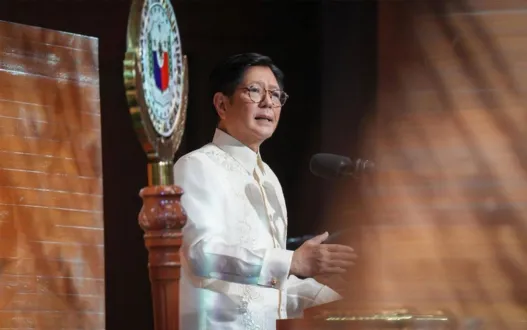
Beyond public works oversight and anti-corruption measures, macroeconomic stabilization serves as a core pillar of the executive address. The country continues to navigate volatile global financial markets, international oil market fluctuations, and shifting geopolitical realities that exert direct upward pressure on local food prices, utility rates, and household purchasing power.
Throughout his presentation, the president marcos sona will outline specific anti-inflation interventions and social safety-net policies deployed by executive agencies over the preceding twelve months. These key initiatives include targeted fuel subsidies for public utility vehicle operators, direct input subsidies for local farming cooperatives, and the strategic expansion of direct-from-farm food retail centers that reduce consumer prices by removing unnecessary intermediary markups.
Recent economic indicators suggest that these structured fiscal interventions have yielded positive results by stabilizing basic household commodity prices while reinforcing local food security metrics. Independent quarterly surveys published ahead of the annual report reflect a steady rise in net public satisfaction ratings alongside a measurable reduction in reported household food insecurity—trends that administrative planners attribute directly to targeted food logistics and anti-hunger campaigns.
Historical Speech Durations and Legislative Evolution
As the current administration enters its penultimate year in office, comparing the structural duration, word count, and policy emphasis of annual state addresses provides valuable context regarding how national priorities have adapted to evolving challenges. The projected 80-minute runtime positions this speech among the most detailed legislative presentations of the current presidential term.
| Speech Year | Total Duration | Primary Focus Areas & Key Policy Directives |
| 2022 (1st SONA) | 1 hour, 14 minutes | Post-pandemic economic reopening, full face-to-face learning resumption, preliminary fiscal management frameworks. |
| 2023 (2nd SONA) | 1 hour, 11 minutes | Inflation management, agricultural logistics, renewable energy investment frameworks, digital government services. |
| 2024 (3rd SONA) | 1 hour, 22 minutes | Imperial ban on POGOs, West Philippine Sea sovereignty enforcement, social welfare program expansions. |
| 2025 (4th SONA) | 1 hour, 11 minutes | Direct warnings against ghost flood control projects, regional industrial park developments, economic buffers. |
| 2026 (5th SONA) | Est. 1 hour, 20 minutes | Infrastructure forensic audits, flood control prosecution updates, economic safety nets, priority legislative bills. |
The expanded scope of the 2026 president marcos sona underscores the sheer volume of multi-year infrastructure commitments, statutory priorities, and administrative reforms requiring clear execution timelines before the current mandate reaches its conclusion.
Legislative Synergy: Pushing Priority Bills in the President Marcos SONA
The delivery of the president marcos sona simultaneously signals the formal opening of the third regular session of the 19th Congress. Senators and District Representatives have gathered at the Batasang Pambansa in full force to receive the executive branch’s statutory wishlist for the upcoming legislative calendar.
Congressional leadership recently noted that the executive branch may request special legislative sessions to accelerate the passage of critical priority bills. Key measures on the administration’s legislative radar include proposed laws aimed at modernizing government procurement regulations, accelerating digital connectivity infrastructure, boosting defense self-reliance frameworks, standardizing national land-use policies, and expanding tax administration efficiencies.
By leveraging the national audience of the president marcos sona, the Chief Executive aims to build tight consensus between both legislative chambers, ensuring that vital fiscal and administrative bills are enacted into law before upcoming national election cycles begin to draw legislative focus away from Capitol Hill.
Public Expectations, Local Governance, and National Outlook
Across the archipelago, citizens, labor unions, business federations, civil society coalitions, and foreign diplomatic corps members are tuning in to gauge how the government intends to guide the nation through its remaining tenure. Financial markets and private enterprise groups will be listening closely for clear executive statements regarding foreign investment guarantees, energy grid reliability, tax policy stability, and long-term public infrastructure financing structures.
Simultaneously, local government leaders across various regions are awaiting specific announcements regarding national tax allotment disbursements, regional development grants, and major transportation corridor allocations—particularly infrastructure initiatives involving inter-island bridge construction, railway extension networks, deep-water seaport modernizations, and regional airport upgrades.
As President Ferdinand R. Marcos Jr. steps up to the podium for this 80-minute state report, the overarching narrative woven into the president marcos sona will focus on demonstrating tangible accomplishments, enforcing firm accountability against systemic corrupt practices, and establishing durable, long-term socio-economic resilience for the entire nation.
With security perimeters fully established around the Batasang Pambansa and legislative leaders in position, the country turns its focus toward an address crafted to map out the legislative, economic, and administrative direction of the Philippines for the year ahead and beyond.
Stay updated with the latest news at Metro Balita PH.