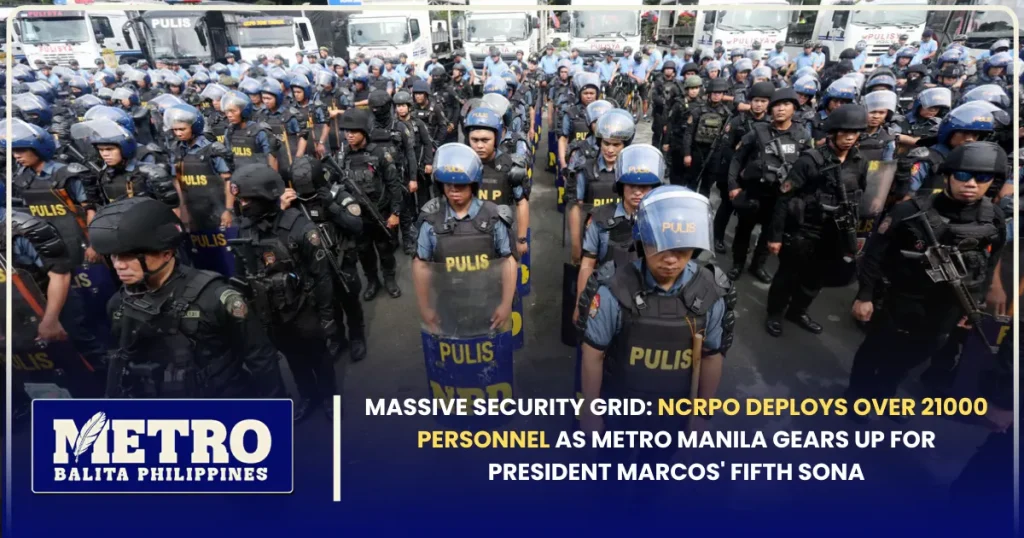
QUEZON CITY, Philippines — Law enforcement units across Metropolitan Manila have officially transitioned to full alert status as the national government prepares for President Ferdinand “Bongbong” Marcos Jr.’s fifth State of the Nation Address (SONA). To guarantee seamless public order, protect vital installations, and manage anticipated public demonstrations, the NCRPO deploys over 21000 personnel in a massive security operation centered around the Batasang Pambansa Complex and key traffic corridors throughout the capital region.
With activist coalitions, labor groups, and civil society organizations preparing to stage marches, security command posts have been fully activated. The extensive operation underscores the state’s dual commitment to upholding peace and safety while accommodating constitutional freedoms during one of the country’s most significant political events.
Strategic Operational Scope: Why NCRPO Deploys Over 21000 Personnel for SONA 2026
The annual State of the Nation Address brings together lawmakers, cabinet officials, foreign dignitaries, and political stakeholders under one roof at the House of Representatives in Quezon City. Due to the high concentration of national leadership and public attention, ensuring absolute security requires extensive logistics and force mobilization. It is within this complex operational environment that the NCRPO deploys over 21000 personnel to manage crowd movements and secure critical perimeters.
According to official updates from the National Capital Region Police Office, a total force of 21,642 officers has been designated under Special Task Force SONA 2026. This comprehensive headcount covers a wide array of specialized units, ranging from visible foot patrols and traffic managers to civil disturbance management teams and tactical response groups.
By pre-positioning forces days in advance, regional leadership aims to prevent potential security breaches while providing structured routes for non-violent rallyists. When the NCRPO deploys over 21000 personnel, police officials emphasize that the primary goal is maintaining public order and safety rather than restricting legitimate public expression.
Send-Off Ceremony and Multi-Agency Augmentation
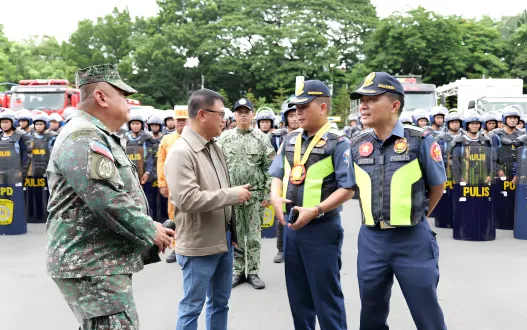
The official mobilization of the regional force took shape during a ceremonial send-off held at Camp PMGEN Tomas B. Karingal in Quezon City. During the assembly, top police officials inspected equipment, reviewed tactical plans, and issued operational guidelines to field commanders representing various police districts.
“We maintain firm, unwavering control to ensure a safe, orderly, and peaceful SONA 2026,” stated NCRPO Director PMGEN Anthony Aberin, who leads Special Task Force SONA 2026 as its main commander.
PMGEN Aberin presided over the ceremony alongside PMGEN Wilson Joseph Lopez, officer-in-charge of the Office of the Deputy Chief PNP for Operations. Together, they reaffirmed that field officers will maintain strict adherence to police procedures throughout the multi-day security detail.
Because securing the entire metropolis during a major event exceeds standard regional capacity, the police command structure integrates heavy support from external units. While the NCRPO deploys over 21000 personnel drawn from Metro Manila’s five police districts, the operational footprint is significantly reinforced by:
- PNP National Headquarters: Reserve contingents and administrative support elements providing centralized coordination.
- Special Action Force (SAF): Highly trained tactical units assigned to perimeter defense and rapid-response counter-threat measures.
- Regional Police Offices: Secondary police personnel drawn from neighboring administrative regions to bolster civil disturbance teams.
- Inter-Agency Partners: Traffic enforcers from local government units (LGUs) and disaster response teams working alongside uniformed personnel.
Ground Reconnaissance: Securing Commonwealth Avenue and Batasan Corridors
Ahead of the President’s speech, field commanders conducted comprehensive on-site inspections around the Batasan complex, with particular focus on Commonwealth Avenue and IBP Road. These thoroughfares serve as primary transit points for both ordinary commuters and marching advocacy groups.
Commonwealth Avenue represents a key focus area for police strategists due to its immense physical width and connection to residential and commercial sectors. Through detailed route assessments, authorities mapped out staging zones, emergency vehicle corridors, and traffic diversions so that when the NCRPO deploys over 21000 personnel, every sector operates with clear spatial boundaries and direct communication channels.
To ensure continuous coverage, the regional command has divided the immediate vicinity of the legislative building into distinct security sectors:
| Security Ring | Primary Coverage Zone | Designated Operational Role |
| Inner Ring | Batasang Pambansa Assembly Grounds | Dignitary safety & strict credential checking |
| Middle Ring | IBP Road & Immediate Access Gates | Perimeter control & bomb squad clearance |
| Outer Ring | Commonwealth Avenue & Quezon City Arterials | Crowd management & traffic redirection |
| Metropolitan Ring | Key Transport Hubs & Regional Borders | General visibility patrols & security checkpoints |
Public Assemblies and Police Operational Directives
A wide spectrum of political and civic organizations have scheduled coordinated rallies coinciding with the address. Prominent coalitions, including Bagong Alyansang Makabayan (Bayan), Sanlakas, and Better Brighter, are expected to assemble thousands of participants along designated stretches of Commonwealth Avenue.
In managing these public gatherings, standard police directives require all deployed personnel to exercise “maximum tolerance.” Field officers are instructed to maintain composure, refrain from unnecessary physical confrontation, and work closely with rally leaders to keep marches peaceful and organized within agreed-upon boundaries.
However, law enforcement authorities have clarified that specific prohibited actions will draw decisive interventions. Philippine National Police (PNP) public information chief Col. Allen Rae Co issued an explicit reminder regarding illegal activities during rallies, specifically addressing the traditional burning of political effigies.
“Kung may magsusunog, it is not allowed. Not only yung mga effigy, but anything na magsusunog ka is not allowed,” Col. Co stated during a press briefing. “We will exhaust all peaceful means para mapigilan ang mga illegal na gawain. But kung hindi matitigil, we will have to act more decisively.”
Authorities highlighted that open burning poses clear public safety hazards in crowded urban spaces. As the NCRPO deploys over 21000 personnel across demonstration areas, officers will prioritize peaceful negotiation to resolve infractions before taking direct law enforcement action.
Traffic Management Strategies and Commuter Advisories
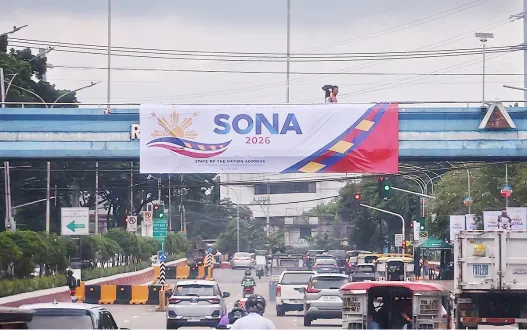
The scale of the security framework inevitably impacts daily transportation patterns across northern Metro Manila. To minimize inconvenience for commuters and residents, traffic authorities and local government units have established comprehensive rerouting schemes.
When the NCRPO deploys over 21000 personnel, a dedicated segment of the deployed force works in tandem with traffic management officers to direct vehicular flow onto alternate routes. Drivers traveling through Quezon City are encouraged to utilize cleared bypass routes, such as the designated Mabuhay Lanes, to avoid congestion near Commonwealth Avenue.
Motorists are urged to monitor official travel advisories, plan journeys ahead of time, and remain patient while navigating checkpoints. Public transport operators have also been notified of temporary route adjustments designed to keep transit options moving while keeping critical security zones clear.
Public Coordination and Emergency Readiness
Beyond static security and crowd management, the comprehensive plan incorporates medical, fire, and emergency response teams. Pre-positioned ambulances, mobile medical stations, and fire engines are placed along key points near assembly zones to provide swift care in cases of heat exhaustion or physical distress.
Police leadership continues to call on the general public for cooperation, encouraging citizens to remain alert and report any unusual items or suspicious activities to uniformed officers on duty or via the 911 national emergency hotline.
The extensive deployment represents a structured, balance-focused effort to safeguard the state’s highest officials while upholding democratic rights. As the NCRPO deploys over 21000 personnel across the capital, law enforcement authorities remain focused on maintaining a peaceful, orderly environment for President Marcos’ fifth State of the Nation Address.
Stay updated with the latest news at Metro Balita PH.