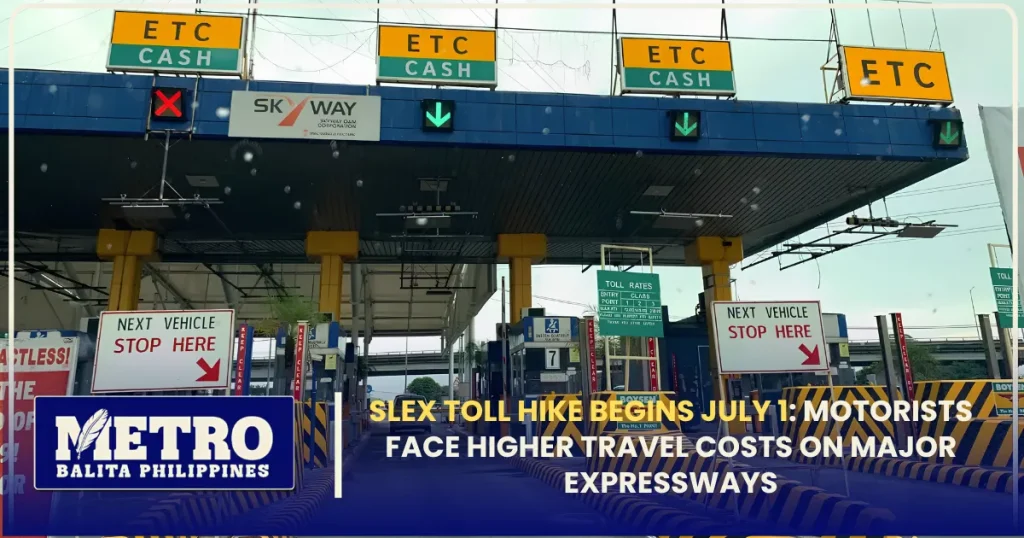
MANILA, Philippines — The slex toll hike set to take effect on July 1 is expected to bring higher travel expenses for thousands of motorists who regularly use the South Luzon Expressway (SLEX) and the Southern Tagalog Arterial Road (STAR Tollway). The toll adjustment, approved by regulators, comes as operators seek to recover investments and fund the continuous improvement and maintenance of the country’s major expressways.
With fuel prices and the cost of living already putting pressure on Filipino households, the new slex toll hike has drawn mixed reactions from motorists, commuters, and business groups who fear that transportation expenses could rise further in the coming months.
SLEX Toll Hike Takes Effect on July 1
Starting July 1, motorists using the South Luzon Expressway and STAR Tollway will pay higher toll fees depending on the type of vehicle and the distance traveled. The toll increase was approved by the Toll Regulatory Board (TRB) after reviewing petitions filed by the expressway operators.
Officials said the adjustment is necessary to ensure that expressway operators can continue maintaining road infrastructure, improving traffic management systems, and financing future expansion projects aimed at easing congestion.
The new toll rates will affect thousands of motorists daily, especially those traveling between Metro Manila and the provinces of Laguna, Batangas, and Quezon.
Why the SLEX Toll Hike Was Approved
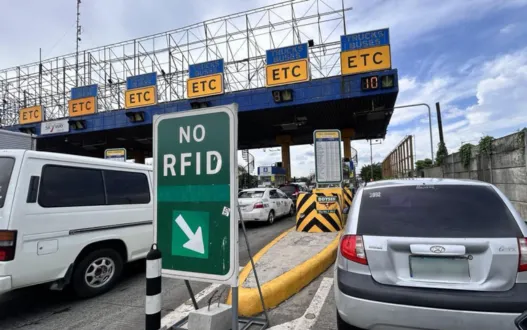
Authorities explained that the slex toll hike is part of existing concession agreements that allow operators to periodically adjust toll rates to account for inflation and rising operational costs.
Expressway companies have invested billions of pesos in road expansions, bridge improvements, and modernization projects over the years. According to transportation officials, toll adjustments help ensure that these projects remain financially sustainable.
Among the infrastructure projects that benefited from previous toll collections are lane expansion initiatives, improved toll plazas, and enhanced traffic monitoring systems designed to provide safer and faster travel for motorists.
The Toll Regulatory Board also emphasized that periodic toll adjustments are necessary to maintain the quality and efficiency of expressway services.
How Much More Will Motorists Pay?
Under the approved adjustment, motorists driving Class 1 vehicles, which include cars, vans, and small SUVs, will experience a modest increase in toll charges. Meanwhile, buses and trucks classified under Class 2 and Class 3 vehicles will also see corresponding increases.
Although the increase may seem minimal on a per-trip basis, frequent travelers and businesses that rely on regular deliveries could feel the impact over time.
For workers who commute daily from nearby provinces to Metro Manila, the slex toll hike may add several hundred pesos to their monthly transportation expenses.
Transportation experts also warned that increased toll fees could eventually influence logistics costs, potentially affecting the prices of goods and services.
Motorists React to the Toll Increase
Many motorists expressed disappointment over the latest slex toll hike, saying that the additional expenses come at a time when many Filipino families are already struggling with rising prices of food, fuel, and other necessities.
Some drivers acknowledged the need for better road infrastructure but called on authorities to ensure that toll increases are accompanied by noticeable improvements in traffic conditions and road safety.
Business groups, meanwhile, urged the government to closely monitor the effects of the toll adjustment, particularly on transportation and logistics sectors that are vital to economic activity.
Several motorists also raised concerns about traffic congestion during peak hours, arguing that higher toll rates should correspond with improved travel experiences and reduced delays.
Potential Impact on Businesses and Consumers
Economists said the slex toll hike could have ripple effects across various industries, particularly those involved in transportation, delivery services, and logistics.
Companies that transport goods between Metro Manila and Southern Luzon may have to absorb higher operational costs or pass them on to consumers through price adjustments.
The increase in transportation expenses could also affect small businesses that depend on regular deliveries of raw materials and supplies.
Experts, however, noted that the impact on inflation may remain limited if businesses manage to absorb the additional costs without significantly increasing prices.
Still, they warned that multiple increases in transportation-related expenses can gradually contribute to higher consumer prices over time.
Importance of SLEX and STAR Tollway
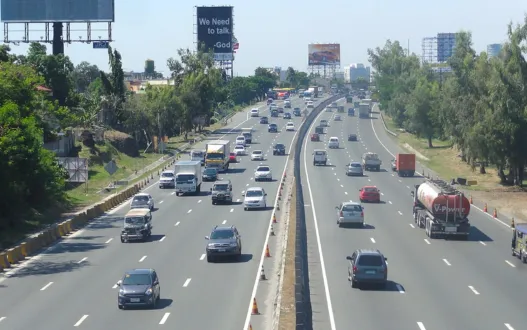
The South Luzon Expressway remains one of the country’s busiest road networks, serving as a critical transportation corridor connecting Metro Manila to the provinces of Laguna, Batangas, and Quezon.
Meanwhile, the STAR Tollway provides an important route for motorists and cargo vehicles traveling to and from Batangas City and nearby industrial areas.
Both expressways play a crucial role in supporting tourism, trade, and economic activities in Southern Luzon.
Infrastructure experts said continuous investment in these expressways is essential to accommodate growing traffic volumes and support regional development.
Government Urges Public Understanding
Transportation officials appealed for public understanding regarding the implementation of the toll increase, emphasizing that the additional revenues will help fund maintenance programs and future infrastructure projects.
Authorities also assured motorists that they will continue monitoring expressway operations to ensure that service quality remains consistent and that improvements are delivered efficiently.
The Toll Regulatory Board reiterated that all toll adjustments undergo thorough evaluation before approval and are intended to strike a balance between the interests of operators and the public.
What Motorists Should Expect
As the slex toll hike takes effect on July 1, motorists are advised to check updated toll matrices and prepare for the corresponding adjustments in their travel budgets.
Regular users of the expressway may need to reassess transportation expenses, especially those who frequently travel between Metro Manila and Southern Luzon for work or business.
Despite concerns over higher costs, authorities maintain that the toll adjustment is necessary to sustain the operation and development of some of the country’s most important road networks.
For many Filipinos, the new toll rates represent another financial challenge amid rising living expenses. However, officials believe that continued investments in infrastructure will ultimately result in better roads, improved mobility, and more efficient transportation services for the public.
As implementation begins this week, all eyes will be on how motorists and businesses adapt to the latest slex toll hike and whether the promised improvements on the country’s major expressways will justify the additional costs borne by the traveling public.
For more news and updates, visit Metro Balita Ph.