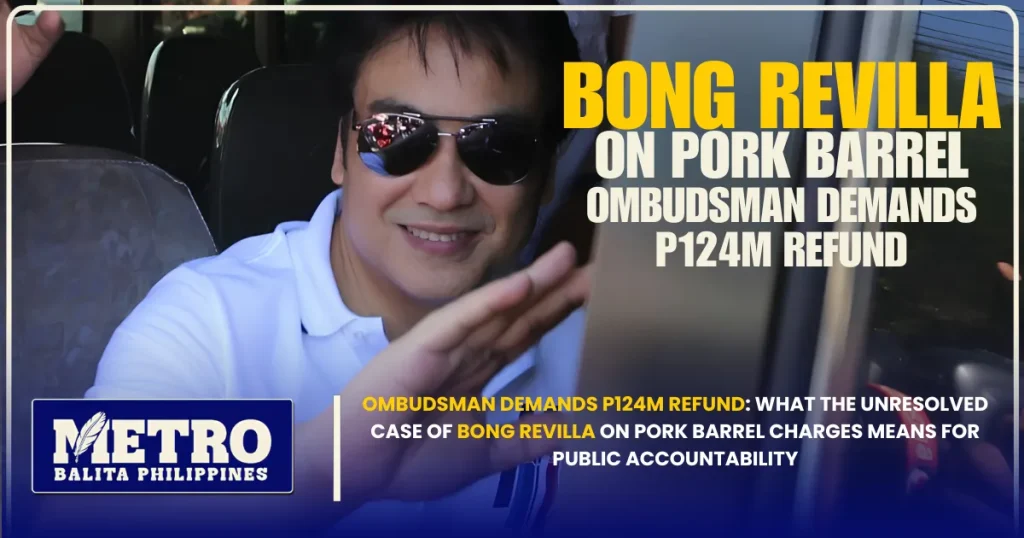
MANILA, Philippines — Questions surrounding public accountability have once again taken center stage following fresh statements from the Office of the Ombudsman regarding former Senator Ramon “Bong” Revilla Jr. As public interest intensifies around the long-standing legal battle of bong revilla on pork barrel funds, Ombudsman Jesus Crispin Remulla emphasized that the former lawmaker has yet to reimburse the national government more than P124 million in civil damages arising from his 2018 plunder acquittal.
Ombudsman Calls Out Pending Civil Liability
Speaking during his weekly radio program Executive Session on DZRH, Ombudsman Jesus Crispin Remulla raised serious concerns over the execution of judicial rulings, specifically targeting the unresolved liabilities of bong revilla on pork barrel allegations. Remulla pointed out that despite being granted bail in a separate malversation proceeding linked to flood control projects, the ex-senator remains obligated to settle civil indemnities stemming from the high-profile Priority Development Assistance Fund (PDAF) scandal.
Remulla reminded both the judiciary and the public that the financial obligations attached to the 2018 Sandiganbayan ruling remain unfulfilled. While Revilla posted a P1-million bail bond to secure temporary freedom from detention under the Sandiganbayan Fourth Division, the state has yet to recover the millions intended for public development projects.
The Ombudsman stressed that the judicial branch, under the guidance of the Supreme Court, must maintain rigorous oversight when civil liabilities involving huge sums of taxpayer money remain outstanding. According to oversight bodies, tracking these amounts is essential to maintaining institutional integrity.
KEY FINANCIAL & LEGAL BREAKDOWN: P124.5M CIVIL DAMAGES
• Case Origin: 2018 Sandiganbayan Plunder Acquittal Verdict
• Total Civil Liability: P124,500,000.00 (Ordered to National Treasury)
• Co-Accused Convicted: Richard Cambe (Chief of Staff), Janet Lim-Napoles
• Defense Stance: Acquittal from criminal charge waives civil indemnity
• Ombudsman Stance: Misuse occurred through office; civil duty stands
Unpacking the Ombudsman’s Stance on Bong Revilla on Pork Barrel Liabilities
To fully appreciate the current debate on bong revilla on pork barrel allocations, one must look back at the landmark December 2018 decision rendered by the Sandiganbayan Special First Division. In that verdict, the anti-graft court acquitted Revilla of criminal plunder, ruling that prosecutors failed to prove beyond reasonable doubt that he personally received kickbacks from his PDAF allocations.
However, the court simultaneously ordered the respondents—including Revilla, his late chief of staff Richard Cambe, and businesswoman Janet Lim-Napoles—to return a total of P124.5 million to the national treasury. While Cambe and Napoles were found criminally guilty and sentenced to reclusion perpetua, the court included Revilla in the civil liability mandate, citing the principle that civil obligation can persist even after a criminal acquittal depending on how the funds were allocated through official channels.
This dual outcome created a complex legal narrative regarding bong revilla on pork barrel funds. Legal analysts noted at the time that while criminal guilt requires proof beyond reasonable doubt, civil liability rests on a preponderance of evidence, allowing courts to order restitution when public funds are demonstrably misapplied through an official entity.
The Legal Tug-of-War Over Civil Obligations
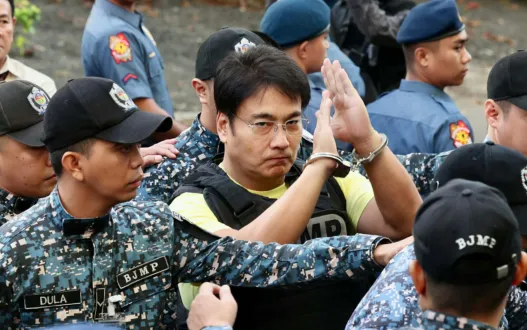
Following the 2018 ruling, the Office of the Ombudsman took proactive legal measures. In 2019, government prosecutors filed a formal motion before the anti-graft court urging it to issue a writ of execution to compel Revilla to pay the P124.5 million. The prosecution maintained that because the fraudulent transactions occurred under the auspices of the senator’s office, civil restitution remained mandatory.
In response, Revilla’s defense team, led at the time by the late legal luminary Estelito Mendoza, mounted a vigorous challenge against the execution order. The defense argued that under Philippine jurisprudence, an acquittal based on a finding that the accused did not commit the acts charged automatically extinguishes civil liability derived from the alleged crime.
This fundamental clash of legal interpretations has kept the debate on bong revilla on pork barrel restitution alive for years:
- Prosecution View: Civil liability attached to the misuse of public funds through official senatorial channels remains active to protect state coffers.
- Defense View: Criminal acquittal clears the individual of all personal civil liabilities tied directly to the dismissed charges.
- Judicial Status: Motion for execution and related petitions remain under ongoing review, creating prolonged enforcement delays.
How the Ongoing Controversy Surrounding Bong Revilla on Pork Barrel Impacts Public Trust
The re-emergence of discussions concerning bong revilla on pork barrel payments highlights broader societal concerns regarding government transparency and anti-corruption measures. When high-value civil judgments remain uncollected, public perception regarding the efficacy of anti-graft laws can be severely tested.
Civic organizations and governance experts argue that prompt execution of court-ordered civil restitution is critical for preserving institutional credibility. When state agencies struggle to retrieve hundreds of millions of pesos in public funds, citizens often express frustration over perceived disparities in the application of the rule of law.
Furthermore, Ombudsman Remulla’s public statements reflect growing impatience within government oversight bodies. By addressing the matter on national radio, the Ombudsman sought to reignite public focus on judicial enforcement mechanisms, emphasizing that judicial victories mean little if financial losses suffered by the public treasury are never recovered.
Examining the Wider Context of the PDAF Scandal
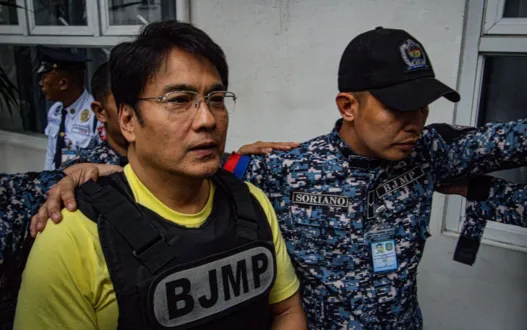
The controversy regarding bong revilla on pork barrel allocations forms part of the larger Priority Development Assistance Fund scandal that shook Philippine politics in 2013. The scandal exposed a systemic scheme wherein discretionary legislative funds were funnelled into bogus non-governmental organizations (NGOs) controlled by Janet Lim-Napoles in exchange for lucrative kickbacks.
In the case involving Revilla’s office, tens of millions of pesos in government funds intended for agricultural and livelihood projects were allegedly diverted to non-existent beneficiaries. The subsequent investigation led to historic detentions, lengthy trials, and extensive political fallout across all branches of government.
Despite the passage of over a decade since the initial expose, the continuing legal maneuvers around bong revilla on pork barrel liabilities serve as a reminder of how deeply embedded and legally complex major corruption cases can become.
| Entity / Party Involved | Role in the 2018 Verdict | Current Status / Obligation |
| Ramon “Bong” Revilla Jr. | Acquitted of Criminal Plunder | Subject to P124.5M civil restitution motion; currently out on bail for separate charges |
| Richard Cambe (Late Chief of Staff) | Convicted of Criminal Plunder | Sentenced to Reclusion Perpetua (Deceased) |
| Janet Lim-Napoles | Convicted of Criminal Plunder | Serving sentence; held jointly liable for civil damages |
| Office of the Ombudsman | Prosecution / Oversight Body | Actively pursuing execution of civil damages and judicial accountability |
Structural Challenges in Executing Anti-Graft Judgments
The difficulty in enforcing civil awards against public officials acquitted of primary crimes highlights structural loopholes in the Philippine judicial process. When complex cases involve multiple co-defendants, appellate motions, and constitutional questions, executing monetary awards can take years, if not decades.
Legal experts monitoring the trajectory of bong revilla on pork barrel proceedings point out several procedural hurdles that slow down the retrieval of funds:
- Interlocutory Appeals: Defense teams frequently utilize appellate remedies before the Supreme Court to suspend the implementation of lower court orders.
- Clarificatory Motions: Differing interpretations regarding the scope of “joint and several liability” in acquittal decisions require extensive judicial clarification.
- Property Garnishment Processes: Identifying, freezing, and liquidating assets to satisfy civil judgments requires prolonged coordination between sheriff offices and financial institutions.
Because of these bottlenecks, Ombudsman Remulla’s call for the Supreme Court to actively monitor civil judgment collections represents a crucial push toward judicial reform.
Future Legal Outcomes and What Lies Ahead
As the debate surrounding bong revilla on pork barrel civil damages continues, legal observers are closely watching how the Sandiganbayan and the Supreme Court will resolve the Ombudsman’s pending motions. A definitive ruling from the highest court could establish a crucial precedent regarding whether acquitted public officials can be held financially responsible for funds misappropriated through their offices.
If the courts rule in favor of execution, it would signal a major victory for fiscal accountability, demonstrating that civil recovery remains viable even when criminal convictions prove elusive. Conversely, if the defense’s position is upheld, lawmakers may be prompted to draft stricter legislative measures to ensure state funds are automatically safeguarded against institutional misuse.
Ultimately, the issue surrounding bong revilla on pork barrel recovery remains an acid test for the Philippine judicial system. As state prosecutors continue their efforts to reclaim the P124.5 million for the public treasury, the case stands as an ongoing narrative about legal responsibility, public office, and the enduring pursuit of state justice.
Get the latest news and updates right here on Metro Balita PH.