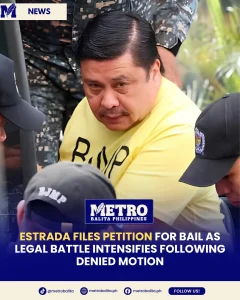
MANILA, Philippines — Senator Jinggoy Estrada has taken a decisive step in his ongoing legal struggle as Estrada files petition for bail before the Sandiganbayan Fifth Division, seeking immediate temporary liberty despite a recent setback in court. The urgent move comes just days after the anti-graft tribunal shot down his initial motion to fix bail, prompting his defense team to submit a formal plea arguing that the state’s evidence against him lacks sufficient weight to keep him behind bars during trial.
The dynamic inside the Sandiganbayan has shifted dramatically as Estrada files petition papers outlining why he should be granted temporary freedom while he fights the non-bailable offense of plunder alongside two counts of graft. The formal seven-page document, which was officially received by the court on Wednesday and made available to media outlets on Thursday, marks a crucial juncture in the high-profile legal saga surrounding allegations of massive budget irregularities within national infrastructure projects.
Strategic Shift in Defense Strategy: Why Estrada Files Petition After Court Rejection
The decision to submit a full petition comes directly on the heels of a procedural defeat for the lawmaker’s defense team. Earlier, the Sandiganbayan Fifth Division turned down Senator Estrada’s request to simply fix his bail amount without evaluating the evidence first. Undeterred by that refusal, the lawmaker’s legal counsel quickly shifted strategy, filing a comprehensive legal motion arguing his fundamental constitutional right to bail based on what they characterize as the inherent weakness of the prosecution’s evidence.
In the formal submission, the defense team emphasized that pre-trial detention should always remain an exception rather than the default rule when prosecution arguments fall short of absolute proof. The motion explicitly asks the anti-graft tribunal to exercise its discretion and grant the lawmaker temporary liberty while the complex trial moves forward in court.
“Senator Jinggoy Ejercito Estrada respectfully prays that the Honorable Court immediately admit him to bail in such amount as the Honorable Court may fix and order his release upon posting of the bail,” the formal court petition explicitly stated.
Legal experts following anti-graft court proceedings note that when Estrada files petition claims focused directly on the strength of prosecution evidence, it forces the tribunal to hold dedicated evidentiary hearings. During these upcoming sessions, government prosecutors from the Office of the Ombudsman will be required to present key witnesses and documentary evidence to prove that the evidence of guilt is indeed strong enough to justify keeping an elected sitting lawmaker detained during proceedings.
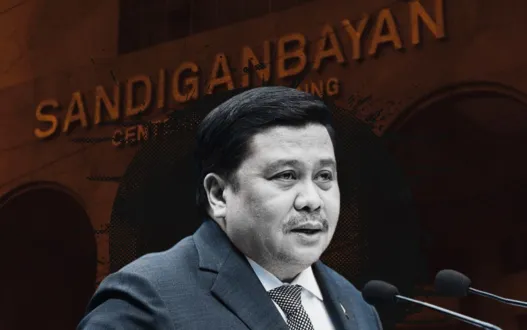
Examining the Plunder Allegations and the DPWH Infrastructure Scandal
The underlying charges against Senator Estrada stem from complex allegations of systemic corruption within public infrastructure spending. According to state prosecutors from the Ombudsman, Estrada allegedly engaged in an intricate mechanism involving illegal budgetary insertions and systematic project allocations within the Department of Public Works and Highways (DPWH) infrastructure portfolio for fiscal year 2025.
State prosecutors formally allege that a total of ₱573 million was “systematically delivered” to the lawmaker through financial kickbacks tied to these allocations. Because plunder involves amounts exceeding the ₱50 million threshold established by law, it is classified under Philippine jurisprudence as a non-bailable offense—meaning conditional liberty is granted only if the court determines after a hearing that the evidence presented by the state is not overwhelming.
Key Aspects of the Charges
- Primary Offense: Plunder (Non-bailable offense under Philippine law)
- Secondary Charges: Two counts of violating the Anti-Graft and Corrupt Practices Act
- Alleged Misappropriation: ₱573 million in kickbacks and budget insertions
- Government Agency: Department of Public Works and Highways (DPWH)
- Budget Cycle: Fiscal Year 2025 Infrastructure Portfolio
- Jurisdiction: Sandiganbayan Fifth Division
Despite the serious nature of these accusations, Senator Estrada has consistently and vigorously maintained his innocence, rejecting the narrative constructed by government investigators. He asserts that the financial allocations in question were legitimate legislative initiatives aimed at public infrastructure development rather than personal enrichment or unlawful financial gain.
Understanding the Legal Arguments as Estrada Files Petition for Liberty
Under Philippine criminal procedure, an accused person charged with a capital offense or a crime punishable by reclusion perpetua (such as plunder) is not automatically entitled to bail upon request. However, Section 13, Article III of the Philippine Constitution guarantees that all persons, except those charged with offenses punishable by reclusion perpetua when evidence of guilt is strong, shall before conviction be bailable by sufficient sureties.
When Estrada files petition documentation before the Fifth Division, the core legal argument hinges entirely on establishing that the prosecution’s primary evidence relies on circumstantial claims rather than direct, indisputable proof of guilt.
The constitutional evaluation follows a strict framework:
- Crime Classification: The tribunal checks if the offense carries the penalty of reclusion perpetua.
- Evidentiary Threshold: The court determines if the prosecution’s proof of guilt is clear and convincing.
- Judicial Ruling: If evidence is deemed strong, bail is denied; if evidence is weak or unconvincing, bail becomes a matter of right for the accused.
The senator’s legal team asserts that the physical evidence does not directly link Senator Estrada to the monetary trail alleged by Ombudsman prosecutors. Furthermore, they argue that the testimonial evidence from government witnesses consists largely of hearsay or uncorroborated claims, while stressing that the constitutional presumption of innocence remains in full effect throughout pre-trial proceedings.
When Estrada files petition pleadings of this nature, the legal burden of proof rests firmly on the shoulders of the prosecution to demonstrate to the magistrates of the Fifth Division that their case is unassailable.
Senate Duties and Political Ramifications of Continued Detention
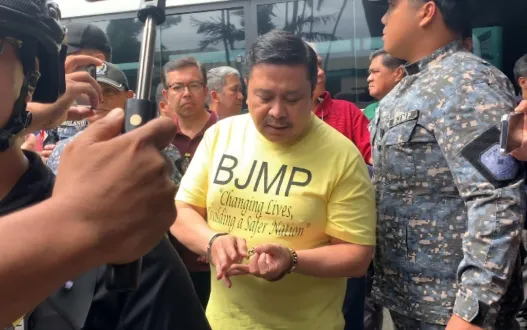
The continuous detention of Senator Estrada carries significant political implications in the Philippine legislature. Despite his current detention, Estrada was recently assigned key committee chairmanships in the Senate, highlighting the delicate balance between judicial proceedings and legislative functioning in the country’s governance.
Supporters argue that keeping an elected legislator in pre-trial detention deprives millions of constituents of full representation in lawmaking and policy oversight. They emphasize that an official who has not been convicted by final judgment should be permitted to carry out legislative duties unless the evidence against them is incontrovertible.
Conversely, critics and legal watchdogs maintain that high-ranking government officials must face the full rigor of anti-corruption laws without receiving special treatment or privilege. They contend that the integrity of the judicial system depends on treating all accused individuals equally, regardless of political standing or electoral mandate.
As Estrada files petition filings with the court, his legislative staff and political allies are keeping a close watch on the tribunal’s timeline. If the Fifth Division grants the request after evaluating the prosecution’s evidence, Estrada could immediately return to performing his official duties in the Senate halls while his trial continues. If denied, he will remain in custody throughout the trial process.
Deep-Dive into the Legal Precedents and Court Standards
The Sandiganbayan has a long history of handling plunder cases involving high-profile public officials, and the standards for granting bail during such trials are well-established in Philippine jurisprudence. The court must evaluate not whether the accused is ultimate guilty—a determination reserved for the final judgment—but whether the evidence presented at the bail stage creates a high probability of guilt.
When Estrada files petition paperwork seeking temporary liberty, the court must carefully weigh several factors:
- The credibility and reliability of state witnesses testifying about the alleged ₱573 million scheme.
- The authenticity and admissibility of financial records and DPWH documents submitted by Ombudsman investigators.
- The existence of direct links connecting the lawmaker to the illegal budgetary insertions.
- The potential flight risk or danger of witness tampering if temporary release is granted.
In previous high-profile plunder cases, the Sandiganbayan has granted bail when prosecution evidence was found to be largely hearsay or reliant on accomplice testimony lacking independent corroboration. Conversely, where physical records and bank trail evidence firmly established a direct connection, bail petitions have been consistently denied.
What Lies Ahead at the Sandiganbayan Fifth Division
The immediate next step for the Sandiganbayan Fifth Division is to schedule formal bail hearings to evaluate the merit of the application. During these upcoming proceedings, both the defense and prosecution will present preliminary evidence and examine witnesses to allow the magistrates to gauge the overall strength of the state’s case.
Court observers note that bail hearings in plunder cases can often turn into lengthy mini-trials, requiring several weeks or even months of testimony from state auditors, bank investigators, and key witnesses from the DPWH and Department of Budget and Management.
Every time Estrada files petition motions or legal manifestations before the tribunal, it signals an ongoing defense strategy to exhaust every procedural avenue available under Philippine law. As the anti-graft court prepares to deliberate on the petition, public interest remains focused on whether the prosecution’s evidence will withstand intense judicial scrutiny or if Senator Estrada will successfully secure temporary freedom while contesting the charges against him.
Stay updated with the latest news at Metro Balita PH.