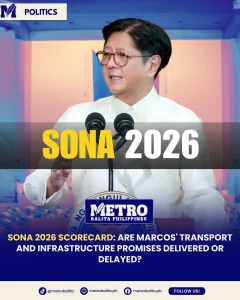

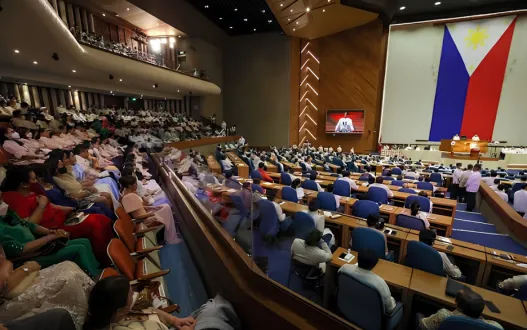
As President Ferdinand Marcos Jr. prepares to deliver his fifth State of the Nation Address for SONA 2026, public scrutiny surrounding his administration’s flagship commitments has reached a critical peak. Four years into his six-year presidential tenure, the ambitious “Build Better More” program stands as the centerpiece of executive policy. The initiative promised to modernize the country’s overburdened transit systems, lower logistical overheads, and bridge geographic divides across the archipelago. Within the first 100 words of this critical political juncture in SONA 2026, public funds poured into multi-billion-peso highways, commuter railways, and transport relief programs are undergoing a thorough public audit to determine whether physical infrastructure promises are moving forward on schedule or stalling under bureaucratic and economic headwinds.
The foundational thesis of the administration leading into SONA 2026 focused on expanding upon previous public works programs while aggressively tackling chronic mobility bottlenecks across urban hubs. Across Metro Manila and key provincial corridors, the executive branch promised sweeping progress on bridges, railways, airports, sea ports, and socialized housing developments. However, as the President takes the podium for SONA 2026, physical realities on the ground reveal a highly complex landscape defined by incremental technical breakthroughs, structural setbacks, and persistent right-of-way hurdles that continue to challenge project managers and test commuter patience.
Mega-Bridges and Structural Setbacks Heading into SONA 2026
When evaluating the state of public works in the lead-up to SONA 2026, bridge construction presents a mixed record of long-awaited openings coupled with troubling engineering failures. Local connectivity projects have proven essential to agricultural supply chains and regional commerce, yet structural vulnerabilities have repeatedly disrupted timelines.
The Cabagan-Sta. Maria Bridge Collapse and Reopening
A prime example of these execution challenges ahead of SONA 2026 is the Cabagan-Sta. Maria Bridge in Isabela. Originally commissioned in November 2014 with an overall budget of ₱1.2 billion, the long-delayed crossing took over a decade to construct before finally opening to public traffic on February 1, 2025. However, just weeks after its official inauguration, a critical segment of the bridge collapsed on February 27, 2025. Initial technical investigations by authorities traced the damage to severe vehicle overloading combined with structural under-design. Following urgent retrofitting and structural reinforcements, the vital crossing was officially reopened exclusively to light vehicles in March 2026. This incident highlights the ongoing engineering and quality control challenges that continue to color national discussions prior to SONA 2026.
Metro Manila Seismic Resiliency and the Guadalupe Bridge Overhaul
In dense metropolitan areas, seismic resiliency has taken center stage under the comprehensive Metro Manila Priority Seismic Improvement Project. Financed with support from the Japan International Cooperation Agency (JICA), this ₱10.4-billion infrastructure initiative focuses on retrofitting key arterial crossings to ensure structural survival during major seismic events. Most notably, the overhaul targets the heavily traversed Guadalupe Bridge in Makati and the Lambingan Bridge in Sta. Ana, Manila. President Marcos previously pledged that the complex Guadalupe Bridge rehabilitation would be finished before his term expires, and Department of Public Works and Highways (DPWH) guidelines confirm that full project completion remains targeted for February 2028.
Bataan-Cavite Interlink Bridge Beyond 2028
Meanwhile, larger signature connectivity projects face much longer construction horizons. Public Works and Highways Secretary Vince Dizon confirmed ahead of SONA 2026 that while critical contract packages for the monumental 32-kilometer Bataan-Cavite Interlink Bridge are actively being awarded, civil works will definitely not be completed before President Marcos leaves office in 2028. Designed as a transformative regional bypass to cut travel time between Mariveles, Bataan, and Naic, Cavite, from five hours down to just 45 minutes, this multi-billion-peso mega-bridge remains a cornerstone long-term goal, even as immediate delivery remains out of reach for the current executive term.
Railway Expansion: ROW Bottlenecks and Long-Term Horizons
Rail development remains another core theme in the SONA 2026 infrastructure assessment. Modernizing mass public transit relies heavily on expanding passenger rail capacity to alleviate severe vehicular gridlock across Metro Manila and seamlessly connect outlying economic growth zones.
The Metro Manila Subway Project Timeline
The flagship 33-kilometer Metro Manila Subway Project (MMSP)—a mega-transit system valued at over ₱488 billion and backed by loan agreements approved through JICA and the Department of Economy, Planning and Development—represents one of the most complex underground engineering feats in national history. Spanning from Valenzuela City to Parañaque City with a direct spur line to Ninoy Aquino International Airport (NAIA) Terminal 3, the underground rail network reached a key milestone in February 2026 when President Marcos led the groundbreaking ceremony for the Kalayaan Avenue and Bonifacio Global City (BGC) stations in Taguig City. Strategic milestones leading up to SONA 2026 show steady underground tunneling, with official target timelines setting a partial demonstration run for 2028 and full commercial operations expected by 2032.
Commuter Rail Corridors and Right-of-Way Delays
Other major commuter rail lines are tracking toward mid-to-late term partial openings across Luzon:
- Metro Rail Transit Line 7 (MRT-7): The 22-kilometer elevated rail line connecting Quezon City to San Jose del Monte, Bulacan, is currently scheduled for partial operations in the second quarter of 2027.
- North-South Commuter Railway (NSCR): The massive 147-kilometer passenger rail trunk connecting Central Luzon, Metro Manila, and Calabarzon aims to achieve partial operational status in the third or fourth quarter of 2027.
Department of Transportation (DOTr) Secretary Giovanni Lopez acknowledged that right-of-way (ROW) acquisition remains the principal operational bottleneck delaying construction and completion across rail corridors. Acquiring private land and relocating thousands of affected informal settler families along rail rights-of-way continue to drag construction schedules, requiring sustained inter-agency coordination to clear building sites without violating socialized housing mandates.
Commuter Subsidies, Fuel Crises, and Transport Sector Tension
Transport relief measures have also gained intense urgency ahead of SONA 2026 due to severe external economic shocks that hit the national economy hard over the past year. Commuters navigating daily transit in 2026 have noted that discussions surrounding SONA 2026 frequently touch on fuel subsidies, discount programs, and the acute financial strain facing public utility vehicle (PUV) drivers and operators.
Free Rides, Fare Subsidies, and Rail Discounts
To buffer daily commuters against rising living costs and transit inflation, the government implemented several fare mitigation initiatives throughout 2025 and early 2026. The iconic “Love Bus” program, first launched in the 1970s, was revived in major regional urban hubs such as Cebu and Davao to provide free rides. In March 2026, the Metropolitan Manila Development Authority (MMDA) relaunched the service along the high-density route between Robinsons Galleria and Eastwood City.
Additionally, transit authorities rolled out targeted rail discounts, including the “1+3 Pamilya Pass” on MRT-3, LRT-1, and LRT-2 for Sunday travel, alongside standard 50-percent discounts for senior citizens, students, and persons with disabilities. In March 2026, the DOTr enacted an emergency 50-percent fare discount for all passengers riding MRT-3 and LRT-2 in direct response to economic strain driven by global supply disruptions.
Global Energy Shocks, Transport Strikes, and the Fare Freeze
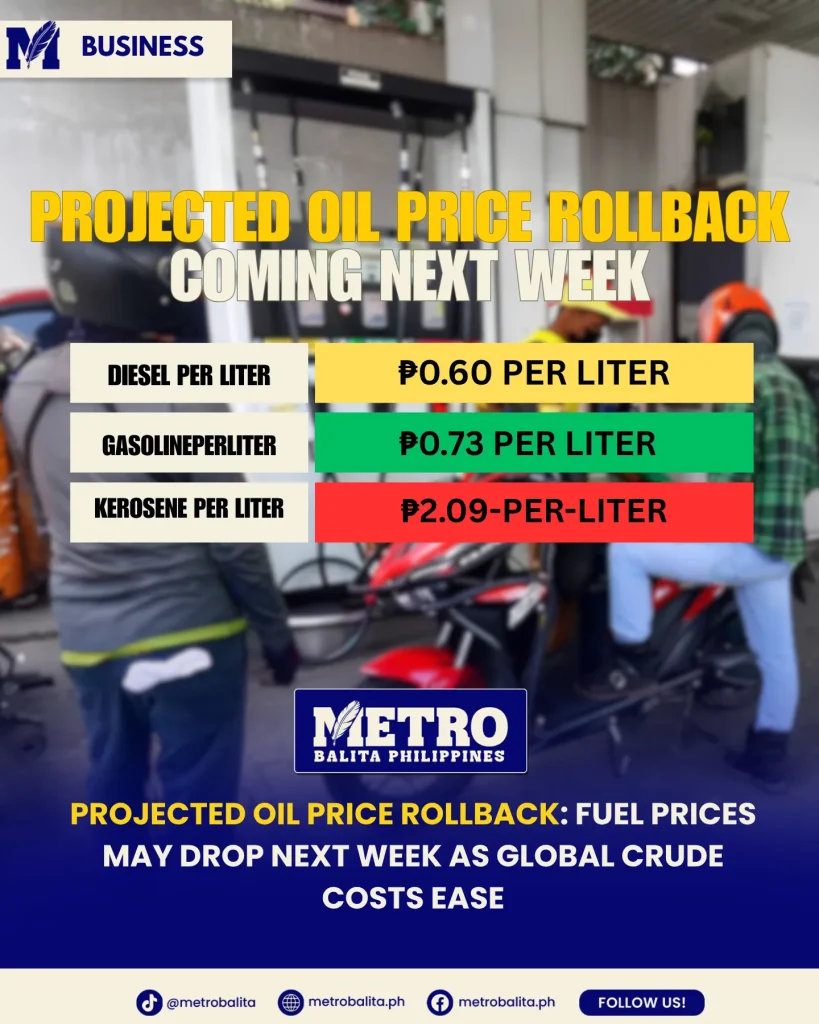
The broader economic backdrop of SONA 2026 has been heavily influenced by the Middle East geopolitical conflict, which triggered sharp spikes in global oil prices throughout early 2026. Soaring diesel costs severely eroded the daily earnings of transport workers, driving major transport groups like Manibela and Piston to stage nationwide strikes. Protesters demanded the repeal of the Oil Deregulation Law, the removal of excise taxes and value-added tax (VAT) on fuel products, and immediate fare adjustments to keep drivers afloat.
Although the Land Transportation Franchising and Regulatory Board (LTFRB) approved fare increases for jeepneys, buses, airport taxis, and transport network vehicle services scheduled to take effect on March 19, 2026, President Marcos suspended the hikes just one day before implementation. Citing the disproportionate financial burden on commuters, the President froze fare rates and declared a state of national energy emergency. To stabilize domestic energy supplies and ensure the uninterrupted movement of food and essential goods, the administration adopted the Unified Package for Livelihoods, Industry, Food and Transport (UPLIFT) as an overarching policy framework.
While the executive fare freeze offered immediate financial relief to millions of daily commuters, it intensified friction with public transport operators who argued that stagnant fares amidst soaring fuel prices threatened their operational survival. Concurrently, basic system maintenance issues drew public ire when viral social media posts revealed pest infestations inside MRT-3 train handrails, prompting official DOTr inspections and formal notices to explain issued to maintenance provider Sumitomo Corporation.
Governance, Anti-Corruption Protests, and the Road to 2028
In addition to operational transit disruptions, the path to SONA 2026 has been shadowed by high-profile anti-corruption investigations into public works spending. Congressional inquiries launched in 2025 uncovered systemic irregularities in regional flood control and infrastructure contracts, implicating major private construction firms, public works officials, and several sitting lawmakers.
Allegations involving phantom projects, double-appropriations, and kickbacks sparked widespread civic outrage, mobilizing thousands of citizens into anti-corruption street demonstrations demanding strict accountability and prosecution. These public demands have heightened the pressure on the Marcos administration during SONA 2026 to demonstrate that public infrastructure spending produces verifiable, high-quality physical assets rather than wasted taxpayer money.
Ultimately, SONA 2026 serves as a crucial reality check for an administration approaching the final stretch of its term. While ambitious mega-projects like the Metro Manila Subway and regional rail networks represent genuine long-term investments in national mobility, practical execution remains burdened by right-of-way disputes, construction delays, external commodity shocks, and intense civic oversight. As the country looks past SONA 2026 toward 2028, the ultimate legacy of the “Build Better More” agenda will depend on converting ambitious architectural blueprints into reliable, fully operational transport networks for the Filipino public.
Stay updated with the latest news at Metro Balita PH.