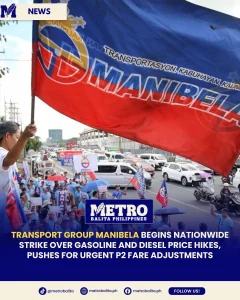

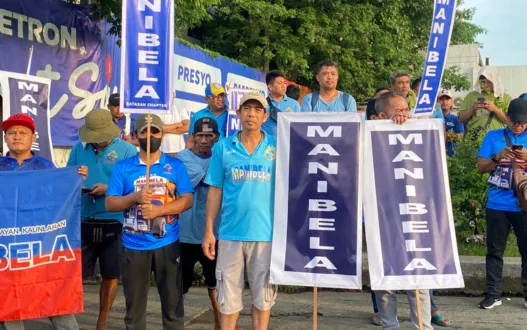
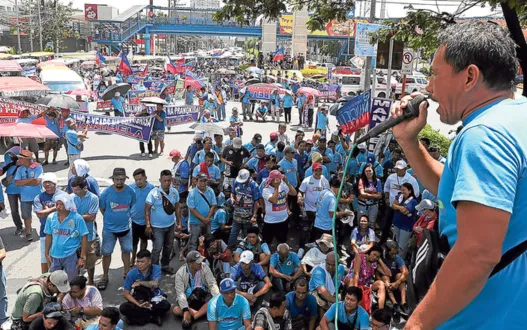
Commuters across major Philippine urban centers faced widespread transportation challenges on Wednesday morning as transport group Manibela officially commenced a two-day nationwide transport strike to protest recent double-digit increases in pump prices and push for an emergency fare adjustment. The mass action, which began at 5:00 a.m. on July 22, saw hundreds of public utility vehicle (PUV) drivers and operators suspend regular operations across key routes. Members and allied transport workers assembled as early as 6:15 a.m. at the Philippine Coconut Authority (Philcoa) along Commonwealth Avenue in Quezon City, establishing a central command post and calling on public transport workers across Metro Manila and surrounding provinces to join the nationwide movement.
The coordinated work stoppage comes directly on the heels of one of the steepest single-week petroleum price surges in recent memory, driven by escalating international geopolitical conflicts in the Middle East. With fuel costs consuming an ever-larger share of daily driver revenues, leadership from transport group Manibela stated that the transport sector has been pushed to a financial breaking point where continued daily operation without regulatory relief is no longer sustainable.
Unprecedented Fuel Surges Drive Transport Sector to Financial Collapse
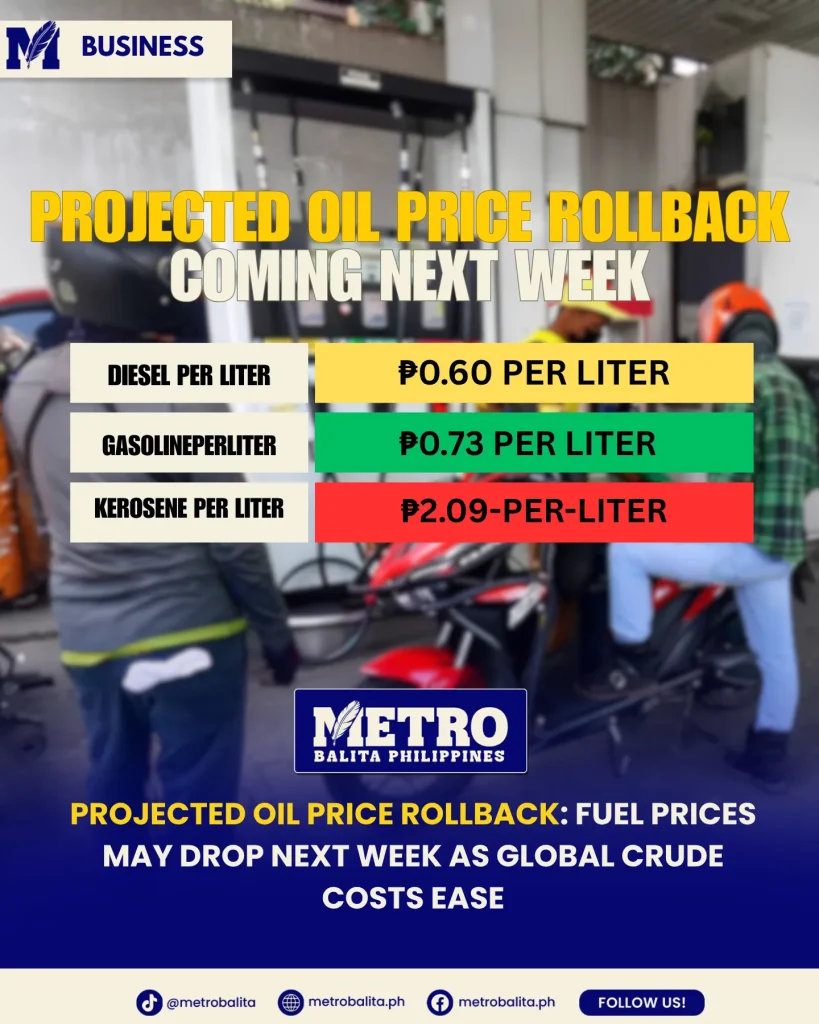
The immediate trigger for the nationwide protest was a sweeping round of fuel price increases implemented by oil companies just twenty-four hours prior. On Tuesday, fuel retailers announced dramatic upward adjustments, raising diesel prices by up to P10.68 per liter, kerosene by P11.77 per liter, and gasoline by P3.65 per liter. These staggering figures represent one of the heaviest single-day financial shocks experienced by small transport operators in recent years.
For traditional and modernized jeepney operators, these numbers represent an immediate collapse in daily take-home earnings. Under typical operating conditions, fuel accounts for anywhere between 40% to 60% of a jeepney driver’s daily gross revenue. With diesel prices surging by double digits in a single adjustment, drivers report losing hundreds of pesos every day—money that directly translates into reduced household budgets for basic necessities like food, utilities, and medical expenses.
Speaking from the Philcoa strike center in Quezon City, transport group Manibela President Mar Valbuena voiced deep frustration over what he described as long-standing government inaction regarding petroleum market volatility. Valbuena sharply criticized regulatory bodies and the Department of Energy (DOE) for failing to shield small transport workers and vulnerable consumers from ruthless global price shifts.
“The transport sector cannot remain silent while the Department of Energy is seemingly ignoring the consecutive increases in oil prices that are sinking the livelihoods of jeepney drivers and ordinary Filipinos,” Valbuena declared during an address to striking drivers.
Valbuena emphasized that while staging a transport strike is a difficult decision that inherently causes inconvenience for the riding public, transport group Manibela felt left with no other mechanism to capture state attention. He argued that regulatory authorities routinely wait until public outcry fades before allowing petroleum distributors to impose subsequent price increases without rigorous audit, price transparency, or state intervention.
Transport Group Manibela Petitions LTFRB for Emergency P2 Fare Adjustment
As part of its multi-pronged response to the ongoing fuel crisis, transport group Manibela confirmed it is formally filing a petition with the Land Transportation Franchising and Regulatory Board (LTFRB) on Wednesday. The petition seeks immediate regulatory action on two distinct fronts regarding the minimum jeepney fare structure in the country.
First, transport group Manibela is asking the LTFRB to unfreeze and lift the temporary suspension on a previously granted P1 fare increase. Second, the group is requesting an additional P1 upward adjustment in light of the current oil market shock. If approved by regulators, the combined petitions would raise the minimum jeepney fare by a total of P2 nationwide.
| Proposed Fare Adjustment Breakdown | Details & Impact |
| Existing Base Fare | Currently regulated minimum fare for traditional jeepneys |
| Pending P1 Lifting | Motion to unfreeze previously approved P1 fare increase |
| New Emergency Petition | Additional P1 request submitted by transport group Manibela |
| Total Target Base Fare | Combined P2 increase over current base rate |
According to economic assessments presented by transport group Manibela, a P2 fare adjustment is essential not merely to offset higher pump prices, but also to compensate for soaring maintenance and spare parts costs. Vehicle tires, engine oil, brake pads, and general mechanical servicing have all seen steep inflationary adjustments over the past year.
Valbuena noted a stark policy discrepancy between land-based public transit and maritime or aviation transport. While commercial airlines and shipping lines are permitted to implement dynamic fuel surcharges or adjust ticket rates relatively quickly in response to global market fluctuations, land-based PUV operators remain tied to lengthy, bureaucratic petition processes that often take months to resolve. During these extended regulatory delays, individual drivers absorb all operational losses out of pocket, severely draining their personal savings.
Widespread Mobilization Across Metropolitan Transit Corridors
The scope of the July 22 strike extends far beyond localized jeepney routes in Quezon City. Leadership from transport group Manibela announced that five major transport organizations and cooperatives have committed full support to the mass protest action, mobilizing a combined network estimated at 100,000 public utility vehicles nationwide.
In addition to traditional jeepneys, transport group Manibela actively rallied operators from other transit sectors, including UV Express services, city buses, Transport Network Vehicle Services (TNVS), and motorcycle taxi drivers. Independent driver associations in key urban centers outside Metro Manila—including parts of Central Luzon and Southern Tagalog—reported holding localized rallies and assembly points in solidarity with the national protest movement.
The group established clear coordination protocols across various major transit arteries to monitor the progress of the work stoppage. Organizers stationed along major highways kept track of participating routes, while communication teams coordinated with local chapters to assess commuter volume and driver participation levels in real time.
To maintain momentum and press their demands effectively, representatives from transport group Manibela indicated that the work stoppage could be extended through Friday, July 24, if the national government and the LTFRB fail to provide concrete commitments regarding immediate fare relief and petroleum tax reform.
On-the-Ground Impact and Commuter Reactions
The immediate effects of the transport strike were felt early Wednesday morning along Metro Manila’s major transit arteries. Along Commonwealth Avenue in Quezon City—one of the country’s busiest commuter corridors—buses and non-striking jeepneys were filled to capacity within minutes of arriving at stops.
To mitigate passenger congestion and prevent widespread stranding of daily workers, the Quezon City Traffic and Transport Management Department (TTMD) deployed field personnel along key intersections. Local government units across Metro Manila mobilized municipal buses, police utility vehicles, and government trucks to offer free rides (Libreng Sakay) to stranded workers and students along heavily affected routes.
Commuter reactions to the protest action remained complex and multi-faceted:
- Minimum Wage Concerns: Low-income earners expressed anxiety over a potential P2 fare hike, noting that daily transit costs already consume a significant portion of their daily earnings alongside rising food inflation.
- Public Empathy: Other daily commuters voiced strong understanding for the drivers, acknowledging that steep diesel price hikes make it impossible for transport workers to sustain their families without an adjusted fare.
- Calls for Government Action: Many citizens echoed calls for systemic government intervention, agreeing that tax adjustments or fuel subsidies are preferable to placing the financial burden entirely on either drivers or passengers.
Monitored checkpoints organized by transport group Manibela reported peaceful gatherings at key assembly hubs, with coordinators ensuring that emergency vehicles, private cars, and non-participating commuters were allowed unhindered passage throughout the protest activity.
Demands for Structural Reforms: Tax Relief vs. Short-Term Aid
Beyond the immediate request for a fare increase, transport group Manibela is calling on the executive branch to enact fundamental policy shifts regarding fuel taxation and energy regulation. The group urged President Ferdinand Marcos Jr. to prioritize long-term, structural solutions to energy pricing rather than relying exclusively on temporary cash handouts or delayed fuel subsidies (ayuda).
Chief among the long-term demands put forward by transport group Manibela is the temporary suspension or permanent repeal of the Excise Tax and Value-Added Tax (VAT) applied to fuel products under current tax laws. Industry analysts note that removing these tax layers during periods of extreme global crude volatility could immediately reduce domestic pump prices by P10 to P15 per liter, offering immediate relief to both transit operators and private consumers alike.
The strategy advocated by transport group Manibela highlights a growing debate over state energy management in the Philippines. While government agencies frequently point to fuel subsidy distribution programs as the primary buffer for transport workers, transport leaders argue that administrative delays, bureaucratic distribution hurdles, and limited coverage leave thousands of legitimate PUV drivers without assistance during critical price spikes.
As the two-day strike progresses, all eyes turn to the LTFRB, the Department of Transportation, and the Department of Energy to see how the administration responds to the escalating demands of transport group Manibela and the broader public transport sector.
Stay updated with the latest news at Metro Balita PH.