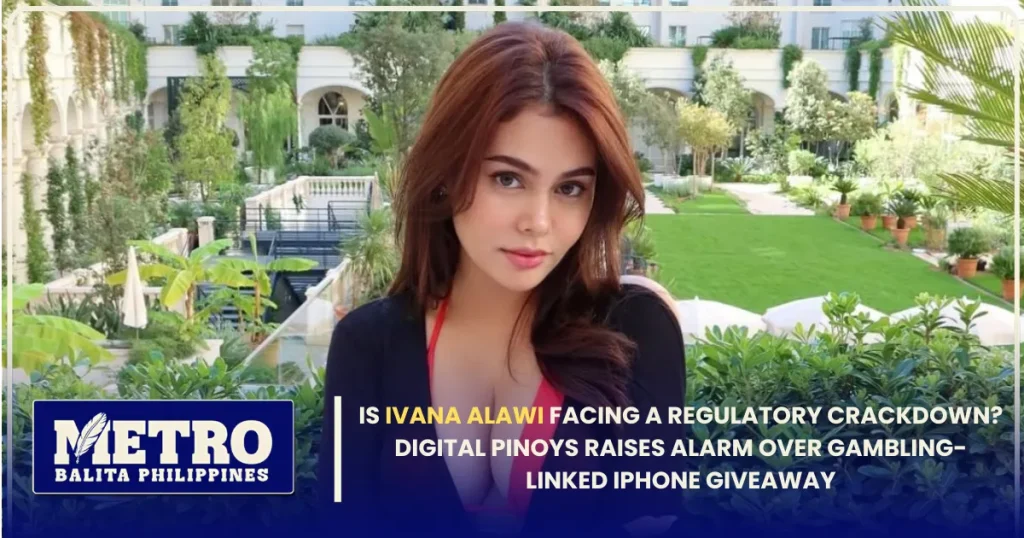
MANILA, Philippines — A prominent digital advocacy organization has sounded a national alarm over a massive social media contest organized by top-tier actress, model, and internet personality Ivana Alawi. The campaign, which promises to distribute one hundred premium smartphones to online participants, has drawn severe criticism due to its direct structural links to a prominent electronic gambling application currently endorsed by the celebrity. Digital Pinoys, an advocacy group championing consumer rights and internet safety in the Philippines, issued a public warning indicating that the giveaway mechanics utilized by Ivana Alawi effectively function as a predatory marketing funnel. The group argues that this method inadvertently exposes minor children, teenagers, and other highly vulnerable demographics to addictive online betting content under the guise of an ordinary digital contest.
The advocacy group is urgently calling upon regulatory authorities, specifically the Philippine Amusement and Gaming Corporation (PAGCOR), alongside the social media conglomerate Meta Platforms, to launch a swift investigation. Digital Pinoys wants to determine whether these aggressive, high-value celebrity promotions comply with domestic advertising laws and children’s digital safety guidelines. As the online gaming sector expands rapidly throughout the country, the intersection of mainstream celebrity entertainment and digital wagering has turned into a heavily contested battleground for public interest groups.
The Mechanics of the Online Promotion
Unpacking the Strategy Behind the Ivana Alawi Online Campaign
The controversy began to unfold rapidly after Ivana Alawi published the details of the grand smartphone raffle across her official digital channels, where she commands an audience of tens of millions of active followers. The premise of the promotional event was undeniably appealing: a chance for ordinary netizens to win a brand-new smartphone. However, the exact conditions required for entry immediately drew the attention of digital watchdogs. To secure a valid entry into the draw, participants were instructed to follow, like, or actively engage with the official social media handles of the online casino app that Ivana Alawi represents as a brand ambassador.
According to Ronald Gustilo, the National Campaigner for Digital Pinoys, this specific promotional format systematically exploits the widespread public adoration of Ivana Alawi to expand the digital consumer base of a gambling platform. By utilizing high-demand consumer electronics that hold a universal appeal across all economic classes and age brackets, the marketing strategy functions as an exceptionally potent customer acquisition mechanism. Gustilo noted that the primary driver of this cross-promotional event goes far beyond simple viewer appreciation. Instead, it serves as a calculated data and audience expansion strategy designed to capture a broad cross-section of internet users, many of whom would otherwise never intentionally visit or follow an electronic gaming platform.

Consumer Protection and Regulatory Issues
The Threat of Predatory Marketing to Filipino Minors
In a formal public briefing, Digital Pinoys explicitly categorized the social media mechanism deployed by Ivana Alawi as possessing distinct “predatory marketing characteristics.” The core issue raised by the consumer safety group centers on the universally attractive nature of tech giveaways. While traditional gambling advertisements are legally restricted to adult audiences aged 21 and older, an internet raffle offering premium smartphones naturally draws the eager participation of schoolchildren, teenagers, and economically vulnerable individuals who view the prize as an unattainable luxury item.
The danger of this model is its long-term, cumulative impact on young minds. Even if a child or teenager who follows the instructions of Ivana Alawi does not immediately deposit real money or place a live bet on the casino application, the act of following the platform’s social accounts bridges a dangerous gap. By adding these pages to their daily feeds, young users open the door to an ongoing stream of future gambling advertisements, interactive betting notifications, promotional deposit bonuses, and highly stylized marketing content. Over an extended period, this persistent algorithmic exposure can slowly erode natural psychological barriers against financial risk, effectively normalizing wagering behaviors and laying a foundation for future gambling dependencies.
Call for Action to National Regulators and Tech Platforms
In light of these findings, Digital Pinoys has formally petitioned the Philippine Amusement and Gaming Corporation (PAGCOR) to look into the broader implications of influencer-led giveaways tied to regulated industries. In the Philippines, gambling advertisements are subject to strict state mandates, including explicit age gates, visible responsible gaming warnings, and restrictions against targeting impressionable audiences. The consumer group questions whether leveraging a universally appealing lifestyle prize to artificially inflate a casino’s digital following violates the foundational principles of responsible advertising laws.
Simultaneously, the advocacy organization has targeted its appeals toward Meta Platforms, the parent company overseeing Facebook and Instagram—the very spaces where Ivana Alawi commands a massive share of her digital viewership. Major global tech networks maintain strict corporate guidelines concerning real-money gaming promotions, often requiring explicit institutional permissions, local licenses, and tight geographic and age filters to completely insulate youth from exposure. Digital Pinoys asserts that by wrapping a gambling acquisition campaign in the friendly packaging of a celebrity lifestyle giveaway, the system successfully circumvents traditional platform filters. This allows aggressive betting promotions to spread organically across mainstream networks without restriction.
The Broader Implications for the Digital Space
The Evolving Landscape of Influencer Advertising and Gaming Laws
The friction between consumer watchdogs and the promotional management of Ivana Alawi highlights a larger, systemic challenge within the rapidly growing digital ecosystem of the Philippines. Over the last few years, localized online casinos, virtual slot machines, and electronic sportsbooks have experienced an unprecedented commercial boom. To secure market share in a highly saturated digital landscape, these platforms increasingly employ top-tier celebrities like Ivana Alawi to make their brands feel accessible, safe, and part of everyday casual entertainment.
However, the regulatory architecture governing these collaborations remains complicated. While PAGCOR possesses absolute jurisdiction over the licensing and operational compliance of electronic gaming firms, the Department of Trade and Industry (DTI) is tasked with regulating public promotional lotteries and consumer raffles to prevent deceptive practices. A massive giveaway involving one hundred smartphones typically necessitates a formal permit from the DTI to validate the fairness of the raffle. When such a contest is structurally dependent on expanding the consumer network of a regulated gaming entity, it creates a challenging regulatory grey area. Experts warn that if regulatory bodies fail to establish clear boundaries now, it could create a precedent where any highly regulated sector can use popular creators to bypass audience restrictions.

The Long-Term Social Consequences of Normalizing Digital Betting
Beyond the specific legal details and permitting structures, social workers and public health advocates express deep concern regarding the cultural shifts these high-profile partnerships encourage. For decades, traditional gambling carried a distinct societal stigma and was geographically isolated to physical casino properties or off-track betting hubs. Today, the active involvement of beloved public figures like Ivana Alawi effectively rebrands monetary wagering as an ordinary, glamorous lifestyle choice for the modern digital native.
Sociological research consistently indicates that when an influential role model promotes a specific behavior, their audience—especially young, developing minds—strongly associates that activity with modern success and social validation. In the context of the smartphone raffle tied to Ivana Alawi, the public messaging can inadvertently downplay the very real financial and psychological hazards of compulsive online betting. The gamified nature of modern casino applications, reinforced by the steady endorsement of trusted media icons, builds an environment where vulnerable individuals struggle to distinguish between risk-free mobile entertainment and high-stakes financial gaming.
Structural Accountability in the Digital Creator Economy
As public pressure for a formal regulatory crackdown mounts, the digital marketing and talent management industries are closely watching how the situation develops. The ongoing controversy has sparked a broader, necessary debate within the online community regarding the ethical obligations of content creators. Activists argue that because top-tier public figures like Ivana Alawi possess immense cultural influence, they must perform rigorous due diligence before entering promotional agreements with industries that carry inherent public health, societal, and economic risks.
Moving forward, Digital Pinoys and its network of consumer protection partners are pushing for a comprehensive modernization of the country’s digital advertising policies. Proposed reforms include mandating strict, non-skippable age-verification systems for any celebrity content linked to gaming brands, instituting outright prohibitions on using general consumer goods to generate traffic for betting platforms, and creating hefty penalties for digital spaces that fail to safeguard localized audiences. Until definitive policy actions are implemented by regulatory bodies like PAGCOR and corporate networks like Meta, the conversation surrounding Ivana Alawi will stand as a clear reminder of the urgent need for robust consumer safeguards in a modern, hyper-connected society.
Stay updated with the latest news at Metro Balita PH.