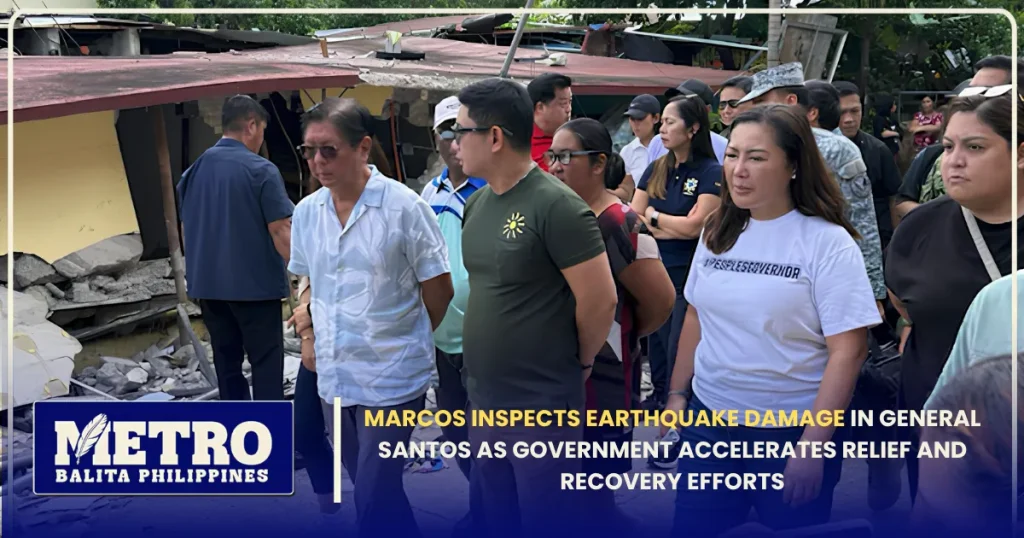
GENERAL SANTOS CITY, Philippines — Marcos Inspects Earthquake Damage in General Santos City as national and local authorities intensify relief operations following the powerful earthquake that recently struck parts of Mindanao. The President’s visit comes amid ongoing rescue efforts, infrastructure assessments, and humanitarian assistance programs aimed at helping thousands of affected residents recover from the disaster.
The decision to personally visit the earthquake-hit region highlights the government’s commitment to ensuring that emergency response measures are implemented efficiently. As Marcos Inspects Earthquake Damage, officials continue gathering data on the full extent of destruction caused by the powerful tremor, which damaged public infrastructure, disrupted essential services, and displaced numerous families.
Government agencies have been working around the clock to provide immediate support to affected communities while conducting detailed assessments of damaged structures and critical facilities.
Marcos Inspects Earthquake Damage During On-Site Assessment
President Ferdinand Marcos Jr. arrived in General Santos City to personally evaluate the situation and receive comprehensive updates from disaster management officials, local government leaders, and emergency response agencies.
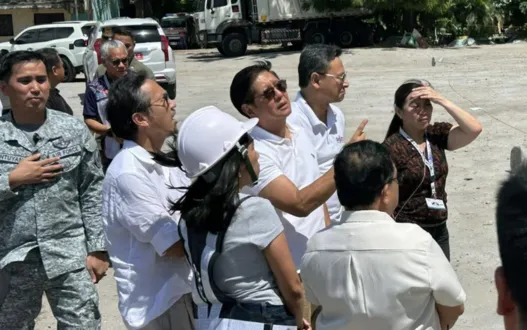
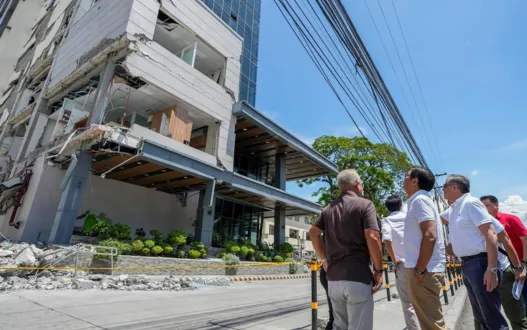
During the visit, Marcos Inspects Earthquake Damage across several affected areas, including residential communities, public facilities, and infrastructure projects impacted by the earthquake. The President participated in a situation briefing where officials presented initial reports on casualties, property losses, and ongoing relief operations.
Authorities outlined the challenges facing affected communities, including damaged roads, disrupted communication services, and the need for additional emergency assistance in remote locations.
As Marcos Inspects Earthquake Damage, he emphasized the importance of rapid coordination between national government agencies and local authorities to ensure that aid reaches residents as quickly as possible.
Officials also discussed strategies to accelerate rehabilitation efforts once emergency response operations transition into the recovery phase.
Significant Damage Recorded Across Affected Areas
Preliminary assessments indicate that the earthquake caused substantial damage to both public and private properties throughout portions of Mindanao. Several government buildings sustained structural cracks, while schools, commercial establishments, and residential homes reported varying degrees of damage.
Engineering teams continue conducting inspections to determine whether affected structures remain safe for occupancy. In some locations, authorities have restricted access to buildings pending further evaluation.
The scale of destruction has prompted concerns regarding the potential cost of reconstruction efforts. Officials estimate that infrastructure rehabilitation could require significant government funding as recovery programs move forward.
As Marcos Inspects Earthquake Damage, local leaders have called for additional resources to help communities rebuild damaged facilities and restore normal economic activities.
Many residents remain cautious due to the possibility of aftershocks, which continue to be monitored by disaster management agencies.
Thousands of Families Temporarily Displaced
The earthquake forced thousands of residents to evacuate their homes due to safety concerns and structural damage. Temporary shelters have been established in schools, gymnasiums, and other public facilities to accommodate displaced families.
Relief teams have distributed food packs, drinking water, medical supplies, and hygiene kits to evacuation centers across affected areas. Health workers are also providing medical consultations and psychological support services to residents coping with the emotional impact of the disaster.
Community leaders have praised volunteers and emergency responders for their swift actions during the immediate aftermath of the earthquake.
As Marcos Inspects Earthquake Damage, government officials continue evaluating additional assistance measures to support families who may require long-term relocation or housing assistance.
Many evacuees expressed hope that rehabilitation efforts will allow them to return to their homes as soon as safety assessments are completed.
Marcos Inspects Earthquake Damage While Monitoring Rescue Efforts
Search and rescue teams remain deployed in areas where damaged structures pose potential risks to residents. Emergency personnel continue clearing debris and conducting inspections to ensure that no individuals remain trapped inside unstable buildings.
Authorities have mobilized specialized equipment and trained rescue units to support operations in heavily affected locations. Coordination between local governments, military personnel, police officers, and volunteer organizations has played a critical role in maintaining an organized response.
During the briefing, Marcos Inspects Earthquake Damage reports and receives updates regarding ongoing rescue operations. Officials assured the President that all available resources are being utilized to protect lives and assist affected communities.
The administration reiterated its commitment to maintaining a strong emergency response presence until recovery efforts become fully operational.
Transportation and Public Services Impacted
The earthquake disrupted transportation services in several areas, prompting authorities to conduct safety inspections on roads, bridges, airports, and other critical infrastructure.
Engineers have been tasked with evaluating structural conditions before facilities are cleared for regular operations. Some transportation services experienced temporary disruptions while inspections were being completed.
Utility providers also reported interruptions to electricity and communication services immediately following the earthquake. Restoration teams were quickly deployed to repair damaged facilities and restore service to affected communities.
As Marcos Inspects Earthquake Damage, officials emphasized the importance of restoring essential services to support relief operations and help residents resume normal daily activities.
Gradual improvements have already been reported in several locations, although repair work continues in areas that suffered more extensive damage.
Whole-of-Government Response Ordered
Following consultations with disaster response agencies, the President directed government departments to implement a comprehensive recovery strategy designed to address both immediate and long-term needs.
As Marcos Inspects Earthquake Damage, he instructed relevant agencies to prioritize humanitarian assistance, infrastructure rehabilitation, and livelihood support programs for affected residents.
Government officials stated that emergency funds and resources have been allocated to accelerate relief distribution and support reconstruction initiatives.
The administration is also coordinating with local government units to identify communities requiring additional assistance and specialized recovery programs.
Officials stressed that rebuilding efforts will focus not only on repairing damaged infrastructure but also on improving disaster resilience and preparedness measures.
Recovery Expected to Take Months
Disaster management experts believe that the recovery process will likely extend over several months due to the widespread impact of the earthquake. Rebuilding homes, restoring infrastructure, and supporting affected businesses will require coordinated efforts from government agencies and local stakeholders.
Economic analysts have warned that prolonged disruptions could affect local industries and commercial activities if rehabilitation efforts are delayed. However, authorities remain optimistic that recovery programs can help minimize long-term economic consequences.
As Marcos Inspects Earthquake Damage, government officials continue developing comprehensive plans aimed at accelerating reconstruction while ensuring public safety remains a top priority.
Community organizations and humanitarian groups have also pledged support for affected families as recovery efforts progress.
Marcos Inspects Earthquake Damage as Communities Begin Rebuilding
For many residents, the focus has shifted from emergency survival to long-term recovery. Families are beginning to assess the condition of their homes, while local businesses are evaluating the impact of the earthquake on operations.
The President’s visit has been viewed by many community members as a sign of the government’s commitment to supporting affected areas throughout the rebuilding process.
As Marcos Inspects Earthquake Damage and oversees response efforts, authorities continue emphasizing the importance of collaboration among government agencies, local communities, and private organizations.
While significant challenges remain, residents remain hopeful that coordinated recovery efforts will help restore normalcy and strengthen communities against future disasters.
The road ahead may be difficult, but officials believe that sustained government support, community resilience, and effective disaster management strategies will play a vital role in helping affected areas recover from one of the most significant earthquakes to impact Mindanao in recent years.
For more news and updates, visit Metro Balita Ph.