
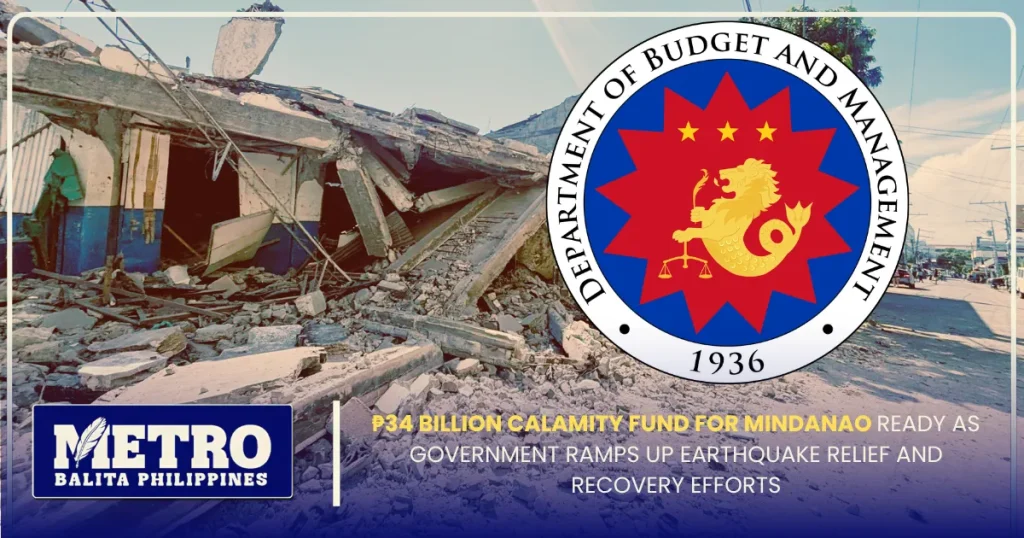
MANILA, Philippines — ₱34 Billion Calamity Fund for Mindanao Available for Immediate Disaster Response
The national government has assured affected communities that the ₱34 billion calamity fund for Mindanao remains available and ready to support relief, rescue, rehabilitation, and recovery operations following the devastating magnitude 7.8 earthquake that struck parts of Southern Philippines.
As rescue teams continue searching for survivors and local governments assess the extent of the damage, the Department of Budget and Management (DBM) confirmed that billions of pesos remain accessible through the country’s disaster response mechanisms. Government officials said the available funding will help ensure that emergency assistance reaches affected families, damaged communities, and local government units in the shortest possible time.
The announcement comes as authorities intensify relief operations in areas severely impacted by the powerful earthquake, particularly in Sarangani and neighboring provinces where infrastructure damage, displacement, and service disruptions have been reported.
Government Confirms Availability of ₱34 Billion Calamity Fund for Mindanao
According to the DBM, the country’s disaster response resources remain sufficient to address the immediate needs of earthquake victims. Officials disclosed that the National Disaster Risk Reduction and Management Fund still holds approximately ₱34.2 billion that may be utilized for disaster-related interventions and emergency operations.
The agency emphasized that Quick Response Funds (QRFs) assigned to various government departments remain available and may be immediately deployed to support ongoing rescue missions, evacuation efforts, food distribution, medical assistance, and rehabilitation activities.
The confirmation of the ₱34 billion calamity fund for Mindanao provides assurance that funding will not become a major obstacle as government agencies continue responding to one of the strongest earthquakes to hit the region in recent years.
Immediate Relief Operations Underway
Several government agencies have already activated their disaster response protocols following the earthquake.
The Department of Social Welfare and Development (DSWD) reported that more than 1.1 million family food packs have been prepositioned across Mindanao and are available for immediate deployment to affected communities. The agency also directed its field offices to coordinate closely with local government units to assess the needs of displaced families and ensure rapid distribution of assistance.
Officials said relief supplies include food packs, hygiene kits, emergency shelter materials, and other essential items needed by families staying in evacuation centers.
The availability of the ₱34 billion calamity fund for Mindanao is expected to strengthen these relief efforts by ensuring agencies have access to additional resources whenever necessary.
President Orders Whole-of-Government Response
The national government has adopted a whole-of-government approach to address the aftermath of the earthquake.
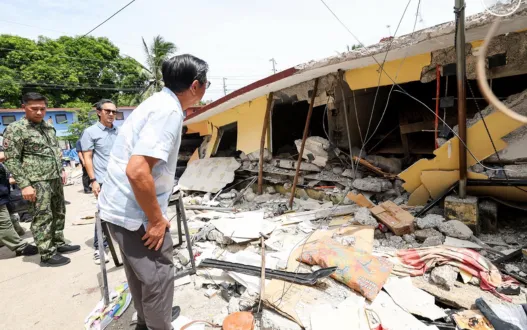
President Ferdinand Marcos Jr. directed concerned agencies to prioritize rescue operations, relief distribution, and damage assessment while ensuring that affected residents receive immediate support. Government officials stressed that national agencies will continue working alongside local governments to accelerate response efforts and recovery programs.
Authorities also assured the public that financial resources remain available to sustain operations for as long as necessary.
Malacañang emphasized that existing government funds are enough to support ongoing rescue missions and emergency assistance while additional budgetary support can be mobilized if requirements increase in the coming days.
Understanding How the Disaster Fund Works
The Quick Response Fund serves as an emergency standby allocation that allows government agencies to immediately respond to disasters without waiting for lengthy budget approvals.
Under existing guidelines, agencies may utilize their available QRF allocations for disaster preparedness, emergency response, relief assistance, and rehabilitation programs. Once a significant portion of their funds has been used, they can request replenishment from the DBM.
This mechanism allows government offices to act quickly during emergencies such as earthquakes, typhoons, floods, and other natural disasters.
With the ₱34 billion calamity fund for Mindanao still available, authorities said agencies have enough flexibility to address evolving needs as damage assessments continue.
Damage Assessment Continues Across Affected Areas
Authorities are still conducting comprehensive evaluations of infrastructure damage caused by the powerful earthquake.
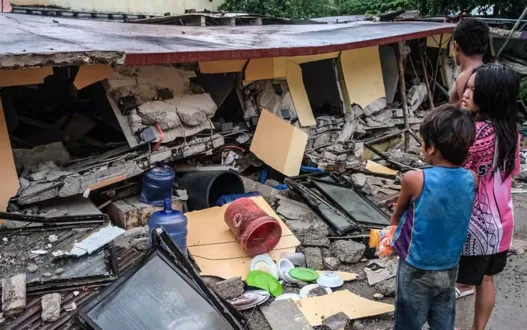
Initial reports indicate that several buildings, schools, commercial establishments, roads, and public facilities sustained varying degrees of damage. Some structures reportedly collapsed while others developed cracks that require immediate inspection. Rescue teams and engineers continue checking affected areas to determine the safety of buildings and identify facilities requiring urgent repairs.
The earthquake also triggered power interruptions and disrupted water services in several communities, creating additional challenges for residents already coping with the disaster.
Government officials said funding from the ₱34 billion calamity fund for Mindanao may also support infrastructure rehabilitation efforts once emergency response operations transition into recovery and rebuilding phases.
Repair and Rehabilitation Plans Already Being Prepared
Even as rescue operations continue, government agencies have started preparing for long-term rehabilitation efforts.
Public Works Secretary Vince Dizon announced that repair activities for damaged infrastructure would begin immediately as authorities work to restore normal conditions in affected communities. Roads, bridges, government buildings, schools, and other public facilities will be prioritized to ensure public safety and facilitate economic recovery.
Officials emphasized that rehabilitation efforts will require coordinated action among national agencies, local governments, and community stakeholders.
The availability of the ₱34 billion calamity fund for Mindanao is expected to play a critical role in financing reconstruction projects and restoring essential services in earthquake-hit areas.
Relief Supplies and Recovery Assistance Remain Sufficient
Aside from emergency food packs and relief goods, government agencies are also preparing additional recovery assistance programs for affected families.
Officials said emergency cash assistance and other support measures may be rolled out once immediate rescue operations are completed and damage assessments become more comprehensive. Authorities stressed that the government is committed to helping families rebuild their lives and recover from the disaster’s impact.
The DSWD and other agencies continue monitoring conditions on the ground to ensure resources are allocated where they are needed most.
Strong Financial Position Supports Ongoing Response
Budget officials noted that the country’s disaster management funds remain in a strong position despite previous releases for various emergency response activities earlier this year.
Data from the DBM showed that while billions have already been utilized for disaster response initiatives, substantial resources remain available under the National Disaster Risk Reduction and Management Fund, disaster rehabilitation programs, and related financing mechanisms.
This financial readiness is seen as a crucial advantage as authorities confront the immediate and long-term challenges brought by the earthquake.
Looking Ahead
As Mindanao continues recovering from the effects of the magnitude 7.8 earthquake, government agencies are focusing on three major priorities: saving lives, delivering humanitarian assistance, and rebuilding affected communities.
The confirmation that the ₱34 billion calamity fund for Mindanao remains available offers reassurance to residents that resources are in place to support rescue efforts, emergency relief operations, and future rehabilitation projects.
While the full extent of the disaster is still being assessed, authorities maintain that funding, supplies, and government support will remain accessible throughout the recovery process. With relief operations continuing and reconstruction plans already being developed, officials hope the available resources will help accelerate the return to normalcy for thousands of families affected by the powerful earthquake across Mindanao.
For more news and updates, visit Metro Balita Ph.