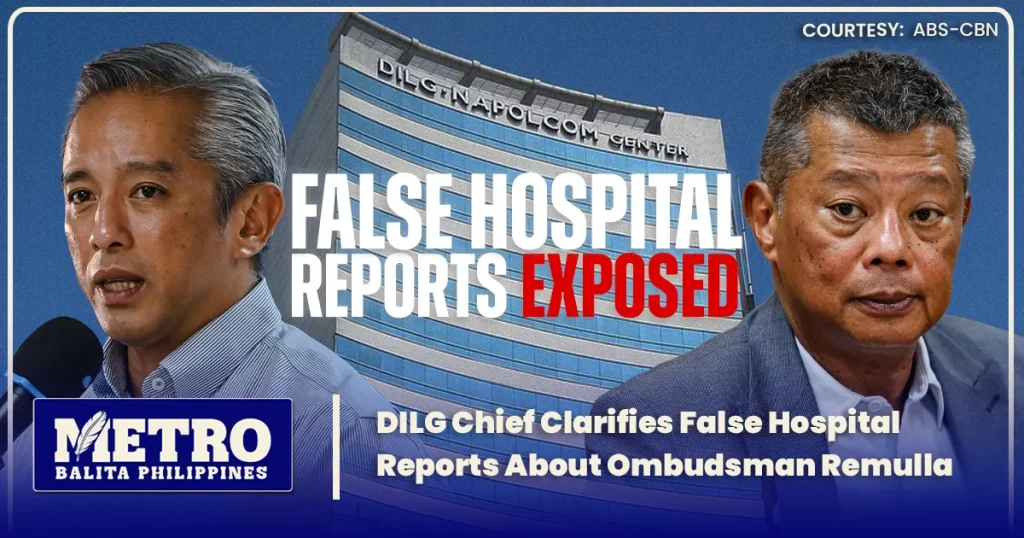
False reports claiming that ombudsman Remulla was hospitalized circulated online in early January 2026, prompting immediate clarification from government officials. The rumors, which gained traction on social media, alleged that the Ombudsman had been rushed to a hospital due to an undisclosed medical condition. These claims were quickly denied by both the Department of the Interior and Local Government (DILG) and Ombudsman Remulla himself.
The incident highlights how quickly misinformation can spread online and why prompt clarification from credible sources is critical, especially when it involves high-ranking public officials.
How the Hospitalization Rumors Started

The false information began appearing on social media pages and unverified accounts, with posts suggesting that ombudsman remulla was confined in a hospital. Some posts used vague language, while others relied on dramatic headlines to attract attention. Despite lacking confirmation from legitimate news organizations or official statements, the claims were widely shared.
Because of the sensitive nature of the position held by the Ombudsman, the rumors immediately drew public attention and raised unnecessary concern. However, no reliable source confirmed the reports before they spread online.
Official Clarification From the DILG
Interior Secretary Jonvic Remulla, the brother of the Ombudsman, addressed the issue publicly. He categorically denied the reports, stating that they were false and had no factual basis. According to the DILG chief, ombudsman remulla was not hospitalized and was in good health.
The DILG emphasized that the rumors were a clear example of fake news and warned the public against sharing unverified information. The department reiterated the importance of relying on established news outlets and official government channels for accurate updates.
Ombudsman Remulla Speaks Out
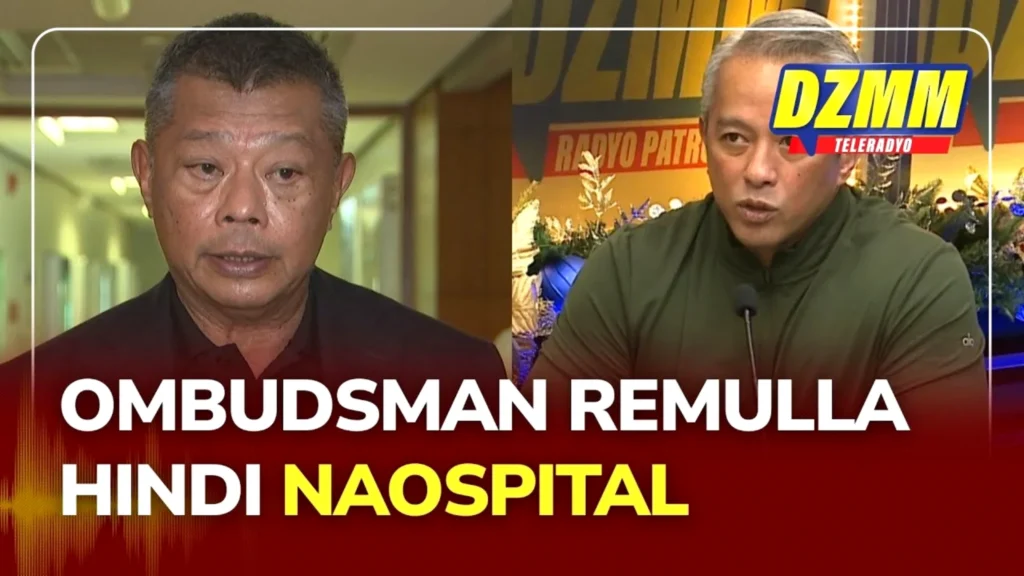
Ombudsman Remulla personally dismissed the rumors during a radio interview. Speaking calmly and with humor, he made it clear that he was not confined in any hospital and was physically present and healthy at the time of the interview. His direct response helped put an end to the speculation surrounding his condition.
Beyond denying the claim, he raised concerns about the increasing use of fabricated stories and artificial intelligence-generated content to mislead the public. He stressed that spreading false information, even as a joke, can have serious consequences.
Key Facts vs. False Claims
The situation can be summarized clearly by separating fact from fiction.
False claims circulated online:
- Ombudsman Remulla was rushed to a hospital
- The hospitalization was sudden and serious
- The information came from credible or insider sources
Verified facts confirmed by officials:
- Ombudsman Remulla was not hospitalized
- Both the DILG chief and the Ombudsman denied the reports
- The Ombudsman addressed the issue directly in a live interview
Why This Clarification Matters

Misinformation involving senior public officials can damage public trust and create unnecessary panic. In this case, the false hospital reports diverted attention from the Ombudsman’s actual work and highlighted how easily unverified content can influence public discussion.
Government officials stressed that fake news does not only misinform but also weakens confidence in institutions. When left unchecked, such rumors can spread faster than corrections, making early clarification essential.
Lessons for the Public
This incident serves as a reminder for citizens to be more cautious when consuming and sharing information online.
The public is encouraged to:
- Verify news through trusted media organizations
- Check for official statements before believing viral claims
- Avoid sharing posts that rely on anonymous or unclear sources
Practicing responsible information sharing helps reduce the spread of false narratives and supports a more informed society.
Conclusion
The hospitalization rumors involving ombudsman remulla were clearly proven false through official statements and personal clarification. The swift response from the DILG and the Ombudsman himself helped stop the spread of misinformation and reinforced the importance of fact-checking.
As false reports continue to circulate in the digital space, this incident stands as a reminder that truth and verification must always come first. For more updated news check Metro Balita Ph