An economist said that suspending the Excise tax on petroleum products could be the fastest way to help poor families, especially now that fuel prices are rising global tensions like the Middle East conflict. As oil prices go up, everyday expenses also increase, and this hits low-income households the hardest.
According to economist Emmanuel Leyco, removing the Excise tax on fuel can quickly reduce transportation costs. Since many Filipinos rely on public transport or use fuel for daily work, even a small drop in fuel prices can already bring relief. In simple terms, less tax on fuel means lower fares and cheaper goods.
Why Excise Tax Matters in Daily Expenses
The Excise tax is added to the price of petroleum products, which means consumers end up paying more. When fuel prices rise, everything else follows from transportation to food and basic goods.
For many families, especially those with limited income, this creates a chain reaction. Higher fuel costs mean:
- Higher jeepney and bus fares
- Increased delivery and logistics expenses
- Higher prices of goods in markets
- More daily financial pressure on households
Because of this, suspending the Excise tax is seen as a direct and immediate solution to ease the burden.
Impact on Transportation and Food Prices
Leyco explained that petroleum is not only used for transport but also plays a big role in the supply chain. The Excise tax affects the cost of moving goods from farms to markets.
If fuel becomes cheaper, transportation costs will also go down. This can help reduce the prices of basic goods, especially food. Farmers and suppliers spend a lot on fuel for delivery, and any reduction can help stabilize prices.
In short, removing the Excise tax can have a ripple effect across different sectors. It doesn’t just help drivers or commuters it can also lower the cost of living overall.
Current Excise Tax Rates on Fuel
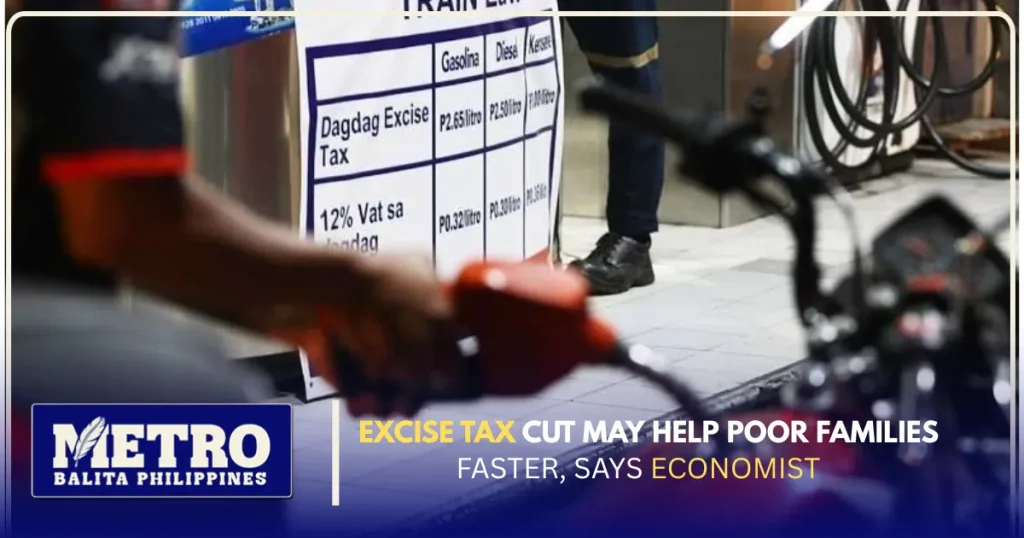
Since 2020, the government has implemented fixed Excise tax rates on different petroleum products under the TRAIN Law. These taxes are part of the reason why fuel prices remain high even when global prices fluctuate.
Here are some of the current rates:
- Gasoline – P10.00 per liter
- Diesel – P6.00 per liter
- Kerosene – P5.00 per liter
- LPG – P3.00 per kilogram
- Aviation fuel – P4.00 per liter
- Lubricating oils – P10.00 per liter
If the government fully suspends the Excise tax, fuel prices could drop by the same amount listed above. This means immediate savings for consumers.
Government Action and Possible Outcomes
President Ferdinand Marcos Jr. has already taken initial steps by suspending the Excise tax on LPG and kerosene earlier this month. This move aims to provide relief to households that rely heavily on these fuels for cooking and daily use.
However, economists believe that a full suspension of the Excise tax on all petroleum products could bring even bigger benefits. It can help control inflation and make essential goods more affordable.
Some concerns remain, such as the possible loss of government revenue. But for many experts, the priority right now is to support consumers who are struggling with rising costs.
Who Benefits the Most from Excise Tax Suspension
There is a common belief that removing the Excise tax mostly benefits the wealthy since they consume more fuel. However, Leyco pointed out that the poor actually feel the impact faster.
Low-income families spend a bigger portion of their income on transportation and basic goods. When fuel prices go down, their daily expenses immediately decrease. This makes the Excise tax suspension more meaningful for them.
In reality, the benefits are shared across all sectors, but the urgency and impact are more visible among those who need it most.
Conclusion
The proposal to suspend the Excise tax on petroleum products is gaining attention as a practical solution to rising fuel prices. With global tensions affecting oil supply, immediate action is needed to protect consumers, especially poor families.
By reducing fuel costs, the government can help lower transportation fares, stabilize food prices, and ease the overall cost of living. While there are trade-offs, many believe that the short-term relief outweighs the risks.
As discussions continue, the focus remains on finding ways to support everyday Filipinos facing economic pressure. For now, the idea of cutting the Excise tax stands as one of the fastest ways to bring real and felt relief on the ground. For updated News Visit Metro Balita Ph.