
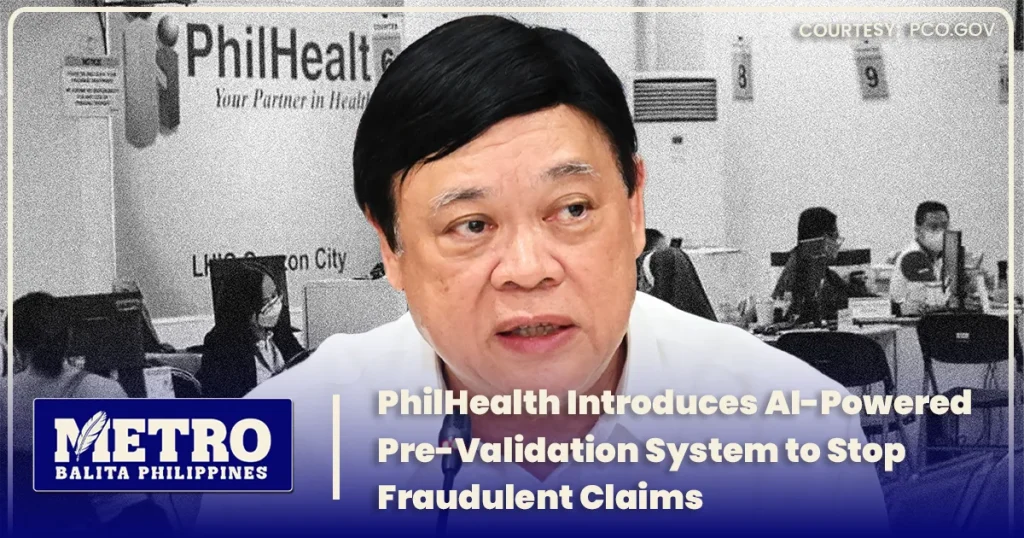
The Philippine Health Insurance Corporation , commonly known as Philhealth, is taking a major step toward strengthening the integrity of the country’s public health insurance system. In response to persistent issues surrounding fraudulent and irregular claims, Philhealth is set to implement an artificial intelligence–enabled pre-validation system designed to identify suspicious claims before payments are released.
This move reflects a broader shift toward digital governance and proactive fraud prevention. Instead of reacting after funds are already disbursed, Philhealth aims to stop questionable claims earlier in the process, reducing financial losses and ensuring that public funds are used only for legitimate healthcare services.
Why Philhealth Is Moving Toward AI-Based Pre-Validation

Fraudulent claims have long been a challenge for health insurance systems worldwide, and Philhealth is no exception. Irregular billing practices, overstated services, and claims that do not match patient records place pressure on limited resources meant to support millions of Filipino members.
By introducing an AI-powered pre-validation system, Philhealth seeks to close gaps in manual review processes that can be slow and vulnerable to human error. The new system is expected to analyze claims data in real time, allowing the agency to detect inconsistencies and high-risk patterns before claims are approved.
The initiative aligns with Philhealth’s mandate to safeguard contributions from members while ensuring that healthcare providers are paid fairly and promptly for legitimate services.
How the AI-Enabled Pre-Validation System Works
The AI-based system will function as an automated screening layer within the claims process. Rather than replacing human evaluators, the technology is designed to support them by flagging claims that require closer inspection.
Key functions of the system include:
- Analyzing large volumes of claims data to identify unusual billing patterns
- Comparing submitted claims against historical data and established medical norms
- Detecting mismatches between diagnoses, procedures, and patient profiles
Through these processes, Philhealth can prioritize which claims need further review, allowing investigators and claims officers to focus on high-risk cases instead of manually checking every submission.
Benefits for the Health Insurance System and Members

The introduction of AI-enabled pre-validation is expected to produce long-term benefits not only for Philhealth but also for its members and partner healthcare institutions.
Among the most significant advantages are:
- Faster identification of potentially fraudulent claims before payments are released
- Reduced financial leakage that drains funds meant for legitimate patient care
- Improved efficiency in claims processing through data-driven screening
For members, this means stronger protection of their contributions and a more sustainable insurance system. For healthcare providers, clearer standards and consistent validation can help maintain trust and accountability across the sector.
Strengthening Transparency and Accountability
Beyond fraud prevention, the initiative reflects Philhealth’s broader commitment to transparency and institutional reform. Automated systems reduce discretionary decision-making and help standardize how claims are assessed across different facilities and regions.
The use of AI also supports evidence-based oversight. Instead of relying solely on tips or post-payment audits, Philhealth can now rely on predictive analysis to identify risks early. This proactive approach helps prevent repeat offenses and discourages fraudulent behavior before it occurs.
At the policy level, the move signals a shift toward smarter governance, where technology is used to protect public resources while improving service delivery.
A Step Forward for Public Health Insurance
The rollout of the AI-enabled pre-validation system represents a significant milestone for Philhealth as it modernizes its operations. By focusing on early detection and prevention, the agency aims to reinforce public trust and ensure that benefits reach those who truly need them.
As implementation progresses, the effectiveness of the system will depend on continuous monitoring, system updates, and cooperation between Philhealth, healthcare providers, and oversight bodies. If successful, the initiative could serve as a model for other government agencies seeking to improve accountability through digital solutions.
Philhealth’s move underscores the growing role of technology in public service and highlights the importance of protecting public funds in a health system that serves millions of Filipinos.
For more upcoming news update Visit Metro Balita PH.