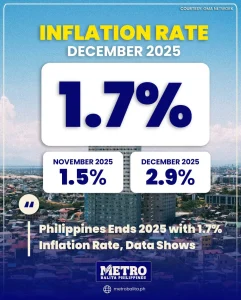
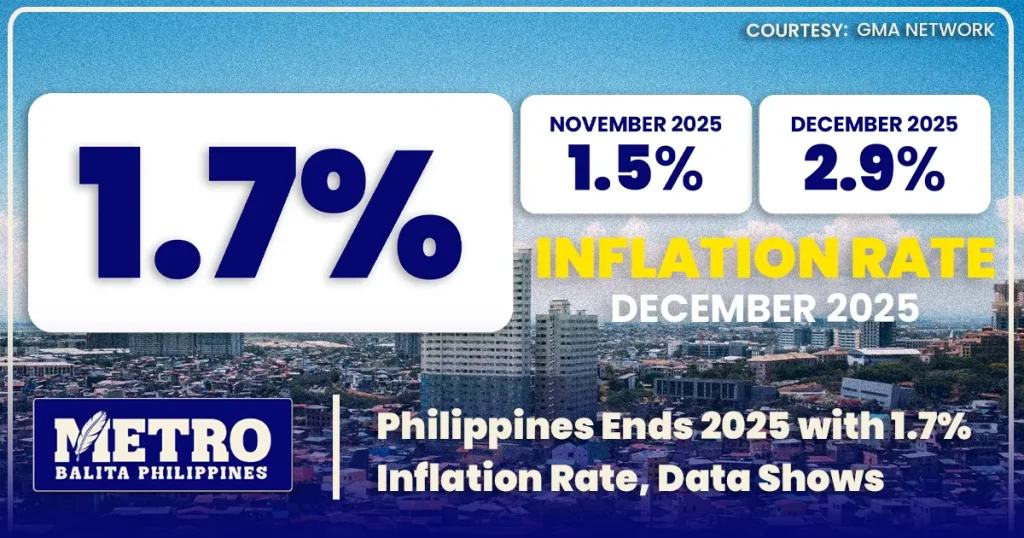
The Philippines officially closed 2025 with a 1.7% Inflation rate, marking one of the lowest year-end inflation figures recorded in recent years. According to the latest government data, the slowdown reflects easing price pressures across key consumer goods and services, offering some relief to households after years of elevated inflation.
The figure indicates that average price increases were significantly more controlled by the end of the year, compared to previous periods when inflation surged due to global supply disruptions, fuel price volatility, and food shortages. Analysts note that this trend signals improving economic stability as the country moves into the new year.
What Drove Inflation Down in Late 2025
The decline in inflation toward the end of 2025 was largely influenced by slower price increases in essential goods. Food prices, which typically make up a large portion of household expenses, rose at a much slower pace. Transportation costs also eased, supported by lower fuel prices and more stable global oil markets.
Economists observed that supply conditions improved throughout the year, helping prevent sharp spikes in prices. Better harvest output, improved logistics, and calmer international markets all played a role in bringing inflation down to 1.7% by December.
Key Contributors to the Lower Inflation Rate
Several major factors contributed to the recorded 1.7% Inflation rate:
- Slower increases in food and non-alcoholic beverage prices
- Reduced transport costs due to lower fuel prices
- Stable housing, water, electricity, and gas charges
- Softer price movements in restaurant and accommodation services
These components helped offset price pressures in other areas, allowing overall inflation to remain subdued toward the end of the year.
How the 1.7% Inflation Rate Affects Filipino Households

For many Filipino families, the lower inflation rate translated into improved purchasing power. With prices rising more slowly, households were better able to manage daily expenses such as food, utilities, and transportation.
Lower inflation also helped ease pressure on wages, allowing income to stretch further compared to previous years. While not all prices fell, the slower pace of increase gave consumers more room to plan budgets and savings.
However, experts caution that while inflation slowed, cost levels remain higher than pre-pandemic years. This means that although prices are no longer rising rapidly, they have not returned to earlier lows.
Policy and Economic Implications
The end-2025 inflation outcome supports the view that monetary tightening and supply-side measures taken earlier were effective. With inflation within a manageable range, policymakers now have more flexibility when it comes to interest rate decisions and economic growth strategies.
A lower inflation environment may also encourage business investment and consumer spending, as uncertainty around price volatility decreases. Economists suggest that this could help support steady economic growth moving forward, provided inflation remains under control.
Sectors That Still Face Price Pressures
Despite the overall slowdown, some sectors continued to experience higher price growth. These areas include:
- Select food items affected by weather disruptions
- Education-related expenses
- Health services and personal care costs
These categories remind consumers and policymakers alike that inflation trends can vary widely across sectors, even when headline inflation appears low.
Outlook Moving Into the Next Year
Looking ahead, analysts expect inflation to remain within a moderate range if global conditions stay stable and domestic supply remains strong. However, risks such as extreme weather, global oil price swings, and geopolitical tensions could still affect price movements.
The 1.7% Inflation rate at the close of 2025 provides a positive starting point for the new year, but economists emphasize the need for continued vigilance. Maintaining price stability will require ongoing coordination between fiscal policy, monetary measures, and supply chain management.
For the latest updates and clear explanations on economic developments, continue following Metro Balita Ph.