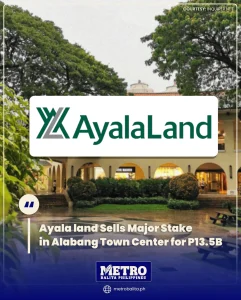

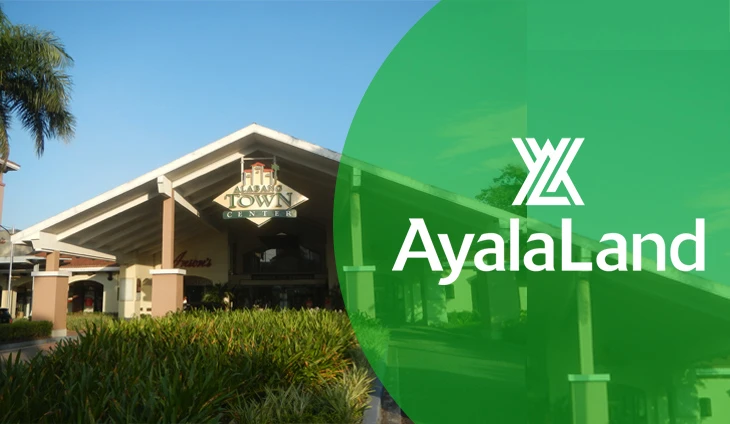
Ayala land Inc. has confirmed the sale of a major ownership stake in Alabang Town Center, one of the most established lifestyle malls in southern Metro Manila, for P13.5 billion. The transaction involves Ayala land’s 50 percent interest in Alabang Commercial Center Corporation, the entity that owns and operates the mall. This move represents a significant shift in how the company manages mature assets within its extensive property portfolio.
Alabang Town Center has been a key commercial landmark since its early days, serving residents of Muntinlupa and nearby cities. Over the years, it has grown into a full-scale lifestyle destination offering retail, dining, and entertainment options. Its consistent performance and strong market position made it one of Ayala land’s most valuable retail assets prior to the sale.
Reason Behind Ayala land’s Decision
The decision to divest was driven by Ayala land’s capital recycling strategy, which focuses on unlocking value from stabilized assets and redirecting capital toward higher-growth opportunities. Rather than retaining mature properties indefinitely, the company has been selectively monetizing assets at favorable valuations.
Industry observers note that this approach allows Ayala land to maintain financial flexibility while continuing to invest in projects that support long-term growth. The proceeds from the sale are expected to strengthen the company’s ability to fund new developments, particularly in leasing businesses such as offices, logistics facilities, and mixed-use estates that generate recurring income.
Details of the Buyer and Ownership Change
The buyer of Ayala land’s stake is the Madrigal family, which has been a long-time joint venture partner in the ownership of Alabang Town Center. With the completion of the transaction, the Madrigal group will assume full ownership of the mall, ending a partnership that has spanned several decades.
The P13.5 billion valuation reflects continued confidence in the property’s long-term value, despite changes in consumer behavior and the evolving retail landscape. The deal was disclosed to regulators and the public in December 2025 and is subject to standard closing conditions.
Use of Sale Proceeds
Ayala land has indicated that the proceeds from the transaction will be used primarily to support its expansion plans. A significant portion will be allocated to growing its leasing portfolio, with the company targeting the development of hundreds of thousands of square meters of new gross leasable area in the coming years.
Beyond funding expansion, the transaction also improves Ayala land’s balance sheet. Increased liquidity enhances the company’s ability to manage risks, navigate market uncertainties, and pursue strategic opportunities without placing excessive pressure on its financial position.
Impact on Ayala land’s Retail Business
Despite selling its stake in Alabang Town Center, Ayala land remains firmly committed to the retail property sector. Through its Ayala Malls unit, the company continues to operate and develop shopping centers across the country, many of which are integrated into large-scale mixed-use communities.
The divestment does not signal a withdrawal from southern Metro Manila. Ayala land continues to invest in nearby estates and developments that align with its long-term vision of creating integrated urban centers. The sale is better viewed as a portfolio adjustment rather than a reduction in overall market presence.
Market and Industry Implications
The transaction has drawn attention from analysts who see it as part of a broader trend among major developers toward portfolio optimization. As economic conditions and consumer preferences evolve, developers are increasingly reassessing how capital is allocated across assets.
For the Madrigal family, full ownership of Alabang Town Center presents both opportunities and responsibilities. Managing a mature lifestyle mall requires sustained reinvestment, careful tenant management, and responsiveness to changing market demands. The future direction of the mall under single ownership will be closely watched by industry stakeholders.
Conclusion
The sale of Ayala land’s stake in Alabang Town Center underscores a strategic shift toward disciplined asset management and long-term value creation. By monetizing a mature property at a strong valuation, the company has positioned itself to pursue new growth opportunities while maintaining financial stability.
As the Philippine real estate sector continues to evolve, Ayala land’s ability to adapt its portfolio strategy will play a crucial role in shaping its future performance. Developments related to this transaction and its broader impact on the property market will continue to be followed by Metro Balita Ph.