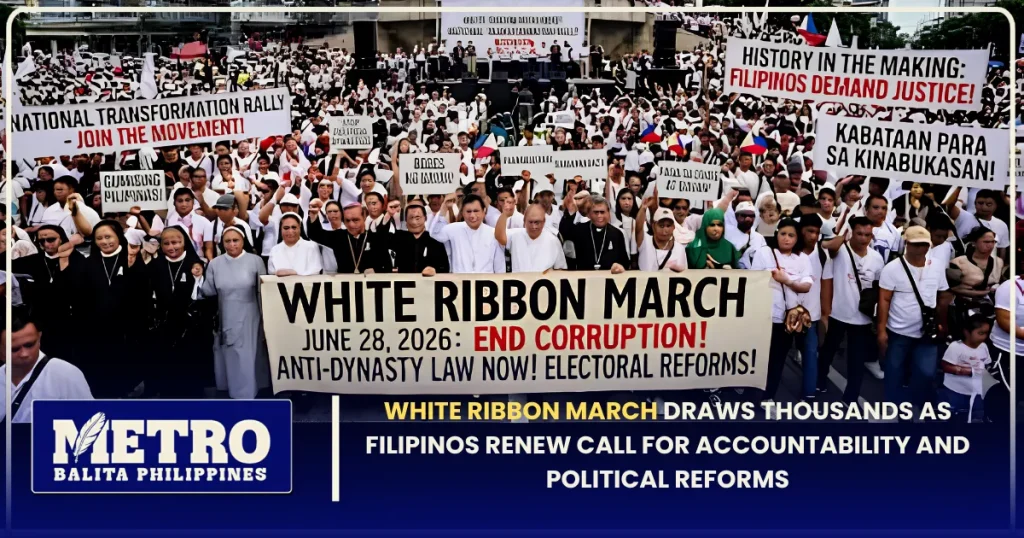
QUEZON CITY, Philippines — White Ribbon March became one of the biggest civic gatherings in the country on Sunday, June 28, as thousands of Filipinos from various sectors gathered at the EDSA People Power Monument to demand greater government accountability, electoral reforms, and an intensified fight against corruption.
The White Ribbon March, organized by religious groups and civil society organizations, transformed the historic EDSA People Power site into a sea of white ribbons and banners symbolizing unity, transparency, and a collective call for change. The gathering was also held simultaneously in several provinces, highlighting the growing support for governance reforms across the country.
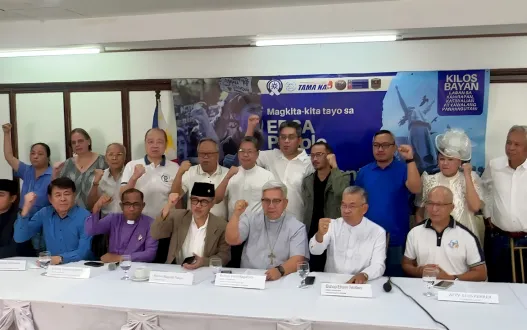
According to organizers, the movement is not tied to any political party or candidate but is instead focused on promoting good governance and encouraging citizens to become more active in national issues. The march was spearheaded by the Interreligious Leaders Council for National Transformation and other civic organizations that have repeatedly voiced concerns over corruption, political dynasties, and the need for institutional reforms.
White Ribbon March Highlights Growing Demand for Government Accountability
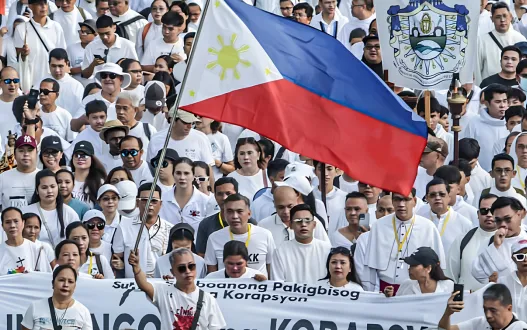
Participants started gathering at the EDSA Shrine before noon for a Mass and prayer service. By mid-afternoon, marchers carrying white flags, banners, and ribbons made their way toward the People Power Monument, where a series of speeches and programs were held.
The White Ribbon March emphasized peaceful assembly and civic participation. Organizers described the event as a “national expression of concern” over issues affecting governance and democracy in the Philippines.
Religious leaders encouraged Filipinos to participate regardless of political affiliation, stressing that the gathering was a call for accountability and ethical leadership rather than a partisan activity. The movement also highlighted concerns over alleged corruption and the influence of political dynasties in government.
Why the White Ribbon March Matters
The symbolism behind the White Ribbon March goes beyond the color itself. Organizers said the white ribbon represents integrity, peace, and the collective desire of Filipinos to build a more transparent and accountable government.
For many participants, the event was also a reminder of the power of people-led movements in Philippine history. The EDSA People Power Monument, where the march culminated, remains one of the country’s most iconic symbols of democracy and citizen participation.
Several attendees said they joined the march because they believe ordinary Filipinos should not remain silent when issues of governance and public accountability are at stake.
“This is not about politics. This is about our future and the kind of government we want for our children,” one participant said during the gathering.
The event’s organizers also emphasized the need for electoral reforms that would strengthen democratic institutions and ensure greater transparency in governance.
Security Tightened for White Ribbon March
Authorities implemented extensive security measures ahead of the event, with nearly 10,000 police personnel deployed to ensure public safety and maintain order during the gathering.
The National Capital Region Police Office assured the public that it would observe maximum tolerance and respect the constitutional right to peaceful assembly while also preventing any potential disruptions.
Meanwhile, traffic management measures were also put in place in Quezon City. The Metropolitan Manila Development Authority and the local government opened a zipper lane along White Plains Avenue to help ease traffic congestion expected from the influx of participants heading to the event venue.
Tow trucks and traffic personnel were also stationed in strategic areas to prevent illegal parking and ensure smooth traffic flow throughout the day.
Nationwide Support for the White Ribbon Movement
The White Ribbon March was not limited to Metro Manila. Similar activities and solidarity gatherings were reported in several provinces, reflecting the movement’s growing reach and influence.
In Iloilo, the Catholic Church and various civic organizations called on the faithful to participate and support the campaign against corruption and for greater accountability in government. Religious leaders in the region said the movement aims to encourage Filipinos to take a more active role in shaping the country’s future.
Observers noted that the simultaneous gatherings in different parts of the country demonstrated widespread public interest in governance issues and reforms.
Calls for Electoral and Institutional Reforms
One of the central messages of the White Ribbon March was the need to improve the country’s political system through meaningful reforms.
Organizers argued that strengthening democratic institutions and ensuring accountability among public officials are essential in restoring public trust in government.
The movement also advocated for reforms that would address long-standing concerns about corruption and political dynasties, issues that have been repeatedly raised by civic groups and religious organizations.
Leaders of the movement said the march should not be viewed as a one-day event but rather as the beginning of a broader national conversation on governance and accountability.
“The real work begins after today,” one organizer said during the program, urging participants to remain engaged in civic and democratic processes.
Peaceful Assembly and Democratic Participation
Despite the large crowd, the White Ribbon March remained peaceful throughout the day.
Authorities and organizers worked closely to ensure that the event proceeded without major incidents. The gathering became an example of how citizens can exercise their right to peaceful assembly while promoting issues they believe are important to the nation’s future.
Political analysts noted that civic movements such as the White Ribbon initiative often serve as reminders of the role of ordinary citizens in shaping democratic societies.
The event also highlighted the continued relevance of public participation in national discussions, especially on issues involving transparency, governance, and institutional reforms.
White Ribbon March Signals Continued Public Engagement
As the program concluded at the People Power Monument, participants expressed hope that the messages delivered during the White Ribbon March would inspire more Filipinos to become involved in civic activities and governance issues.
The march ended with prayers, songs, and calls for unity, accountability, and reforms that organizers believe are necessary to strengthen democratic institutions in the Philippines.
Whether the movement will translate into long-term reforms remains to be seen, but Sunday’s gathering clearly demonstrated that many Filipinos remain willing to participate in peaceful civic actions to voice their concerns and aspirations for the country.
The White Ribbon March may have concluded, but the conversations it sparked regarding accountability, transparency, and political reform are expected to continue in the weeks and months ahead as citizens, religious leaders, and civil society groups push for meaningful change in the Philippines.
For more news and updates, visit Metro Balita Ph.