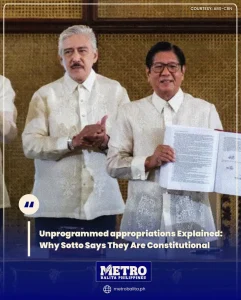
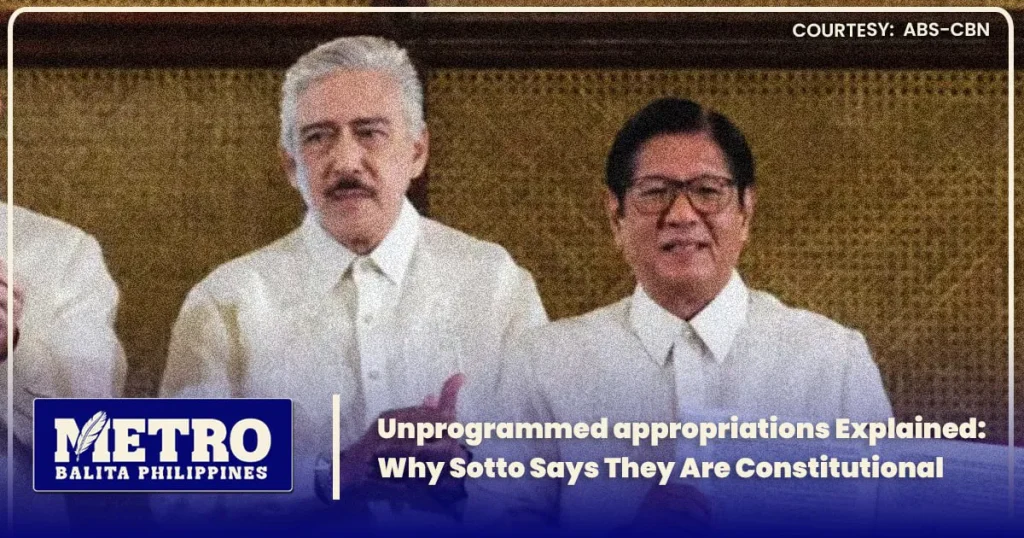
The issue of Unprogrammed appropriations became a major topic again after Sotto said clearly that they are constitutional. His statement came amid public debate about the national budget and concerns over funds that do not yet have a fixed source of income.
Many people are asking a simple question: how can the government approve funds that are not guaranteed to be collected yet? According to Sotto, the answer lies in how the budget system works under the Philippine Constitution.
What Are Unprogrammed Appropriations?
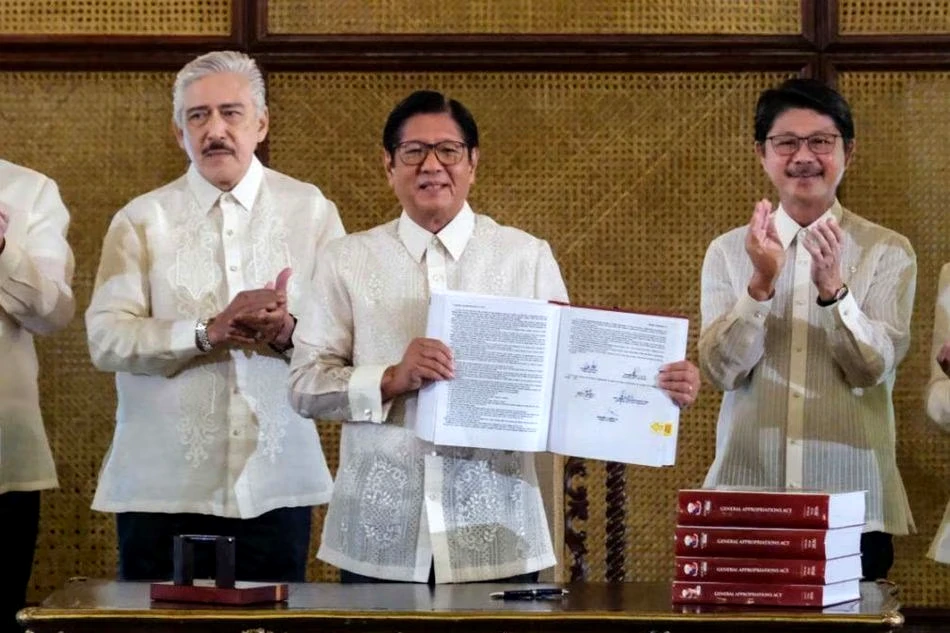
Unprogrammed appropriations are funds included in the national budget but cannot be used right away. These funds are only released if the government earns extra money beyond its original revenue target or finds new sources of income during the year.
This means the money is not automatically spent. It is only made available when certain conditions are met. Sotto explained that these funds act as a backup plan, allowing the government to respond to needs without rushing to pass a new budget law.
Why Sotto Says They Are Constitutional
Sotto stressed that the Constitution allows Congress to approve a budget that includes conditional funding. As long as these funds follow clear rules and go through proper approval, they are legal.
He also pointed out that Unprogrammed appropriations are not new. They have been part of national budgets for many years and were used by past administrations. According to him, calling them unconstitutional ignores long-standing budget practices.
Key Points Behind Sotto’s Explanation
- Unprogrammed funds are not spent immediately
- They can only be used if extra revenue is collected
- Congress approves these funds in advance
- Their release still follows legal procedures
For Sotto, these conditions are enough to prove that the system respects the Constitution.
How These Funds Are Different From Regular Budget Items
Regular budget items are based on expected income, such as taxes and fees. Unprogrammed appropriations, on the other hand, depend on income that may or may not come in later.
These funds are not meant for everyday expenses. They are usually reserved for urgent or important needs that may arise unexpectedly. Because of this, they serve as a safety net for the government.
Common Uses of Unprogrammed Appropriations
- Payment of government debt
- Emergency response during disasters
- Support for critical economic needs
- Urgent programs when extra funds are available
Sotto argued that without this option, the government would struggle to respond quickly to emergencies.
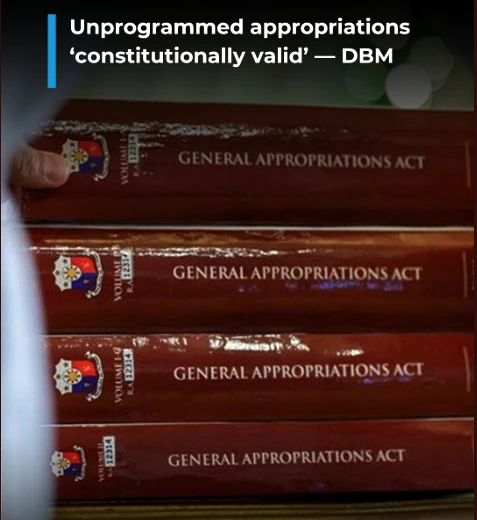
Why the Public Is Concerned
Despite these explanations, many Filipinos remain uneasy. Some fear that approving funds without guaranteed income could lead to misuse or lack of transparency. Others worry that it gives too much flexibility to those managing public money.
Sotto responded by saying that misunderstanding is the real problem. According to him, people often assume these funds are automatically spent, which is not true. He emphasized that safeguards are in place to prevent abuse.
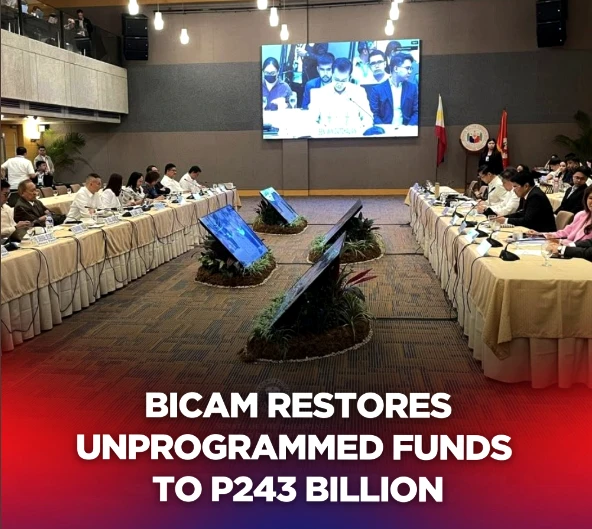
A Debate About Understanding, Not Just Legality
At its core, the discussion about Unprogrammed appropriations is about public understanding. Budget terms can be complex, and without clear explanations, confusion is inevitable.
Sotto believes that instead of removing unprogrammed funds, the focus should be on explaining how they work and ensuring they are monitored properly. Transparency and accountability, he said, are still required even when funds are conditional.
Why This Issue Matters
This debate matters because it affects how public money is managed. Budgets shape government services, disaster response, and economic stability. Knowing how different types of funds work helps citizens better understand government decisions.
While opinions remain divided, Sotto’s position is firm: Unprogrammed appropriations, when used correctly and legally, do not violate the Constitution. The challenge now is making sure the public clearly understands how and when these funds are used.
Metro Balita Ph will continue to follow this issue closely and provide clear, simple explanations to help readers stay informed about important national budget discussions.