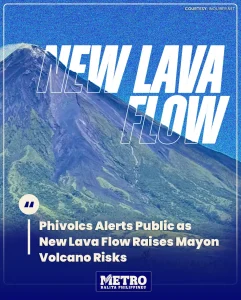

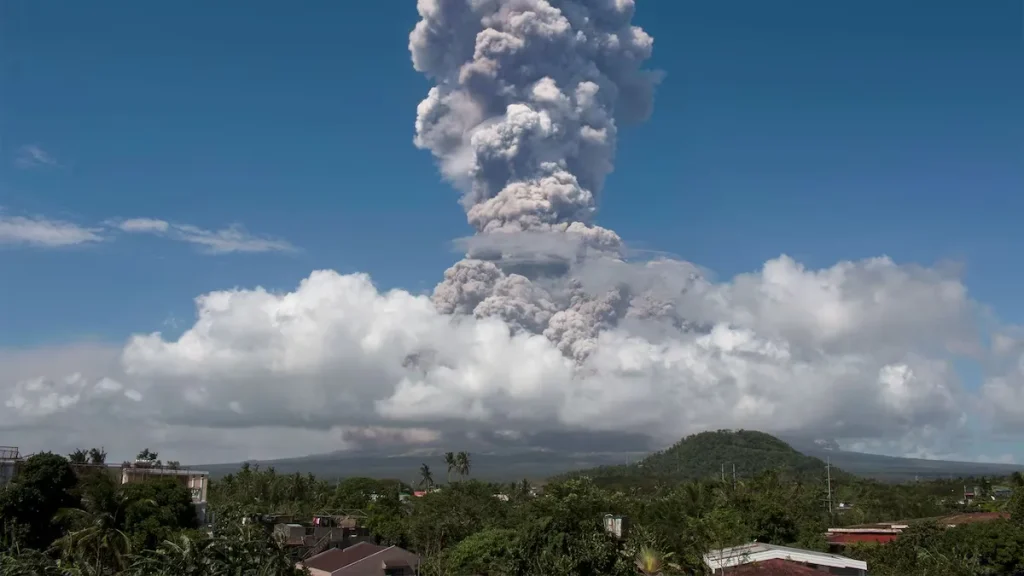
The Philippine Institute of Volcanology and Seismology (Phivolcs) has issued renewed warnings to communities surrounding Mayon Volcano after detecting a fresh lava flow and rising signs of unrest at the summit. These new developments indicate increased volcanic activity that may elevate hazards in the coming days.
While Alert Level 1 remains in place, scientists emphasize that Mayon is currently in a state of low-level but progressive unrest that requires public awareness and caution.
Fresh Lava Flow and Emerging Lava Spines
Phivolcs field teams and monitoring cameras recently observed new dark lava spines pushing out from the summit lava dome. These structures form when highly viscous magma rises slowly and solidifies externally, often weakening the surrounding rock and destabilizing upper slopes. Reports show that the new lava output began appearing between December 8 and 10, aligning with a noticeable shift in the volcano’s surface conditions.
This fresh extrusion suggests that magma is steadily moving upward within the system. Even without explosive activity, this process increases the likelihood of rockfalls, small-volume lava collapses, and sudden releases of volcanic gases—events that can occur without warning and affect areas within the Permanent Danger Zone.
Rockfall Incidents Spike as Slopes Become More Unstable
One of the clearest indicators of increased volcanic activity at Mayon Volcano is the documented rise in rockfall incidents. Phivolcs reports a significant jump in the number of daily rockfalls compared to previous weeks. These rockfalls are triggered by the newly formed lava spines and the ongoing intrusion of magma, which loosen older and weaker rock layers on the steep slopes.
Although rockfalls do not travel far enough to directly impact distant communities, they remain extremely dangerous for anyone entering restricted zones. Loose debris, sudden collapses, and rolling boulders can occur with little to no visual or seismic warning.
Alert Level 1 Stays, But Strict Safety Measures Apply
Even with the alert status remaining at Level 1, Phivolcs reiterates that entry into the 6-kilometer Permanent Danger Zone (PDZ) is prohibited. The PDZ covers areas most at risk from rockfalls, sudden steam-driven explosions, or unexpected lava collapse.
Level 1 does not signify an imminent major eruption; however, it does confirm that the volcano is undergoing changes that could escalate if the magma intrusion continues. Residents, hikers, and tourists are advised to monitor official updates instead of relying on rumors or unverified social media posts.

Aviation Authorities Issue Airspace Warning
In response to the observed volcanic activity, the Civil Aviation Authority of the Philippines (CAAP) has released a Notice to Airmen (NOTAM) advising aircraft to avoid airspace close to the summit of Mayon Volcano. Although no major ash emissions have been recorded, changes in volcanic behavior can still pose risks to aviation, especially during periods of active lava extrusion or collapse.
The NOTAM covers flights up to 11,000 feet near the volcano and is a standard protective measure whenever Phivolcs reports unusual summit activity.
Local Government and Phivolcs Enhance Monitoring
Local government units in Albay are coordinating closely with Phivolcs as constant monitoring continues. Daily bulletins include seismic activity, gas emissions, visual observations, and thermal imagery. These data allow authorities to implement timely evacuation protocols should activity escalate.
Community information drives, radio updates, and barangay advisories are also being strengthened to help residents understand the current threats and how they should respond if conditions worsen.
Understanding Mayon Volcano’s Behavior
Mayon Volcano is one of the country’s most active volcanoes, known not only for its perfect cone but also for its long history of eruptions. Episodes of lava dome growth, new spines, gas releases, and rockfalls are all part of its typical activity pattern. Even mild unrest can shift rapidly, which is why scientific vigilance and community preparedness remain essential.
Conclusion
The appearance of a new lava flow and increased rockfall activity has placed Mayon Volcano under heightened observation, with Phivolcs urging the public to remain alert and follow safety restrictions. While no major eruption is expected at the moment, the evolving conditions highlight the importance of respecting hazard zones and staying updated through official channels.
For more news and continuing coverage on Mayon Volcano and other national developments, follow Metro Balita Ph.